
Schloss Belvedere and Vienna’s baroque palace ensemble
Published on 09/15/2026 at 11:27 | Editorial responsibility: Rafael Müller, Editor-in-Chief AD HOC NEWS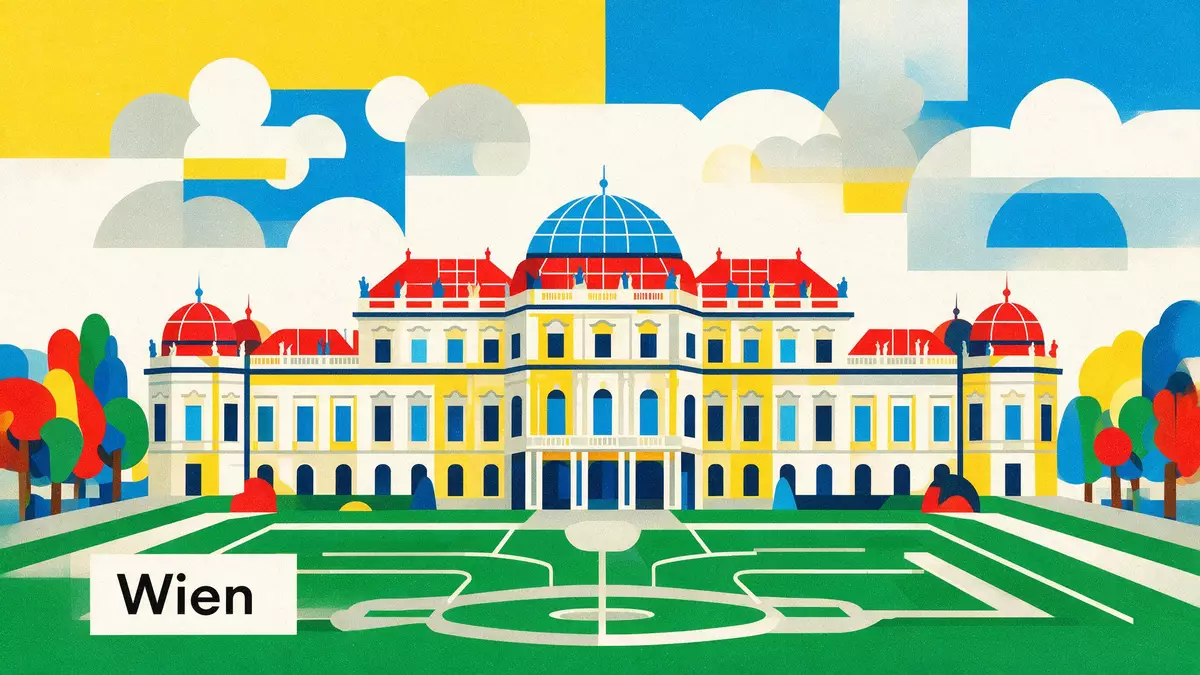
Schloss Belvedere in Wien is a baroque palace ensemble of the early eighteenth century, commissioned by Prince Eugene of Savoy and designed by Johann Lukas von Hildebrandt. Its two palaces, gardens and linked terraces create a composed sequence rather than a single block.
Prince Eugene’s baroque stage in Wien
The ensemble belongs to the historic centre of Vienna, a UNESCO World Heritage Site, and its palace buildings were completed in 1723. The Upper Belvedere and Lower Belvedere present a formal pair, with the garden between them giving the whole site its strongest architectural rhythm.The palace buildings UNESCO World Heritage Site
Baroque planning is visible here in the long axial layout, the ornamented façades and the carefully staged relation between architecture and garden. Schloss Belvedere was not a single residence alone, but a palace world with state rooms, gardens and service ranges that form a coherent whole.
Upper and Lower Belvedere
Johann Lukas von Hildebrandt gave the complex two distinct palaces. The Lower Belvedere dates from 1712 to 1716, while the Upper Belvedere followed from 1717 to 1723, and the pair reads as a sequence of linked volumes across the garden.Johann Lukas von Hildebrandt Lower Belvedere dates
The division between the two palaces is visible in their different placements and functions within the ensemble. Together with the Orangerie, stables and garden terraces, they give Schloss Belvedere a layered baroque character that remains easy to read on site.
From princely residence to public museum
Prince Eugene of Savoy commissioned the palace as a summer residence, and the complex later passed to Maria Theresa. The Upper Belvedere became a place for imperial collections, and the Belvedere name is tied to one of the first public museums in Europe.Prince Eugene of Savoy public museums in Europe
That later museum role sits naturally beside the palace’s baroque identity. Schloss Belvedere combines ceremonial architecture, garden space and gallery rooms, so the visitor sees both a princely world and a museum landscape in one place.
Visiting Schloss Belvedere: what travellers from Western Europe should know
- Schloss Belvedere stands in Wien’s third district, and the grounds are reached by tram and city bus services that stop near the palace area.
- The ensemble rises on gently terraced ground, with paved paths, steps and broad garden walks linking the different levels.
- The site includes the Upper Belvedere, Lower Belvedere, the gardens and ancillary baroque buildings such as the Orangery.
- The official language is German and the currency is the euro.
Searching for Schloss Belvedere on social platforms
These links open searches for Schloss Belvedere on each platform.
Frequently asked questions about Schloss Belvedere
Where is Schloss Belvedere?
Schloss Belvedere is in Wien, in Austria’s third district. The palace ensemble sits within the city and forms part of the historic centre.
What should a visit to Schloss Belvedere reveal?
A visit brings together baroque façades, formal gardens and the pair of palaces on the same site. The arrangement is clear across terraces, paths and court spaces.
What makes Schloss Belvedere distinctive?
The palace is distinctive for its linked Upper and Lower Belvedere, its baroque planning and its role as a former princely residence with a museum life.


