
Sawah Terasering Tegalalang, the carved rice valley north of Ubud
Published on 09/07/2026 at 11:02 | Editorial responsibility: Rafael Müller, Editor-in-Chief AD HOC NEWS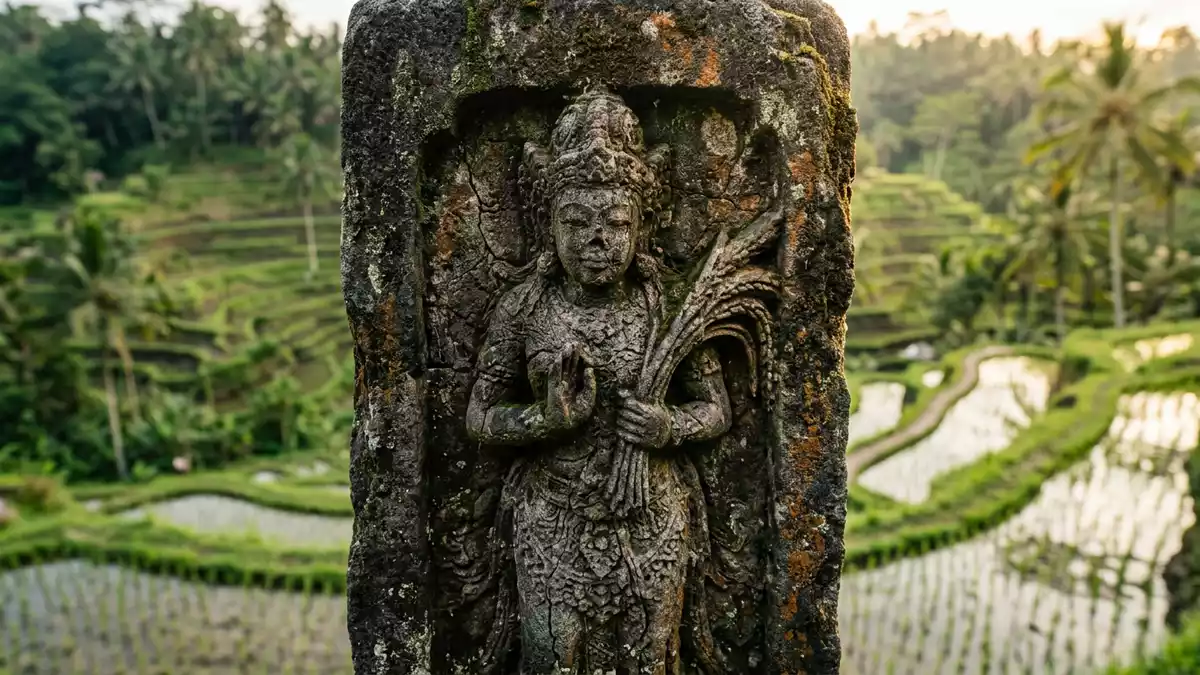
On the hills north of Ubud on the island of Bali, Sawah Terasering Tegalalang turns a steep valley into a layered landscape of rice paddies carved into the slopes and irrigated by the traditional Balinese subak system.Tegallalang Rice Terrace The terraces form part of the Cultural Landscape of Bali Province, which gained UNESCO World Heritage status in 2012 for landscapes shaped by subak irrigation.Cultural Landscape of Bali Province
A stepped landscape shaped around water
Sawah Terasering Tegalalang lies in Tegallalang district north of Ubud, where a narrow valley has been filled with rice fields arranged in terraces following the contours of the hillside.carved rice valley near Ubud The paddies are held in place by earthen banks, and narrow paths trace their edges, linking the plots and giving access down into the valley from the roadside above.Tegallalang Rice Terrace landscape
The terraces are fed by subak, the cooperative irrigation system that has structured rice farming in Bali for generations and underpins the UNESCO designation for the wider landscape.ancient subak irrigation system Water flows through channels cut into the banks and is distributed across the paddies, with small crossings and bunds marking where field meets path and where channels bend around the lines of the terraces.series of arranged paddies
Rice growing, elevation and views over the valley
The landscape at Sawah Terasering Tegalalang sits at an elevation of around 600 m (about 1,970 ft), with the valley opening out below a roadside lined with cafés and small shops.elevation of approximately 600 meters From this upper edge of the valley, viewpoints look across the terraces, giving long views over the stepped paddies and the coconut and other trees that punctuate the slopes.views of the terraces
Rice cultivation shapes the appearance of Sawah Terasering Tegalalang through the cycle of planting, growing and harvest, and the paddies form part of the working agricultural landscape of Tegallalang.agricultural landscape Depending on the stage of growth, visitors may see newly flooded plots reflecting the surrounding slopes, paddies covered with young seedlings or taller rice plants swaying across the terraces, all framed by the earthen banks and the vegetation that follows the lines of the irrigation channels.rice terrace scenery
Subak, cultural landscape and the wider setting around Ubud
Sawah Terasering Tegalalang is one expression of the wider Cultural Landscape of Bali Province, where subak has structured fields, villages and water temples across central Bali.traditional Balinese irrigation system The terraces stand in Tegallalang district, roughly 9 km north of central Ubud, and their carved slopes form a contrast with the denser settlement and cultural institutions of Ubud’s town centre.9 kilometers north of Ubud
The valley is reached along Jalan Raya Tegallalang, the main road through the district, where the roadside edge offers glimpses down into the rice fields between buildings and stopping places.Jl. Raya Tegallalang location From there, paths descend towards bridges and crossings across the terraces, and the surrounding slopes carry further plots of rice as well as trees and small shrines associated with the agricultural cycle and local religious practice.paths into the valley
Visiting Sawah Terasering Tegalalang: what travellers from Western Europe should know
- Sawah Terasering Tegalalang lies in Tegallalang district north of Ubud in Bali, Indonesia, reached along Jalan Raya Tegallalang by road from the town.
- The terraces occupy a steep valley, and visiting involves walking on earthen paths and slopes, with sections of steps and narrow crossings between paddies.
- Sawah Terasering Tegalalang stands at around 600 m (1,970 ft) above sea level, so approaches from Ubud involve a modest gain in elevation as the road climbs towards Tegallalang.
- The official language is Indonesian and the currency is the Indonesian rupiah.
- Entry requirements depend on your nationality; UK travellers can check the FCDO travel advice at gov.uk/foreign-travel-advice, Irish travellers the Department of Foreign Affairs at ireland.ie.
Searching for Sawah Terasering Tegalalang on social platforms
These links open searches for Sawah Terasering Tegalalang on each platform.
Frequently asked questions about Sawah Terasering Tegalalang
Where is Sawah Terasering Tegalalang located?
Sawah Terasering Tegalalang is in Tegallalang district north of Ubud in central Bali, Indonesia, along Jalan Raya Tegallalang above a steep rice-filled valley.
What should visitors expect on a visit to the terraces?
Visitors encounter a working rice landscape of carved terraces, irrigation channels and earthen paths on slopes, with viewpoints along the roadside and routes down into the valley.
What makes Sawah Terasering Tegalalang distinctive among Bali’s rice fields?
The terraces combine a steep valley setting, views from a roadside edge, active rice cultivation and their role within the UNESCO-listed Cultural Landscape of Bali Province shaped by subak.


