
Sawah Terasering Tegalalang, Bali’s carved rice valley near Ubud
Published on 09/16/2026 at 19:56 | Editorial responsibility: Rafael Müller, Editor-in-Chief AD HOC NEWS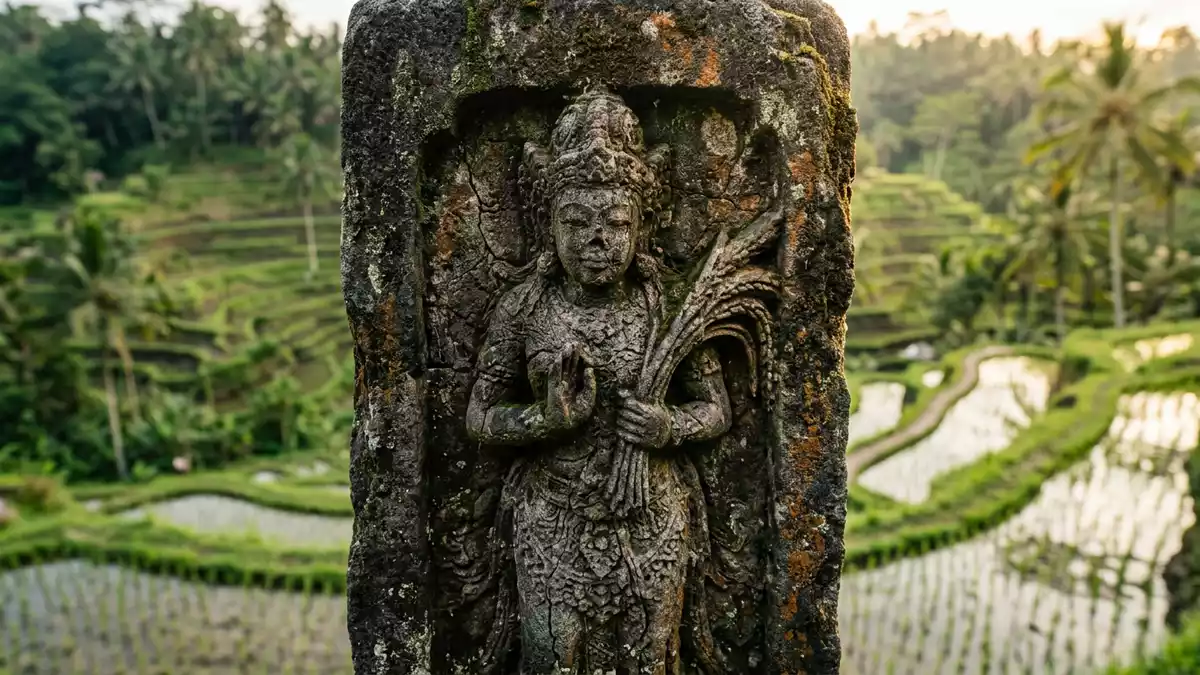
On the hills north of Ubud on the Indonesian island of Bali, Sawah Terasering Tegalalang turns a steep valley into layered terraces of rice fields shaped by water and contour. The terraces form part of the Cultural Landscape of Bali Province, which gained UNESCO World Heritage status in 2012 for landscapes shaped by the island’s traditional subak irrigation system.
A rice valley carved into the Balinese hillside
Sawah Terasering Tegalalang occupies a narrow, steep-sided valley in Tegallalang district in Gianyar Regency, where farmers have long cultivated rice by stepping the slopes into terraces that follow the natural contours of the hillside. From the roadside ridge along Jalan Raya Tegallalang, the land falls away into bands of paddies held in place by earthen banks that track the lie of the slope.occupies a steep-sided valley Narrow paths run along these banks, linking plots and creating routes that lead down from the roadside viewpoints into the valley floor.
The terraces belong to the wider Tegallalang Rice Terrace landscape within Tegallalang district on Bali’s central plateau, where earthen embankments and irrigation channels turn the valley into a visible pattern of curves and levels.Tegalalang Rice Terrace landscape Water runs along the edges of the terraces in small channels, linking the upper slopes with plots lower down and tracing the lines of the relief in water and earth.
Subak irrigation and the Cultural Landscape of Bali Province
The structure of Sawah Terasering Tegalalang is closely tied to Bali’s subak irrigation system, a cooperative network of canals, weirs and farmer associations managed through village water temples and rooted in Balinese Hindu concepts of harmony between humans, nature and the divine.Bali’s traditional irrigation cooperative Historical overviews trace the beginnings of organised water management on Bali to the revered sage Rsi Markandeya, associated with the emergence of subak and the carving of terraced landscapes in valleys such as Ceking north of Ubud.water management in Bali began with Rsi Markandeya
In 2012, the Cultural Landscape of Bali Province, including the Tegallalang Rice Terrace area, was inscribed on the UNESCO World Heritage list for the way the subak system underpins both agriculture and ritual life across parts of the island.inscribed as a UNESCO World Heritage site The UNESCO designation recognises terraced rice landscapes such as Sawah Terasering Tegalalang as cultural constructions shaped over generations by shared labour and water management rather than by a single architect or ruler.Cultural Landscape of Bali Province: the Subak System
Names, setting and views over the terraces
Locally, the name Sawah Terasering Tegalalang literally means terraced rice fields of Tegalalang, combining the Indonesian words for rice fields and terracing with the name of the area north of Ubud.“Sawah Terasering Tegalalang” meaning Internationally, the valley is widely referred to as the Tegallalang Rice Terraces or Tegallalang Rice Terrace, terms that describe the same stepped rice landscape above the Ceking area in Tegallalang district.Tegalalang Rice Terraces
Sawah Terasering Tegalalang lies north of central Ubud along Jalan Raya Tegallalang, a road that follows the ridge beside the valley and offers viewpoints into the terraces from several spots along its length.lies north of Ubud in Tegallalang district From these viewpoints, the valley reads as a layered amphitheatre of rice fields, with the slopes cut into successive bands and irrigation channels drawing lines of water across the green surfaces.
Visiting Sawah Terasering Tegalalang: what travellers from Western Europe should know
- Sawah Terasering Tegalalang lies in Tegallalang district in Gianyar Regency on Bali, along Jalan Raya Tegallalang north of Ubud, reached by road transport from the town.
- The terraces occupy a steep valley, and paths down into the rice fields run along earthen banks and slopes, demanding sure footing on uneven, sometimes muddy ground.
- The surrounding landscape forms part of Bali’s central uplands, with roadside viewpoints looking across the terraced valley and, in places, towards forested hills beyond.
- The official language is Indonesian and the currency is the Indonesian rupiah.
- Entry requirements depend on your nationality; UK travellers can check the FCDO travel advice at gov.uk/foreign-travel-advice, Irish travellers the Department of Foreign Affairs at ireland.ie.
Searching for Sawah Terasering Tegalalang on social platforms
These links open searches for Sawah Terasering Tegalalang on each platform.
Frequently asked questions about Sawah Terasering Tegalalang
Where is Sawah Terasering Tegalalang located?
Sawah Terasering Tegalalang is in Tegallalang district in Gianyar Regency on the island of Bali in Indonesia, along Jalan Raya Tegallalang north of central Ubud.
What should visitors expect on a visit?
Visitors encounter a steep valley cut into terraces of rice paddies, with viewpoints along the roadside ridge and narrow paths tracing the earthen banks down through the fields.
What makes Sawah Terasering Tegalalang distinctive?
The terraces form part of the UNESCO-listed Cultural Landscape of Bali Province, where the traditional subak irrigation system shapes both the stepped rice fields and their wider cultural setting.


