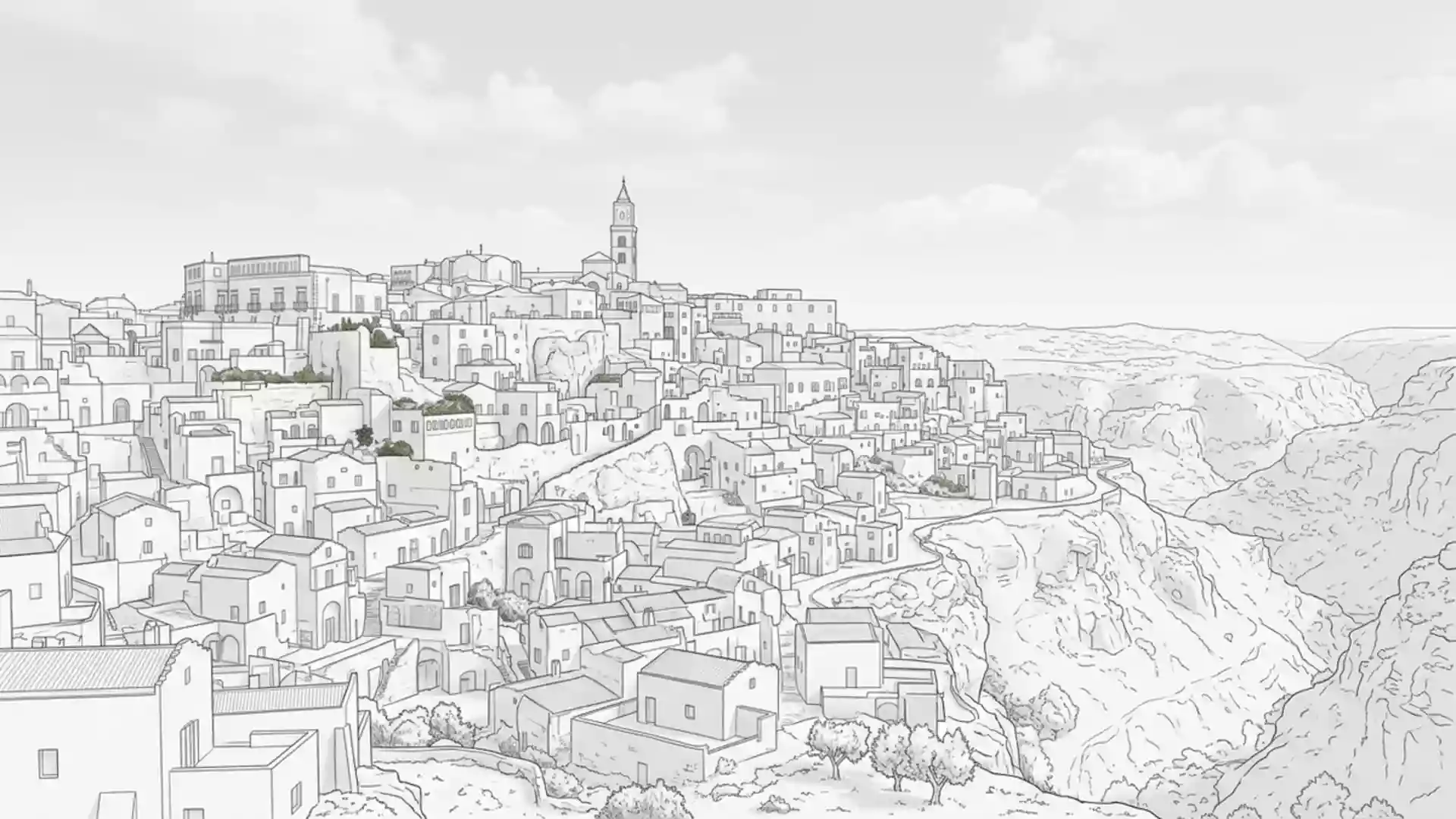
Sassi di Matera, the stone labyrinth above Matera’s gorge
Published on 09/02/2026 at 21:02 | Editorial responsibility: Rafael Müller, Editor-in-Chief AD HOC NEWS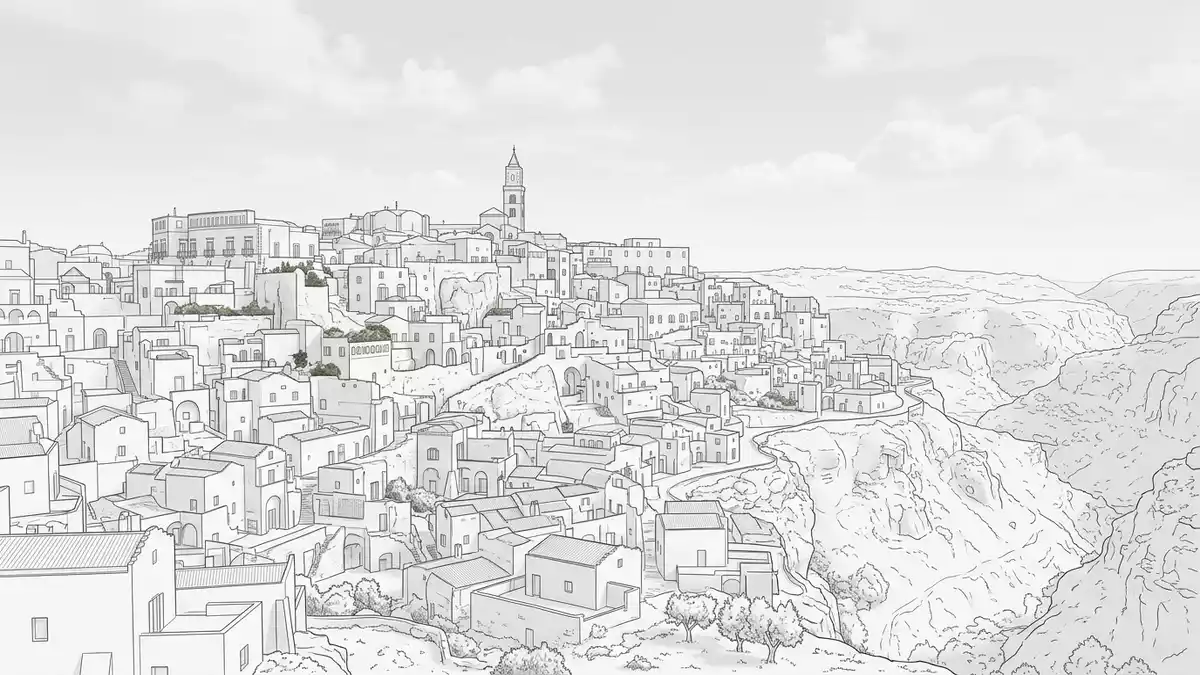
Sassi di Matera is the stony heart of Matera in southern Italy, a stacked landscape of dwellings carved into a limestone ravine and layered with centuries of human habitation. Recognised as a UNESCO World Heritage Site in 1993, it forms a dense urban labyrinth where caves, masonry facades and narrow lanes merge into a single slope of stone.
A rock-cut city on the edge of the Gravina gorge
The historic districts known as Sasso Caveoso and Sasso Barisano occupy the flanks of the Gravina di Matera, a canyon cut into the Murgia plateau in Basilicata. They frame the Civita, the older core of Matera that rises on a spur between the two districts and anchors the composition of houses, churches and terraces around it.Sasso Caveoso and Sasso Barisano The limestone of the plateau is soft enough to be hollowed and firm enough to stand, and generations have cut into it to extend natural cavities into deeper rooms, cisterns and passageways.
Seen from across the gorge, Sassi di Matera has the profile of a compact stone town, yet much of its volume is hidden within the rock face. Many dwellings present built facades and small courtyards at the front, while their interiors run back into caves as a sequence of chambers carved from the “tufa” limestone of the Murgia.rupestrian architectures scavati nella roccia Steps link terraces in irregular cascades, and roofs act as platforms for paths and further houses above, turning the settlement into overlapping levels of stone.
From prehistoric shelter to UNESCO World Heritage landscape
Archaeological evidence indicates that the Matera area has been inhabited since the Palaeolithic era, and the cave dwellings of the Sassi developed over millennia into a continuous urban settlement.origins of the Sassi go back to prehistory By the medieval period, houses, rock-cut churches and monastic complexes had formed a dense network along the canyon walls, closely adapted to the contours of the ravine.
In the twentieth century, living conditions in the Sassi deteriorated severely and the cave dwellings became synonymous with overcrowding and poverty, leading the Italian state to evacuate residents in the early 1950s.evacuation of the cave dwellings in 1952 A programme of restoration and reuse followed in the later decades of the century, and in 1993 the Sassi and the Park of the Rupestrian Churches of Matera were inscribed on the UNESCO World Heritage List as an outstanding example of a rock-cut settlement that preserves more than two thousand years of continuity.World Heritage inscription in 1993
Cave houses, rupestrian churches and the stone streets of Matera
Inside the districts, lanes thread between houses that combine masonry construction with rock-cut interiors. Many buildings share walls or roof surfaces, and some dwellings are partially buried in the slope, reached by staircases that climb past successive doorways and small paved areas. Rainwater collection has long been vital here, and the historic settlement is characterised by a network of cisterns and channels integrated into its terraces and courtyards.troglodyte settlement adapted to terrain
Rock-cut churches, many dating back to the medieval period, punctuate the canyon walls and form part of the wider Park of the Rupestrian Churches of Matera. Their interiors are carved from limestone, with frescoed walls in some cases, and they sit among clusters of dwellings and agricultural spaces that testify to a long-standing, integrated way of life on the ravine edge.Park of the Rupestrian Churches of Matera Together, the Sassi and the park are recognised as a cultural landscape in which built structures, religious sites and the rocky terrain form a single, continuous environment.
Visiting Sassi di Matera: what travellers from Western Europe should know
- Sassi di Matera stands on the slopes above the Gravina di Matera in Basilicata, southern Italy, immediately beside the modern quarters of Matera and reached by streets that descend towards the canyon.
- The historic districts are laid out on a steep stone slope with numerous staircases, uneven paving and terraces that act as paths, and moving between levels frequently involves climbing narrow flights of steps.
- The canyon of the Gravina and the limestone plateau of the Murgia surround the Sassi, and viewpoints on the opposite side of the ravine look back towards the stacked houses and rock-cut churches in the cliffs.
- The official language is Italian and the currency is the euro.
Searching for Sassi di Matera on social platforms
These links open searches for Sassi di Matera on each platform.Frequently asked questions about Sassi di Matera
Where is Sassi di Matera located?
It forms the historic cave-dwelling districts of Matera in Basilicata, southern Italy, on the limestone slopes above the Gravina di Matera canyon.
What should travellers expect when visiting?
A visit involves walking through steep stone streets and staircases among cave houses, terraces and rock-cut churches, with views across the ravine and into carved interiors.
What makes Sassi di Matera distinctive among historic towns?
Its defining character lies in the way an extensive urban settlement has been carved directly into a canyon wall of soft limestone, combining caves, masonry and religious sites as one stone landscape.