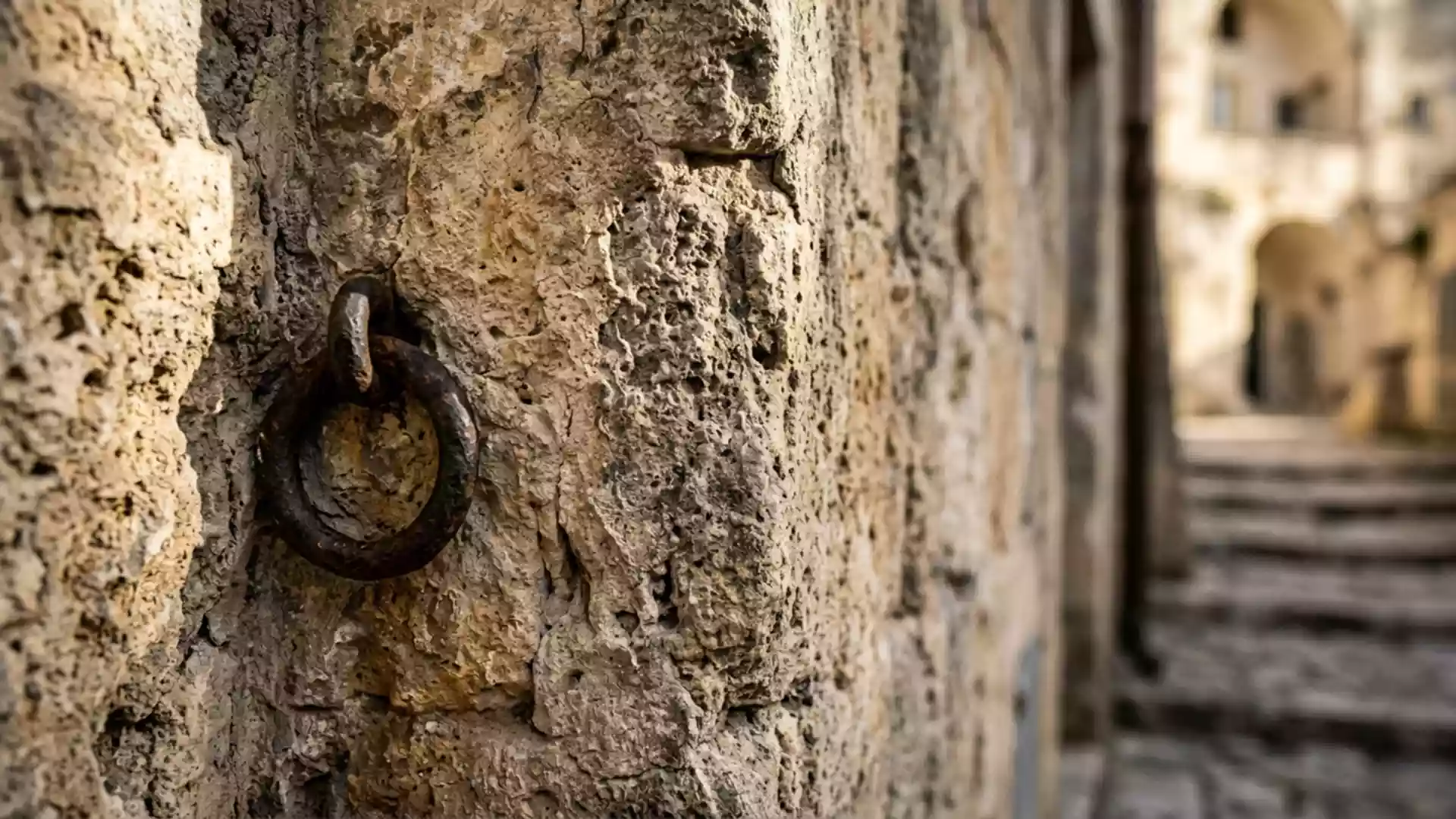
Sassi di Matera, a stone city carved into a ravine
Published on 09/11/2026 at 06:45 | Editorial responsibility: Rafael Müller, Editor-in-Chief AD HOC NEWS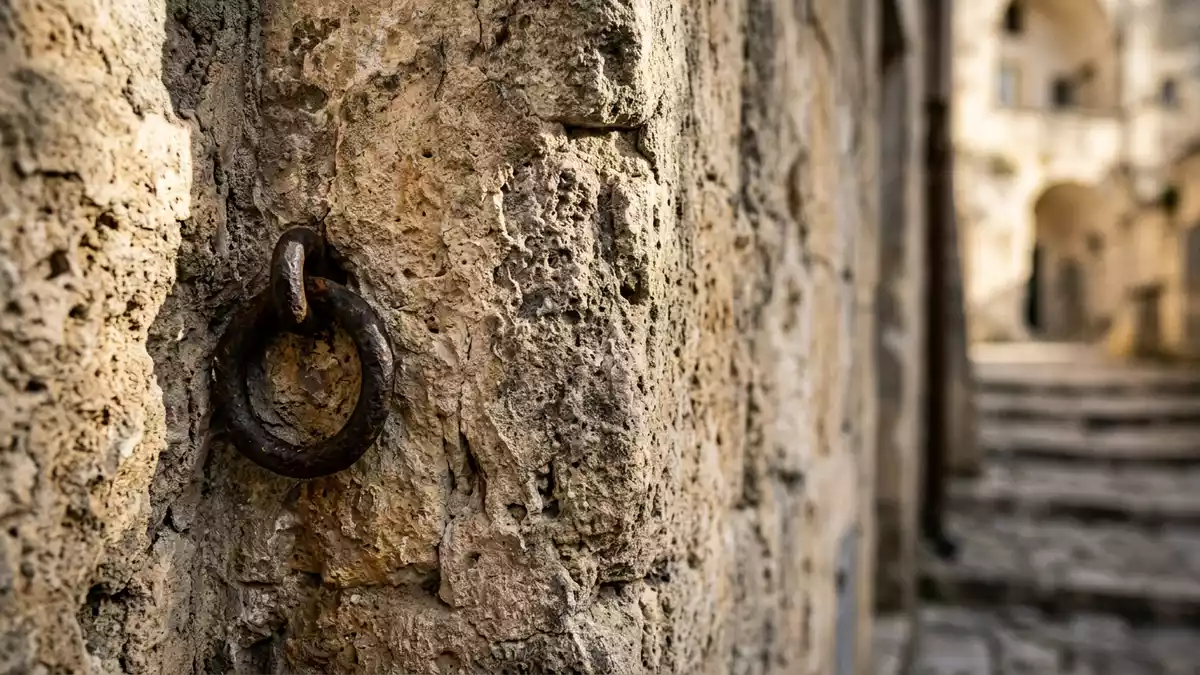
On the steep sides of a rocky ravine at Matera in southern Italy, Sassi di Matera forms a compact stone city where houses, lanes and churches seem to grow out of the rock itself. The twin districts of Sasso Caveoso and Sasso Barisano descend towards the Gravina gorge in terraces of pale limestone, creating a landscape in which façades, staircases and cave interiors merge into a single urban fabric. Along with the surrounding park of rupestrian churches, this historic settlement is recognised as a UNESCO World Heritage Site, reflecting a cultural continuum that reaches back to the Paleolithic period and extends into the twentieth century.
A rock?cut city in Basilicata’s limestone ravine
Sassi di Matera lies on the edge of the Murge plateau in the Basilicata region, where the Gravina river has cut a deep gorge into soft Miocene limestone. Over time, inhabitants carved dwellings, cisterns and passageways into the ravine walls, then added masonry façades and upper storeys that line the slopes in dense tiers. The result is a settlement in which rock?cut interiors open behind built fronts, and steep external stairways thread between roofs, terraces and small courtyards.The Sassi and the Park of the Rupestrian Churches of Matera are described as an exemplary troglodyte settlement, adapted closely to its terrain and ecosystem, with continuity of habitation over more than two millennia.
The two principal districts, Sasso Caveoso and Sasso Barisano, occupy opposing slopes of the ravine and are separated by the Gravina’s channel. In Sasso Caveoso, many dwellings retain deep cave interiors with minimal façades, emphasizing their excavation into the rock face. Sasso Barisano, closer to the modern centre of Matera, shows more built elements facing the streets, including multi?storey houses stacked one above another so that the roof of one forms the terrace of the next.Sassi di Matera is often described as an underground city because so much of its volume is hidden within the limestone rather than expressed outwardly.
Layers of time: from prehistoric shelters to twentieth?century life
Archaeological evidence indicates that the Matera ravine has been used by humans since the Paleolithic, when natural cavities offered shelter on the steep slopes. Over succeeding millennia, Neolithic communities and later historic populations deepened caves, cut channels for water and developed more complex dwelling clusters. The built fabric recognisable as an urban settlement emerged particularly during the medieval period, when houses, alleyways and rock?cut churches formed a dense network on the ravine sides.Layers of Time emphasises how the Sassi record successive stages in human history through their architectural forms.
By the nineteenth and early twentieth centuries, the Sassi districts had become associated with poverty and overcrowded living conditions. Accounts from the 1940s describe families, animals and storage sharing cramped cave spaces with limited light and ventilation. In the early 1950s, relocation programmes moved many residents to housing on the plateau above, marking a major shift in the use of the ravine settlement.Historical descriptions of the Sassi refer to significant health problems linked to these conditions and to the subsequent evacuation of the cave districts.
UNESCO recognition and rupestrian churches
In 1993 Sassi di Matera, together with the surrounding landscape known as the Park of the Rupestrian Churches of Matera, was inscribed on the UNESCO World Heritage List as a cultural site under criteria (iii), (iv) and (v. The inscription highlights the settlement as an outstanding example of a rock?cut urban ensemble that illustrates significant stages in human history and demonstrates traditional human interaction with its environment.Matera’s UNESCO listing notes an inscribed area of 1,016 ha within a broader buffer zone that protects the wider ravine landscape.
Within and beyond the dwelling clusters, numerous rupestrian churches – rock?hewn places of worship decorated with frescoes – punctuate the cliffs and slopes. Some are simple cave chapels; others have more elaborate carved interiors that open behind modest entrances along lanes or terraces. These churches, together with monasteries and hermitages cut into the ravine, form an integral part of the World Heritage property.UNESCO documentation describes this ensemble as a testimony to rupestrian civilisation in the Mediterranean, shaped by both religious and domestic use of the rock.
Visiting Sassi di Matera: what travellers from Western Europe should know
- Sassi di Matera forms part of the city of Matera in Basilicata in southern Italy. It lies on the slopes of the Gravina ravine below the modern town on the plateau, reached on foot from streets above and by road that descends into the historic districts.
- The terrain consists of steep limestone slopes cut by stairways, stepped lanes and uneven surfaces. Moving through the Sassi involves frequent climbs and descents on stone steps and paths that pass close to ravine edges.
- Matera is served by regional road connections towards Bari and other Apulian centres, with onward rail links from those cities; local transport and walking routes connect the modern neighbourhoods on the plateau with the historic Sassi districts in the ravine.
- Within the Sassi, many passages are narrow and follow the contours of the hillside, and some interiors remain partly cave?like, with limited natural light, which may require care while moving between outside terraces and enclosed spaces.
- The official language is Italian and the currency is the euro (EUR).
Searching for Sassi di Matera on social platforms
These links open searches for Sassi di Matera on each platform.
Frequently asked questions about Sassi di Matera
Where is Sassi di Matera located?
Sassi di Matera is part of the city of Matera in the Basilicata region of southern Italy, descending from the modern town into the Gravina ravine.
What should visitors expect when walking through the Sassi districts?
Visitors encounter steep stairways, terraced lanes and stone surfaces, with many dwellings and churches partly carved into the limestone, creating a complex, multi?level streetscape.
What makes Sassi di Matera distinctive among historic urban sites?
Its combination of rock?cut dwellings, rupestrian churches and masonry houses in a ravine, together with documented habitation since the Paleolithic and UNESCO recognition in 1993, gives Sassi di Matera a particular character.