
San Miguel de Allende, a pink-stone highland city of baroque streets
Published on 09/10/2026 at 18:09 | Editorial responsibility: Rafael Müller, Editor-in-Chief AD HOC NEWS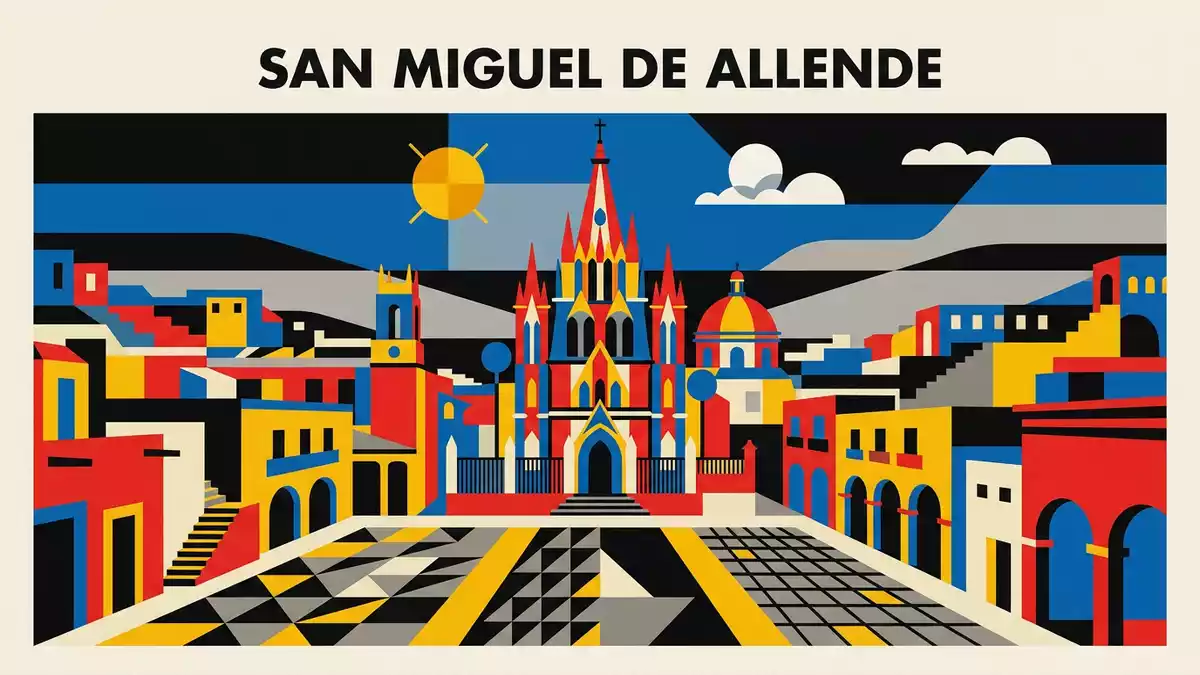
San Miguel de Allende in central Mexico is a colonial highland city of stone streets and plazas whose historic centre forms part of the UNESCO World Heritage property “Protective town of San Miguel and the Sanctuary of Jesús Nazareno de Atotonilco”, inscribed in 2008 as a cultural site for its preserved architecture and town planning linked to Mexico’s independence era.Protective town of San Miguel
A grid of pink stone in the Guanajuato highlands
San Miguel de Allende lies in the state of Guanajuato on the central Mexican plateau, where a regular grid of streets climbs and falls over gentle slopes, framed by houses, churches and civic buildings in local stone and plaster.colonial-era town located in the state of Guanajuato Many facades are rendered in warm tones, with carved stone surrounds to doors and windows and wrought-iron balconies that look over narrow cobbled thoroughfares.
The World Heritage listing confirmed on 8 July 2008 covers a sizeable portion of the historic centre, together with the Sanctuary of Jesús Nazareno de Atotonilco along the road to the north, recognising both the continuity of colonial urban fabric and the ensemble’s association with the Mexican War of Independence.Decision 32 COM 8B.44 Within the inscribed area, streets converge on plazas where religious and civil architecture reflects the evolution from 16th-century Spanish colonial baroque towards neoclassical and neo-Gothic forms over the following centuries.remarkable example of 16th-century Spanish Colonial Baroque architecture
The Parroquia de San Miguel Arcángel and baroque churches
Above the central Plaza de Armas rises the Parroquia de San Miguel Arcángel, a parish church whose current neo-Gothic facade in pink quarry stone was created in the late nineteenth century by local master stonemason Zeferino Gutiérrez, reworking an earlier baroque structure that dates back to the seventeenth and early eighteenth centuries.Parroquia de San Miguel Arcángel The original parish church serving the town was established after San Miguel was founded in the 1540s by Franciscan friars, reflecting the early spread of Spanish settlement along inland routes in New Spain.first parish church built shortly after the town was founded in 1542
The town flourished particularly in the eighteenth century, when religious complexes and urban mansions were constructed on generous plots, their courtyards, arcades and salons illustrating the transition from Mexican baroque towards neoclassical forms.urban mansions transition from Baroque to Neo-Classic Beyond the Parroquia, other churches and chapels contribute towers, domes and stone volumes to the skyline, with carved portals and painted interiors that align San Miguel de Allende with the wider tradition of baroque religious architecture in colonial Mexico.Mexican Baroque architectural style
The Sanctuary of Jesús Nazareno de Atotonilco
North of the city, along the historic route through the highlands, stands the Sanctuary of Jesús Nazareno de Atotonilco, a complex of churches and devotional spaces whose richly painted interiors have been described as a masterpiece of Mexican baroque art.Sanctuary of Jesús Nazareno de Atotonilco Murals and altarpieces cover walls and vaults, combining religious iconography with decorative motifs in dense compositions that reflect the devotional culture of colonial New Spain.finest examples of Baroque art and architecture in New Spain
The sanctuary and the town are linked in the UNESCO inscription under the title “Protective town of San Miguel and the Sanctuary of Jesús Nazareno de Atotonilco”, acknowledging both the architectural ensemble and the way religious institutions, urban planning and inland roads intersected in this part of Guanajuato.Protective town of San Miguel and the Sanctuary Together they form a cultural landscape where baroque and neo-Gothic architecture in pink stone, cobbled streets and plazas sit within a wider highland setting of fields and low hills.
Visiting San Miguel de Allende: what travellers from Western Europe should know
- San Miguel de Allende lies in central Mexico’s state of Guanajuato and is reached by road from regional cities such as Querétaro and León, both of which have airports served by domestic and international flights.
- Within the historic centre many streets are cobbled and rise on gentle gradients, with stone kerbs and steps around church plazas and between different levels of the grid.
- The city stands on a highland plateau, so temperatures and sunlight can be strong in the dry season, and shade from arcades and interior patios offers relief from direct exposure.
- The Sanctuary of Jesús Nazareno de Atotonilco lies to the north along a rural road, and approaches to the complex involve walking through courtyards and passageways paved in stone.
- The official language is Spanish and the currency is the Mexican peso; entry requirements depend on your nationality, UK travellers can check the FCDO travel advice at gov.uk/foreign-travel-advice, Irish travellers the Department of Foreign Affairs at ireland.ie.
Searching for San Miguel de Allende on social platforms
These links open searches for San Miguel de Allende on each platform.Frequently asked questions about San Miguel de Allende
Where is San Miguel de Allende and what kind of place is it?
San Miguel de Allende is a colonial-era city in the state of Guanajuato in central Mexico, known for its grid of stone streets, plazas and churches.
What should visitors expect on a visit to San Miguel de Allende?
Visitors encounter cobbled streets, warm-toned facades, baroque and neo-Gothic churches such as the Parroquia de San Miguel Arcángel, and highland light over the historic centre.
What makes San Miguel de Allende distinctive among Mexican colonial cities?
The combination of pink-stone neo-Gothic church towers, eighteenth-century mansions and the linked Sanctuary of Jesús Nazareno de Atotonilco has earned UNESCO recognition as the “Protective town of San Miguel and the Sanctuary of Jesús Nazareno de Atotonilco”.


