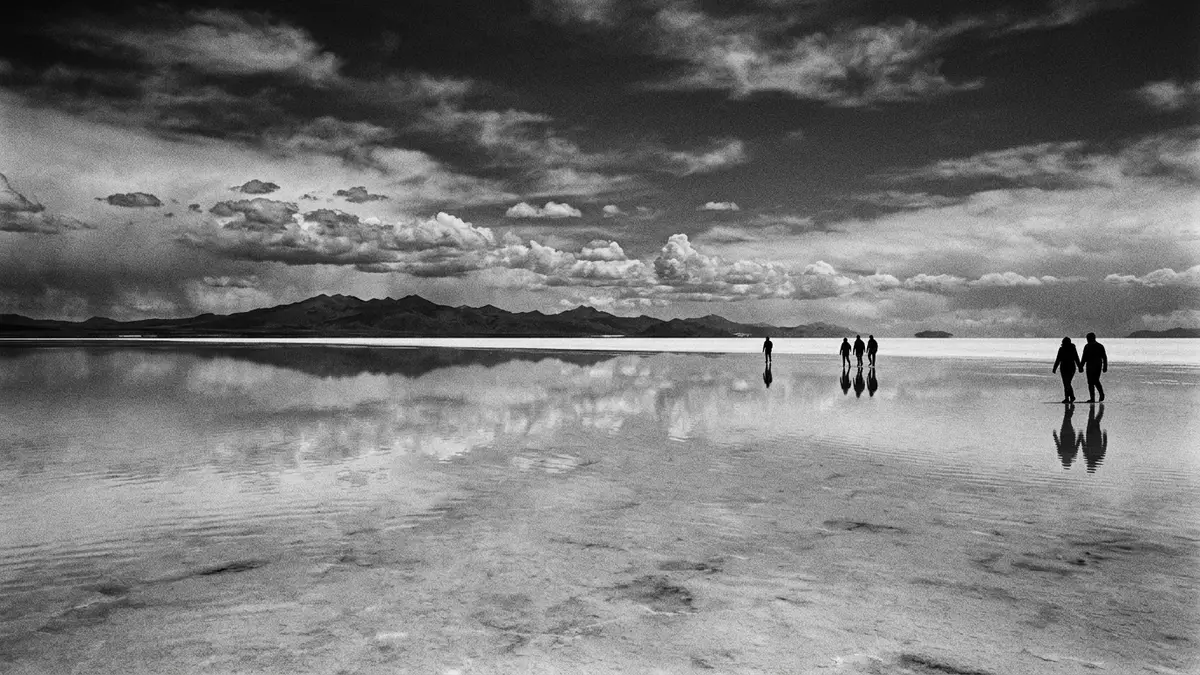
Salar de Uyuni and its white horizon in Bolivia
Published on 08/09/2026 at 15:00 | Editorial responsibility: Rafael Müller, Editor-in-Chief AD HOC NEWS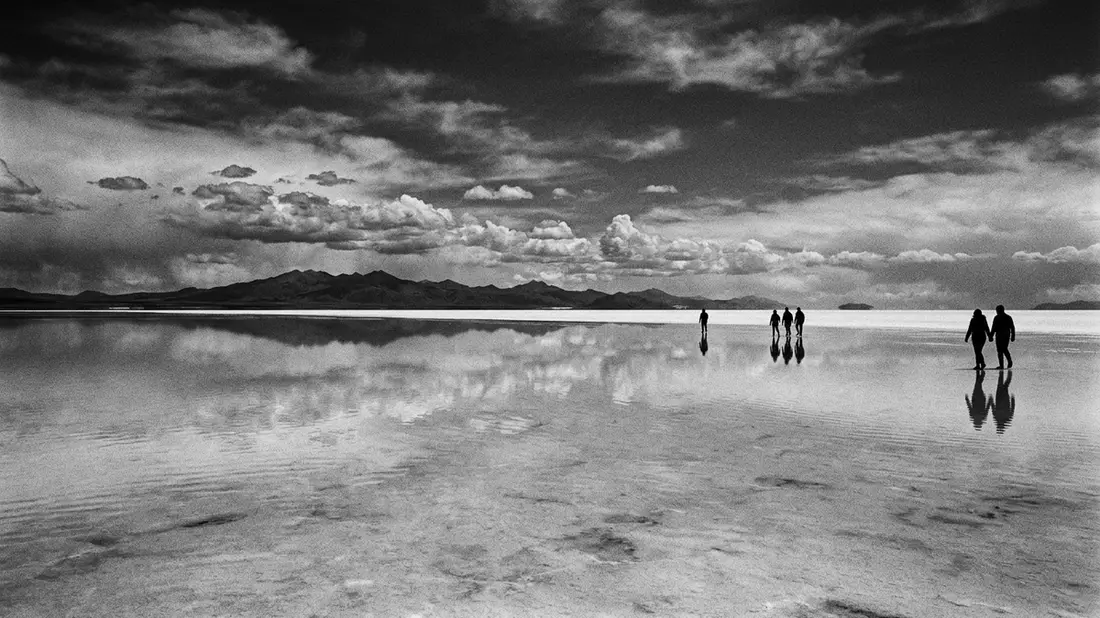
Salar de Uyuni is Bolivia’s vast salt flat near Uyuni, a white expanse that reads as almost level from a distance and becomes richly textured underfoot. Its surface, crust, and mirrored floodwater shift the place from hard ground to reflective plain.
A salt plain shaped by ancient waters
The salar lies in the Andes on the Altiplano, where high-elevation basins preserve the traces of older lakes. The ground is made of salt crust over brine, with polygonal patterns that appear across much of the surface.
The area forms part of a broader landscape of basins, volcanic ridges, and open sky. The light-coloured crust gives the place its stark appearance, while shallow water in the wet season turns sections into a reflective sheet.
Uyuni, trains and the salt economy
Uyuni is the nearest town and the main starting point for trips onto the salar. The place is also tied to the railway heritage of southern Bolivia, with old lines and locomotives around Uyuni recalling the region’s transport history.
Salt extraction remains part of the landscape, alongside travel and photography. The working and touristic uses sit beside one another in a setting that feels both industrial and elemental.
Walking the edge of an immense white surface
At the margins, the salar shows salt ridges, shallow water, and rough transitions between firm and soft ground. Islands of rock and cactus rise from the flatness, breaking the surface with darker forms.
The site is often associated with clear horizons and strong light. Its size and uniform colour make nearby objects, vehicles, and figures stand out sharply against the plain.
Visiting Salar de Uyuni: what travellers from Western Europe should know
- The site is reached from Uyuni by road and by organised trips that cross the salt flat.
- Admission arrangements and opening hours are set by the site's operator and change with the season; the official website is the only binding source.
- The dry season gives firmer surfaces, while the wet season brings shallow water and reflective views.
- The surface can be uneven, with salt crust, soft patches, and open exposure to altitude.
- Spanish is the main language in the area, and cash remains useful in Uyuni and on excursions.
- Entry requirements depend on your nationality. UK travellers should check the FCDO travel advice at gov.uk/foreign-travel-advice; Irish travellers the Department of Foreign Affairs at ireland.ie; EU and EEA citizens their own national foreign ministry.
Searching for Salar de Uyuni on social platforms
These links open searches for Salar de Uyuni on each platform.
Frequently asked questions about Salar de Uyuni
Where is Salar de Uyuni?
It lies in south-western Bolivia, near the town of Uyuni, on the high Andean Altiplano.
What should visitors expect?
Expect an open salt surface, strong glare, changing ground conditions, and wide horizons. Access usually involves road travel from Uyuni.
What makes it distinctive?
The salar combines a salt crust, seasonal water, and an immense flatness that turns the landscape into a bright, almost abstract field.