
Sainte-Chapelle and the Gothic architecture of light
Published on 09/23/2026 at 08:14 | Editorial responsibility: Rafael Müller, Editor-in-Chief AD HOC NEWS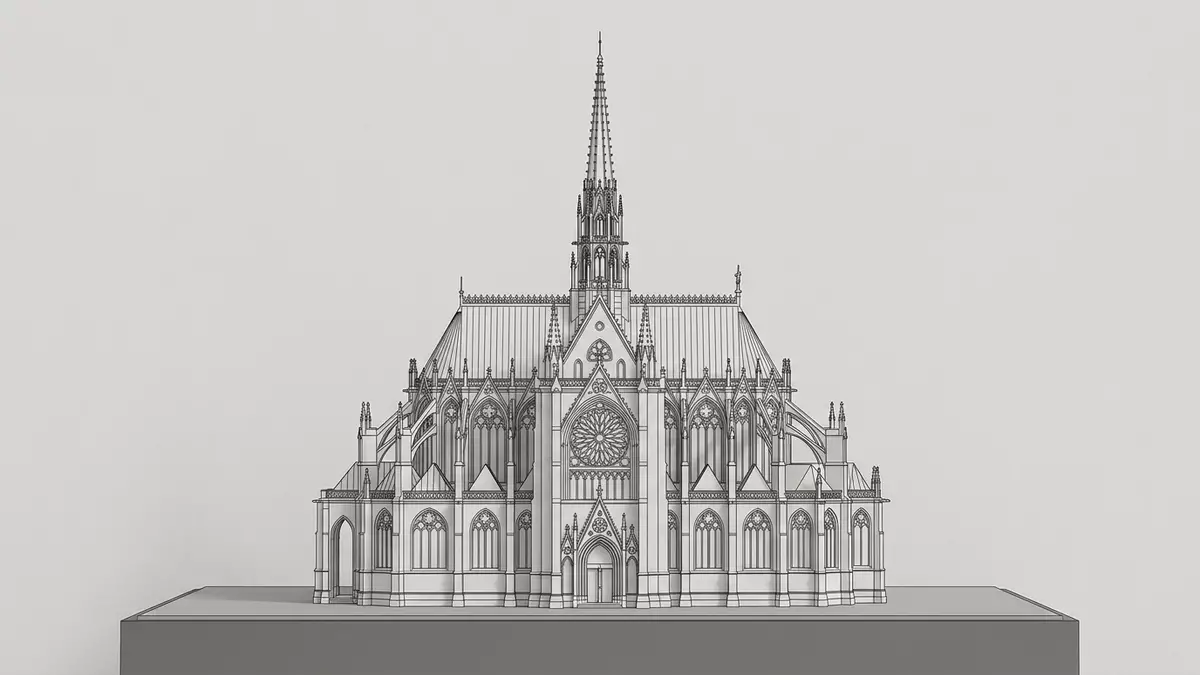
Sainte-Chapelle in Paris is a royal chapel whose upper level is framed by stained glass. Built for Louis IX and consecrated in 1248, it places colour, biblical narrative and Gothic structure within the medieval Palais de la Cité.
Sainte-Chapelle: a chapel built around colour
The building occupies the Île de la Cité, within the former royal palace complex beside the Seine. Its architectural identity belongs to Rayonnant Gothic, the thirteenth-century phase of Gothic design associated with increasingly elaborate tracery and broad glazed surfaces. Rayonnant Gothic chapel is the established description of its form.
Sainte-Chapelle is arranged on two levels. The lower chapel has a more enclosed character, with coloured decoration, painted surfaces and a low vaulted space. The upper chapel opens into a tall room lined by stained-glass windows, where slender stone supports divide the glazed wall surfaces.
Louis IX, relics and the royal palace
Louis IX, later known as Saint Louis, commissioned Sainte-Chapelle in the thirteenth century. Construction took place between 1242 and 1248, and the chapel was consecrated in 1248. the chapel’s royal history remains visible in its relationship with the Palais de la Cité.
The upper chapel housed relics associated with the Passion of Christ, including the Crown of Thorns and a fragment of the True Cross. The relics connected the chapel with the devotional life of the French monarchy, while the building served as a royal chapel within the palace. Its setting therefore joins religious ceremony, dynastic history and court architecture in one compact monument.
The upper chapel and its medieval glass
The stained glass forms Sainte-Chapelle’s most extensive visual field. Fifteen large windows occupy the upper chapel, with scenes presenting biblical history from Genesis through the life of Christ. The sequence includes 1,113 scenes, arranged within a programme that links sacred history with the relics kept in the building. the fifteen stained-glass windows remain central to the chapel’s identity.
The western end contains a rose window added in the fifteenth century, with tracery associated with the Flamboyant Gothic period. This later element differs from the earlier windows while remaining part of the chapel’s visual composition. Stone sculpture, painted details and coloured glass create a richly layered interior rather than a bare structural shell.
The chapel’s history also includes damage during the French Revolution and restoration work in the nineteenth century. These interventions form part of the building’s documented history, alongside its medieval construction and its continued presence within the Palais de la Cité.
Visiting Sainte-Chapelle: what travellers from Western Europe should know
- Sainte-Chapelle stands at 10 Boulevard du Palais on the Île de la Cité, in Paris’s first arrondissement. The nearby Cité and Châtelet transport connections serve the central island.
- The monument has two distinct levels. The lower chapel is reached before the upper chapel, where stairs lead to the tall room of stained-glass windows.
- The site lies within the Palais de la Cité complex, close to the Seine and near other historic buildings on the Île de la Cité.
- The official language is French and the currency is the euro.
Searching for Sainte-Chapelle on social platforms
These links open searches for Sainte-Chapelle on each platform.
Frequently asked questions about Sainte-Chapelle
Where is Sainte-Chapelle?
Sainte-Chapelle is on the Île de la Cité in central Paris, within the Palais de la Cité complex at Boulevard du Palais.
What can visitors expect inside?
The visit includes a lower chapel and an upper chapel, with stairs connecting the levels. The upper chapel contains tall stained-glass windows filled with biblical scenes.
What makes Sainte-Chapelle distinctive?
Its combination of a thirteenth-century royal chapel, Rayonnant Gothic architecture and an extensive medieval stained-glass programme gives the building its distinctive character.


