
Sainte-Chapelle and Parisian Gothic in light and glass
Published on 09/02/2026 at 07:47 | Editorial responsibility: Rafael Müller, Editor-in-Chief AD HOC NEWS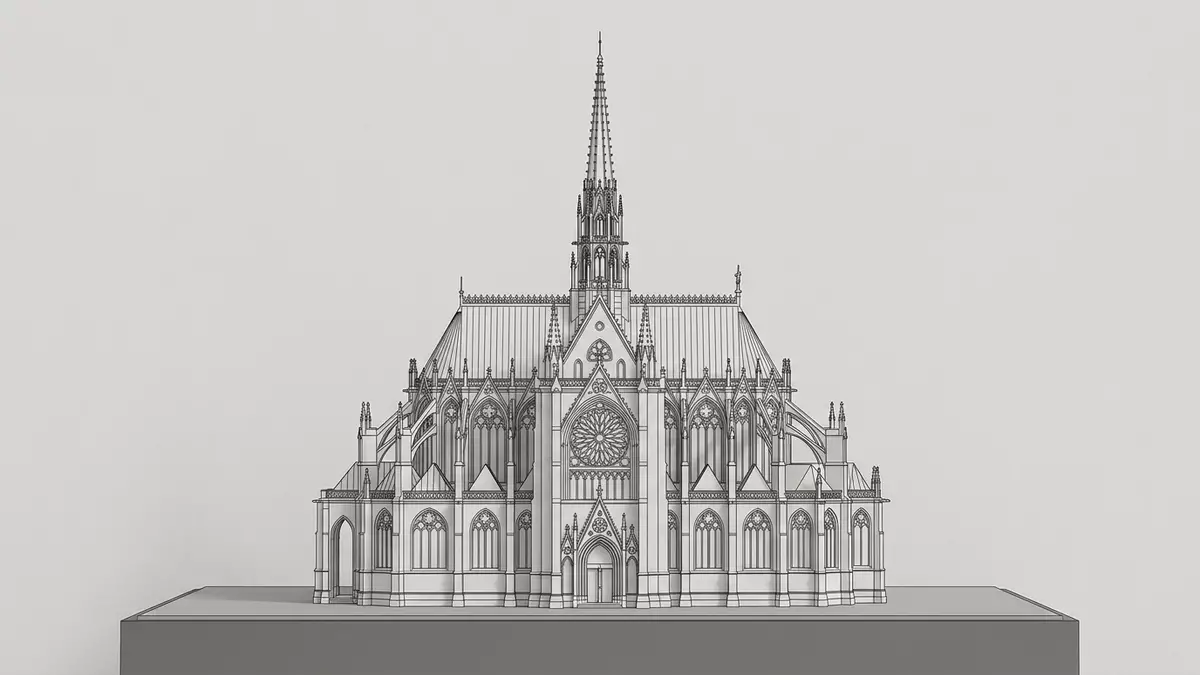
Sainte-Chapelle in Paris is a thirteenth-century royal chapel whose walls give way to stained glass and slender stone framing. Built for Louis IX, it remains one of the clearest surviving expressions of Rayonnant Gothic in FranceRayonnant Gothic.
Sainte-Chapelle and the Capetian court
The chapel stands on the Île de la Cité inside the former royal complex of the Palais de la Cité, placing Sainte-Chapelle at the historic core of Paris. Its patron was Louis IX, later Saint Louis, and the building was consecrated in 1248Louis IXconsecrated in 1248.
The chapel’s two-level arrangement remains central to its character. The lower chapel is darker and more compact, while the upper chapel rises into tall glass surfaces and ribbed vaultstwo-level arrangement.
Glass, stone and the upper chapel
The upper chapel carries the visual weight of the building. Its coloured glazing dominates the walls, leaving only narrow bands of masonry between the windows and the supporting structure.
That balance between structure and glass is what gives Sainte-Chapelle its lasting appeal. The chapel reads less like a single enclosed room than a frame for light, colour and biblical imagery, all contained within a compact royal shrine.
From royal shrine to city monument
Sainte-Chapelle began as a palace chapel tied to the Capetian monarchy and the relics associated with the Passion of Christ. Its later history brought damage and restoration, but the building still presents itself as a Gothic structure of exceptional delicacy and ambitionpalace chapelGothic structure.
The interior is compact, but the visual effect is expansive. Stone tracery, painted surfaces and coloured glass create a concentrated monument that belongs as much to Parisian history as to religious architecture.
Visiting Sainte-Chapelle: what travellers from Western Europe should know
- The chapel is on the Île de la Cité, close to the Seine and the Palais de Justice. Metro line 4 stops at Cité, and Saint-Michel is another nearby rail point.
- The building has a lower chapel and an upper chapel reached by stairways within the structure. The upper level is the one defined by large glazed walls and slender stone supports.
- The chapel sits within a dense historic island setting, with the Conciergerie and Notre-Dame in the same urban landscape. The approach is through central Paris streets rather than an open square.
- English is not the official language in France. The official language is French and the currency is the euro.
Searching for Sainte-Chapelle on social platforms
These links open searches for Sainte-Chapelle on each platform.
Frequently asked questions about Sainte-Chapelle
Where is Sainte-Chapelle?
It stands on the Île de la Cité in central Paris, within the former royal and judicial complex of the Palais de la Cité. The nearest transport reference in common use is Cité on metro line 4.
What does a visit reveal?
The building is compact, but the upper chapel contains the main interior display, with stained glass set between fine stone supports. The lower chapel offers a more enclosed contrast within the same structure.
What makes Sainte-Chapelle distinctive?
Its strongest feature is the extraordinary amount of glass in the upper chapel, set within a refined Gothic frame. The building also carries the historical weight of Louis IX and 1248.


