Sacsayhuaman, the stone citadel above Cusco
Published on 08/28/2026 at 15:04 | Editorial responsibility: Rafael Müller, Editor-in-Chief AD HOC NEWS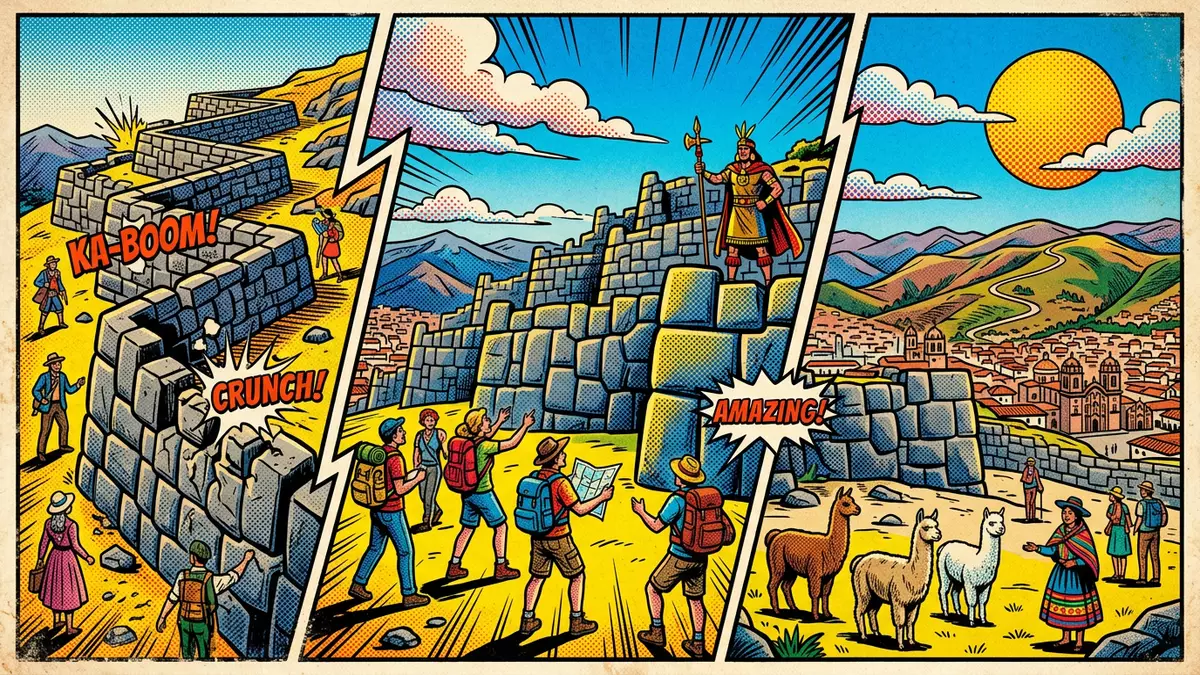
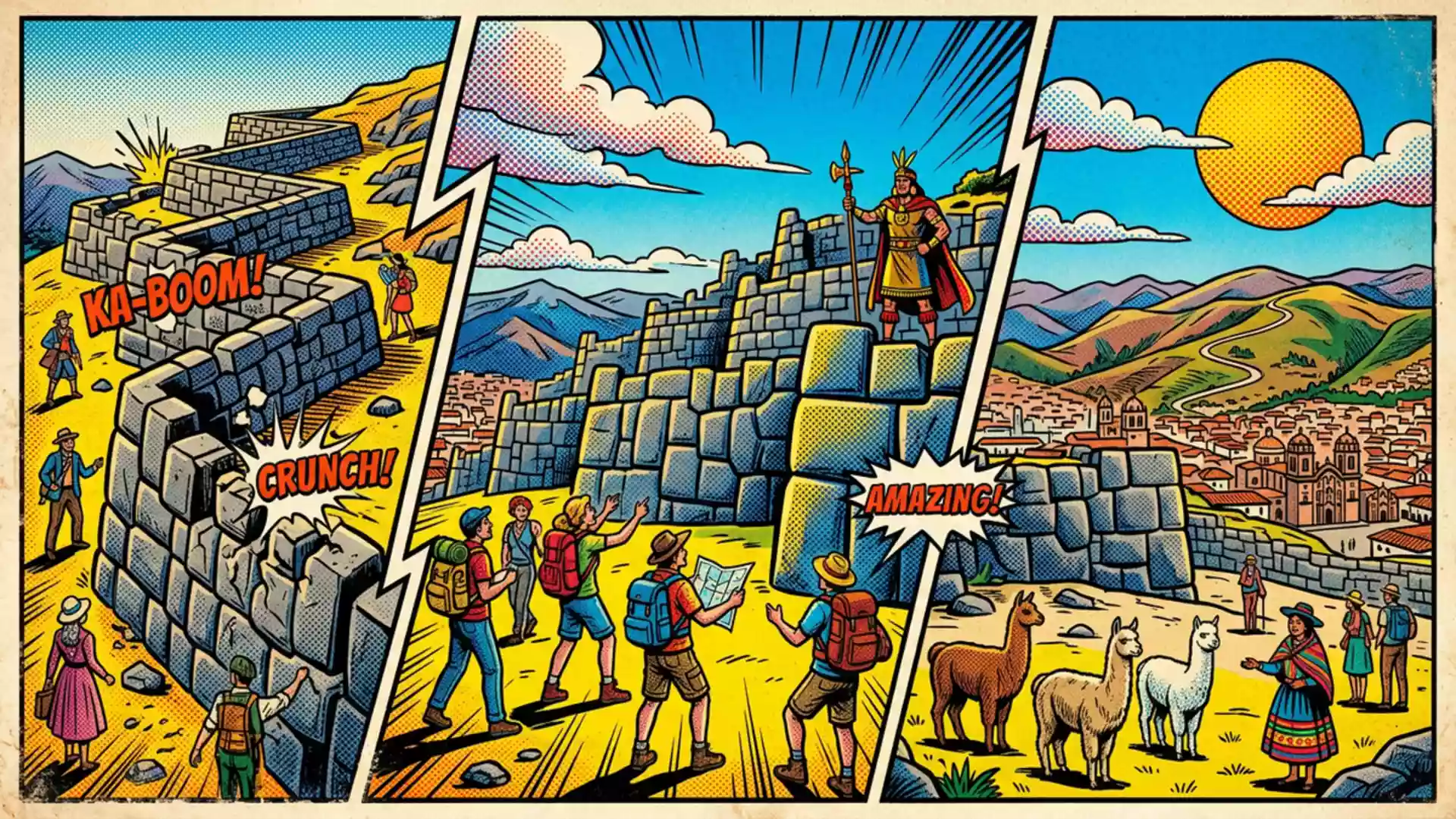
On a hillside above Cusco in southern Peru, Sacsayhuaman stretches across the slope as a monumental Inca stone citadel. Its massive terraces and zigzag walls create a stepped front of masonry that dominates the ridge and looks out over the former capital of the Inca Empire.
Stone walls on the edge of the Inca capital
Sacsayhuaman occupies a hilltop on the northern outskirts of Cusco, with the city spreading below and the surrounding Andean landscape rising beyond. From the grassy terraces of the site, the urban grid of Cusco lies in the valley, framed by mountains that emphasise how deliberately the citadel claims the higher ground above the historic centre.Inca fortress overlooking Cusco The location ties the complex closely to the political heart of the empire, giving visitors a direct sense of how the site was positioned in relation to the city it guarded.
The complex forms part of the wider historic ensemble of Cusco, which is recognised on the World Heritage List as an exceptional surviving expression of Inca urban planning and stone construction.citadel on the northern outskirts At Sacsayhuaman, that planning is expressed in open ceremonial spaces, defensive works and elevated viewpoints, all integrated into a single archaeological park above the city. The result is a place where the physical relationship between fortress and capital is still legible in the terrain.
Construction under Pachacuti and his successors
Work on Sacsayhuaman took place during the fifteenth century, in the period when Cusco served as the capital of a rapidly expanding Andean empire. The fortress complex is associated particularly with the reign of Pachacuti Inca Yupanqui, the ninth Inca ruler, whose rule in the fifteenth century transformed Cusco and its surrounding landscape.built in the 15th century during the reign of Pachacuti Inca Yupanqui Later rulers extended and refined the complex, contributing to the scale of walls and terraces that can be traced across the hillside.
The citadel also played a central role in the Spanish conquest of the region. In 1536, during the siege of Cusco, Inca forces seized the fortress above the city and used it as a stronghold in their attempt to retake the capital.Incas seized the Sacsayhuaman fortress in 1536 Standing among the remaining structures, it is possible to imagine how the high position and robust stone works shaped that confrontation between Inca and Spanish forces in the sixteenth century.
Terraces, zigzag walls and carved rock
The most striking feature at Sacsayhuaman is a series of enormous stone walls laid out in a zigzag pattern across three levels. Built from large blocks of stone cut and fitted together with remarkable precision, these front terraces form the visible “teeth” of the fortress line.outer walls constructed in a zigzag formation across three levels Visitors move alongside these works on broad grassy platforms, able to see at close range how the interlocking blocks step back and forward along the plan of the wall.
Behind the zigzag front lies a broader archaeological zone, with open parade grounds, carved outcrops of bedrock and areas associated with religious or ceremonial use. Some sections of exposed rock have been worked into smooth undulating surfaces that are distinct from the cut masonry of the walls, giving the site a mixture of natural and built forms across its area.different zones within the archaeological park Together, the terraces, walls and carved stone create a layered topography in which military, ceremonial and civic spaces can all be read in the remains.
Visiting Sacsayhuaman: what travellers from Western Europe should know
- Sacsayhuaman lies north of Cusco’s historic centre on a hillside above the city and can be reached on foot or by road from the Plaza de Armas area.archaeological site north of the historic centre
- The site stands at an altitude of around 3,700 m (12,100 ft), and exploring the terraces involves walking on sloping ground and climbing short flights of stone steps.Inca city 2 km from Cusco at an altitude of 3,700 m
- Sacsayhuaman forms one of several Inca sites in and around Cusco, so it is often combined with visits to other nearby archaeological areas on the same hillside and in the surrounding valleys.part of a wider set of archaeological sites
- The official language is Spanish and the currency is the Peruvian sol, and guided visits are widely available for travellers who wish to explore the site in more detail.
- Entry requirements depend on your nationality; UK travellers can check the FCDO travel advice at gov.uk/foreign-travel-advice, Irish travellers the Department of Foreign Affairs at ireland.ie.
Searching for Sacsayhuaman on social platforms
These links open searches for Sacsayhuaman on each platform.
Frequently asked questions about Sacsayhuaman
Where is Sacsayhuaman located in relation to Cusco?
Sacsayhuaman stands on a hillside north of Cusco’s historic centre, overlooking the city from a ridge that forms part of the wider urban basin.
What should visitors expect when exploring the site?
Visitors encounter vast stone terraces, zigzag walls, open grassy areas and carved rock, all at high altitude and connected by sloping paths and short staircases.
What makes Sacsayhuaman distinctive among Inca sites?
The combination of colossal masonry, zigzag defensive lines and its elevated position directly above the former Inca capital gives Sacsayhuaman a particularly monumental character.