
Ruinas de Sao Paulo and the stone façade that defines Macau
Published on 08/21/2026 at 07:29 | Editorial responsibility: Rafael Müller, Editor-in-Chief AD HOC NEWS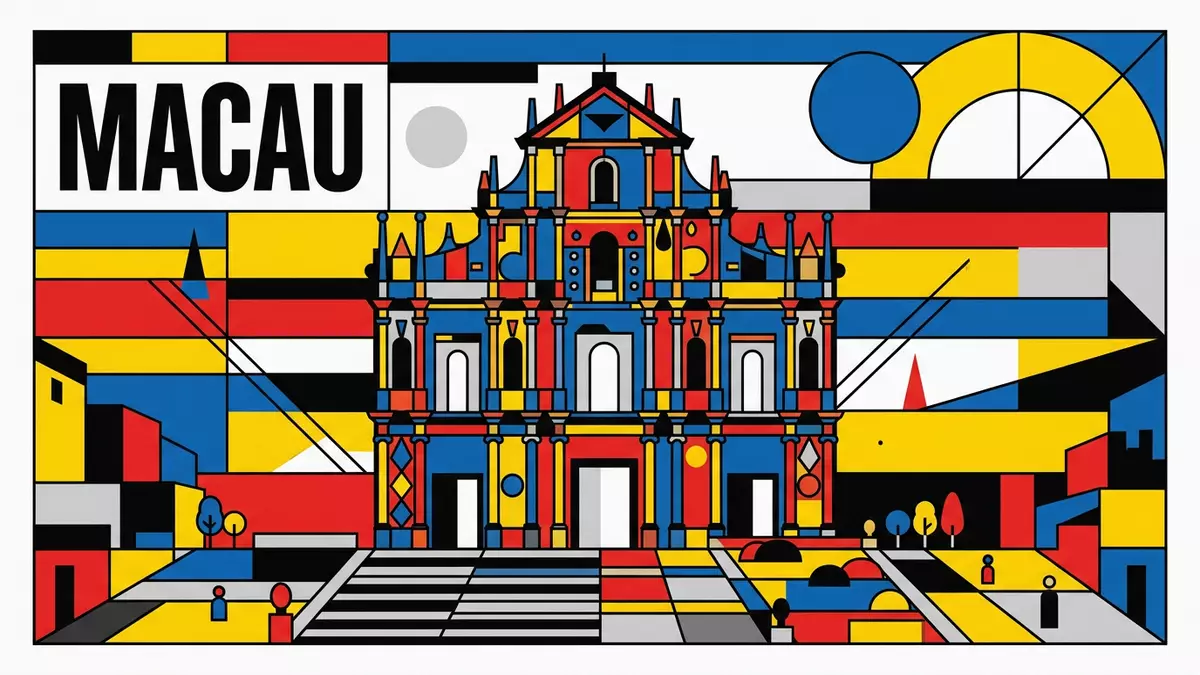
In Macau, Ruinas de Sao Paulo refers to the surviving stone façade of a seventeenth-century Catholic complex, standing above a flight of steps as a fixed point in the city’s historic centre. Built as the Church of Mater Dei and the adjoining College of St Paul during the early 1600s, the structure was largely destroyed by fire in 1835, leaving the front wall and foundations as the most recognisable remnant of Jesuit Macau.Ruínas de São Paulo
A baroque façade on a Jesuit hill
Ruinas de Sao Paulo stands in Santo António district on Rua de Sao Paulo, rising above a broad stairway that leads from the surrounding streets towards the former Jesuit acropolis.Ruínas de S. Paulo The church that once occupied this platform, dedicated as Mater Dei, is dated to construction between 1602 and 1640, reflecting early baroque architecture filtered through Portuguese colonial practice.1637–1640 granite façade
Together with the adjacent Fortaleza do Monte, the former church and college once formed a fortified religious cluster described as the acropolis of Macau, sitting above the streets that now form the Historic Centre.acrópole de Macau The granite façade is divided into tiers with classical columns, relief sculptures and inscriptions, combining European baroque motifs with references to East Asian iconography carved into the stone. The remains of the College of St Paul lie behind and beside the façade, forming an archaeological zone that documents the Jesuit presence in this part of Macau.Ruins of São Paulo complex
From church and college to UNESCO-listed ruins
The Church of Mater Dei and the adjoining College of St Paul were built by the Society of Jesus as a Catholic hub for Macau, with the college training clergy and missionaries for work across East Asia.Jesuit religious complex The façade visible at Ruinas de Sao Paulo was completed in the seventeenth century, after which the complex functioned as one of the most prominent Catholic sites in the Portuguese colony.elaborate granite façade In 1835 a fire destroyed most of the church and college buildings, leaving only the stone façade and parts of the foundations, effectively transforming the site into ruins while preserving its outline against the sky.incêndio em 1835
During the twentieth century, conservation work stabilised the remaining masonry and recovered archaeological material, and Ruinas de Sao Paulo became integrated into the wider protection of Macau’s historic centre.restoration efforts In 2005, the ruins, together with the surrounding streets and neighbouring monuments, were inscribed as part of the Historic Centre of Macau on the UNESCO World Heritage List, formally recognising the façade and the former college as components of a layered urban landscape shaped by Portuguese and Chinese influences.Historic Centre of Macau Within this setting, the façade marks the upper end of a sequence of paved lanes, small squares and religious buildings that document four centuries of contact between Europe and southern China.
Encountering Ruinas de Sao Paulo in Macau’s streetscape
Ruinas de Sao Paulo stands above a stone stairway that rises from the commercial streets north of Senado Square, and the approach on foot traces a route through the compact urban fabric of central Macau.Rua de Sao Paulo location From the lower streets, the façade appears between shopfronts and balconies, before the stairs open into a broad terrace where visitors can take in the carved stone, the profile of Fortaleza do Monte nearby and the pattern of tiled roofs below.adjacent to Mount Fortress
Behind the façade, excavation has revealed foundations and masonry from the former church and college, and part of this area has been arranged as an underground museum and crypt displaying religious art and artefacts recovered from the site.Museum of Sacred Art and Crypt Within the Historic Centre, Ruinas de Sao Paulo forms a visual axis with nearby landmarks including the Dom Pedro V Theatre and other Catholic churches, and the carved granite, Latin inscriptions and relief panels stand in contrast to surrounding Chinese-language shop signs and the compact grid of local housing.heritage sites near Senado Square
Visiting Ruinas de Sao Paulo: what travellers from Western Europe should know
- Ruinas de Sao Paulo stands on Rua de Sao Paulo in central Macau, north of Senado Square, and can be reached on foot through the Historic Centre from the main avenues.
- The stone stairway leading to the façade involves a sustained climb over many steps, and the terraces around the ruins are paved, with additional internal stairs in the museum and crypt.
- The ruins lie within Macau, where the official languages are Chinese and Portuguese and the currency is the Macanese pataca.
- Entry requirements depend on your nationality; UK travellers can check the FCDO travel advice at gov.uk/foreign-travel-advice, Irish travellers the Department of Foreign Affairs at ireland.ie.
Searching for Ruinas de Sao Paulo on social platforms
These links open searches for Ruinas de Sao Paulo on each platform.
Frequently asked questions about Ruinas de Sao Paulo
Where is Ruinas de Sao Paulo located?
Ruinas de Sao Paulo stands in Santo António district of Macau, on Rua de Sao Paulo near the Historic Centre recognised by UNESCO.UNESCO-listed Historic Centre
What can visitors expect to see at Ruinas de Sao Paulo?
Visitors encounter the surviving stone façade of the former Church of Mater Dei, the grand stairway leading to it, and an underground museum and crypt with religious artefacts.museum beneath the ruins
What makes Ruinas de Sao Paulo distinctive within Macau?
The granite baroque façade, dating to the seventeenth century and preserved after the 1835 fire, stands as a prominent historic landmark linking Jesuit architecture with the urban fabric of Chinese and Portuguese Macau.seventeenth-century façade


