
Royal Botanic Gardens in Melbourne’s riverside landscape
Published on 09/14/2026 at 07:03 | Editorial responsibility: Rafael Müller, Editor-in-Chief AD HOC NEWS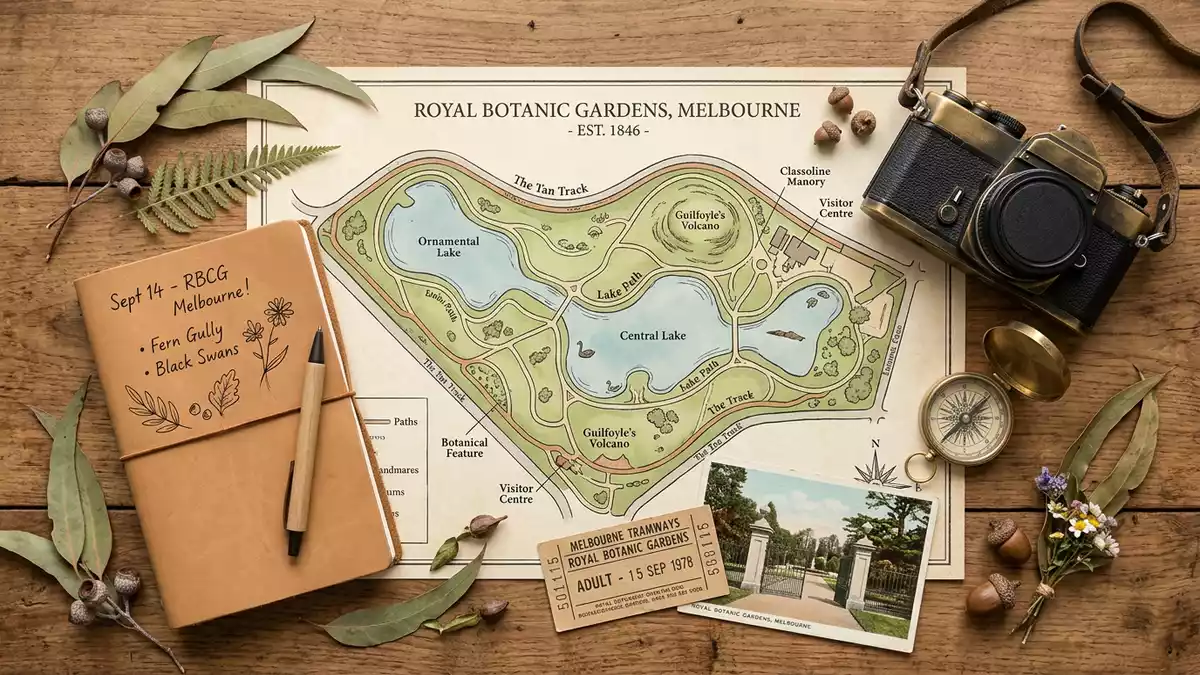
Royal Botanic Gardens in Melbourne stretches along the southern bank of the Yarra River, a nineteenth?century landscape garden woven into the city’s riverside slopes. Established in the 1840s and reshaped over decades by botanists and designers, it combines expansive lawns, lakes and richly planted slopes with scientific collections such as the National Herbarium of Victoria, making it both a pleasure garden and a centre of botanical research.
A nineteenth-century garden shaped by botanists
The land for what became Royal Botanic Gardens was reserved on the south side of the Yarra River in the mid nineteenth century, when Lieutenant Governor Charles La Trobe selected a site of marshland and rocky ground for Melbourne’s botanic garden.selected the site on the southern bank An area was formally set aside in March 1846, marking the beginning of the garden that would later receive a royal warrant and become known as Royal Botanic Gardens Melbourne.commenced in 1846 on the south side of the Yarra River
Ferdinand von Mueller, appointed as director in the 1850s, expanded the gardens and established the National Herbarium of Victoria, turning the site into a scientific centre with extensive plant collections drawn from many regions.created the National Herbarium of Victoria Later in the nineteenth century William Guilfoyle developed the design into a picturesque landscape with sweeping lawns, meandering paths and ornamental lakes, a character maintained and refined under subsequent directors.comprehensively relandscaped from 1873–1909 by William Guilfoyle
Landscape rooms along the Yarra River
Royal Botanic Gardens occupies a large riverside site south of central Melbourne, near Government House, the Melbourne Observatory and the wider Domain parklands.located adjacent to Government House, Melbourne Observatory and the Domain The terrain falls from higher ground towards the river, creating terraces and slopes where lawns, shrubberies and tree groups frame views across ornamental lakes and towards the city skyline. Paths curve through these planted areas, giving access to different parts of the garden without rigidly formal geometry.
Within the wider grounds, distinct zones reflect the garden’s layers of development and its botanical focus. The lake system and surrounding lawns form one of the most recognisable compositions of Guilfoyle’s picturesque design, with water margins planted with trees and shrubs adapted to Melbourne’s climate.sweeping lawns, meandering paths and glittering lakes Other areas are organised around particular plant groups, including collections of trees, shrubs and herbaceous species assembled for both display and study.
From pleasure garden to scientific institution
When the botanic garden was first laid out in the mid nineteenth century it was conceived as a pleasure ground for the growing metropolis, a landscaped space where residents could walk among exotic and native plants beside the river.its purpose was to provide a pleasure garden Over time the site expanded significantly in area, accommodating additional planting, buildings and infrastructure linked to its scientific and public roles.expanded in area to 36 hectares
The National Herbarium of Victoria, founded by Ferdinand von Mueller in 1857, remains central to Royal Botanic Gardens, housing extensive collections of preserved plants, algae and fungi used in taxonomic research.National Herbarium begun in 1857 The combination of landscaped grounds and scientific facilities makes the gardens both a place for quiet walking among trees and lakes and a hub for botanical study linked to the wider Royal Botanic Gardens Victoria organisation.Royal Botanic Gardens Victoria
Visiting Royal Botanic Gardens: what travellers from Western Europe should know
- Royal Botanic Gardens lies on Birdwood Avenue south of central Melbourne, on the southern bank of the Yarra River, reached by city tram and local roads.
- The grounds extend over gently undulating terrain with lakes, lawns and planted slopes, and visits involve walking on paths that rise and fall with the riverside landscape.
- The city of Melbourne is in Australia, where the official language is English and the currency is the Australian dollar.
- Entry requirements depend on your nationality; UK travellers can check the FCDO travel advice at gov.uk/foreign-travel-advice, Irish travellers the Department of Foreign Affairs at ireland.ie.
Searching for Royal Botanic Gardens on social platforms
These links open searches for Royal Botanic Gardens on each platform.Frequently asked questions about Royal Botanic Gardens
Where is Royal Botanic Gardens in Melbourne?
Royal Botanic Gardens stands on Birdwood Avenue on the southern bank of the Yarra River, near Government House and the Melbourne Observatory.
What can visitors expect during a walk in the gardens?
Visitors encounter lawns, lakes, tree collections and curving paths across gently sloping ground, together with buildings linked to botanical research such as the National Herbarium of Victoria.
What makes Royal Botanic Gardens distinctive among Melbourne’s green spaces?
Its combination of nineteenth-century picturesque landscape design, riverside setting and the long-established National Herbarium of Victoria gives the gardens both a recreational and scientific character.


