
Royal Botanic Gardens and Melbourne’s living landscape
Published on 09/22/2026 at 09:11 | Editorial responsibility: Rafael Müller, Editor-in-Chief AD HOC NEWS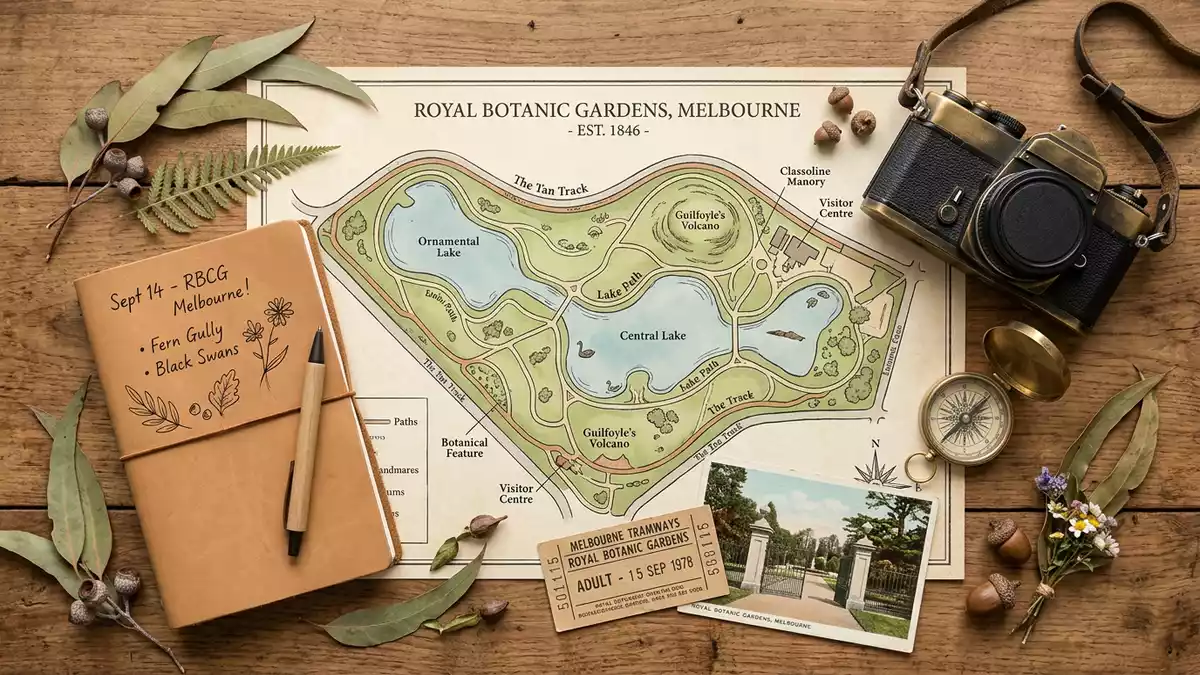
Royal Botanic Gardens lies beside the Yarra River in South Yarra, Melbourne. Its open lawns, lakes, curved paths and layered plantings form a living landscape shaped across the nineteenth century, with William Guilfoyle’s work remaining central to its appearance.
William Guilfoyle’s picturesque Melbourne landscape
The gardens began in 1846, after Charles La Trobe selected land on the south side of the Yarra River. Early development combined cultivated plants with a botanical purpose, and the grounds grew alongside Melbourne’s civic and scientific institutions.
William Guilfoyle became director in 1873 and held the position until 1909. During those decades, the landscape changed from straighter avenues towards sweeping lawns, curved paths, open water and planted views. The redesign included lakes, islands, bridges, rockeries, pavilions and garden structures, creating a sequence of distinct spaces within the wider grounds. Guilfoyle’s landscape work remains a defining historical feature.
Plant collections beside the Yarra River
Royal Botanic Gardens brings together Australian plants and species from other regions. Outdoor beds and glasshouses contain palms, rhododendrons, camellias, oaks, cacti, succulents, bromeliads, ferns and native Australian trees. The gardens also include lawns, water margins, shaded plantings and specialist collections.
The National Herbarium of Victoria forms an important scientific companion to the living gardens. Ferdinand von Mueller began the herbarium in 1857, during his directorship from 1857 to 1873. Its reference specimens document Australian plants and species from other parts of the world, connecting cultivated landscapes with botanical research. the National Herbarium gives the Melbourne garden an institutional dimension beyond its paths and lawns.
Gardens House and the garden within a garden
Gardens House was built in 1854 and served as the residence of the garden director. The building sits within its own planted setting, where species from different collections are arranged around a smaller garden landscape.
Its planting reflects the gardenesque and picturesque traditions associated with Guilfoyle. Camellias, giant spear lilies, aloe and other plants appear beside the historic house, creating a compact composition within the larger grounds. The result brings architecture, horticulture and garden history together in one named corner of Royal Botanic Gardens. Gardens House’s 1854 history is part of the site’s architectural record.
Visiting Royal Botanic Gardens: what travellers from Western Europe should know
- Royal Botanic Gardens occupies the south side of the Yarra River in South Yarra. Melbourne’s tram network and nearby city streets connect the gardens with central Melbourne.
- The grounds combine broad lawns with curved paths, lakes, bridges, planted beds and shaded garden sections. Walking involves changing surfaces and routes across a large landscape.
- Gardens House is a historic building within the gardens. Its surrounding planting combines specimens drawn from several horticultural collections.
- The official language is English and the currency is the Australian dollar.
Searching for Royal Botanic Gardens on social platforms
These links open searches for Royal Botanic Gardens on each platform.
Frequently asked questions about Royal Botanic Gardens
Where is Royal Botanic Gardens?
Royal Botanic Gardens is in South Yarra, on the south side of the Yarra River in Melbourne, Australia.
What can visitors see there?
The grounds contain lawns, lakes, curved paths, bridges, historic structures, glasshouses and plant collections from Australia and other regions.
What makes the gardens distinctive?
William Guilfoyle’s nineteenth-century picturesque landscape combines botanical collections with open lawns, water, garden structures and the historic Gardens House.


