Rottnest Island: limestone shores, quokkas and a layered past
Published on 09/15/2026 at 08:06 | Editorial responsibility: Rafael Müller, Editor-in-Chief AD HOC NEWS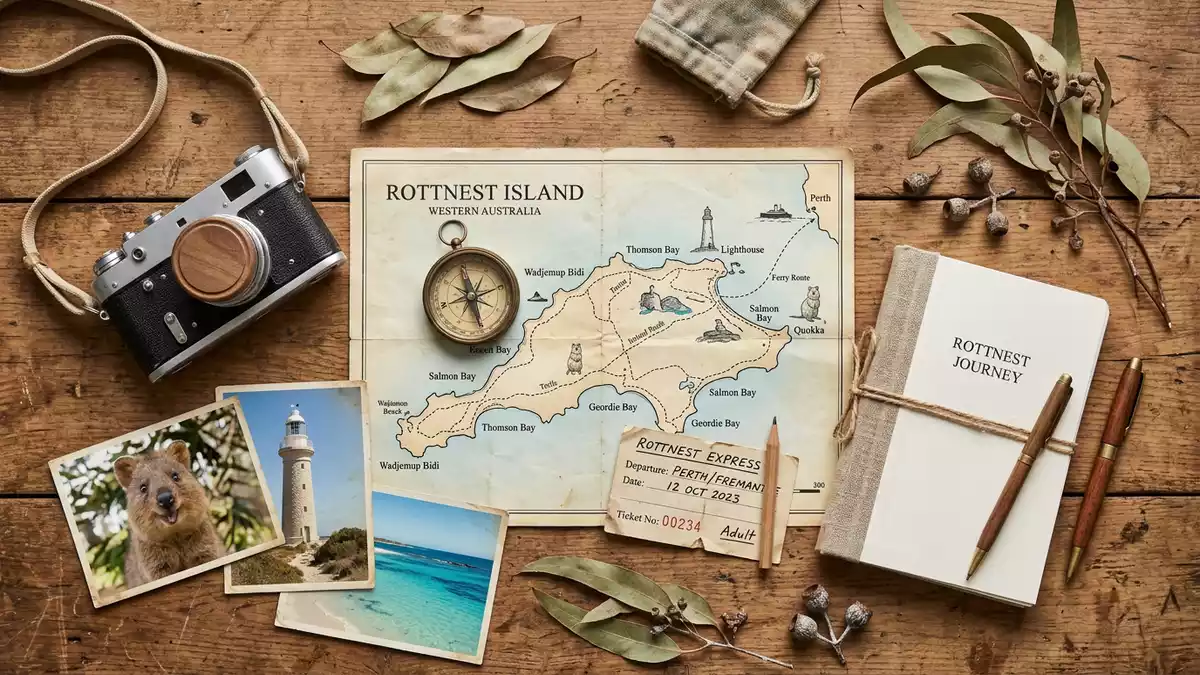
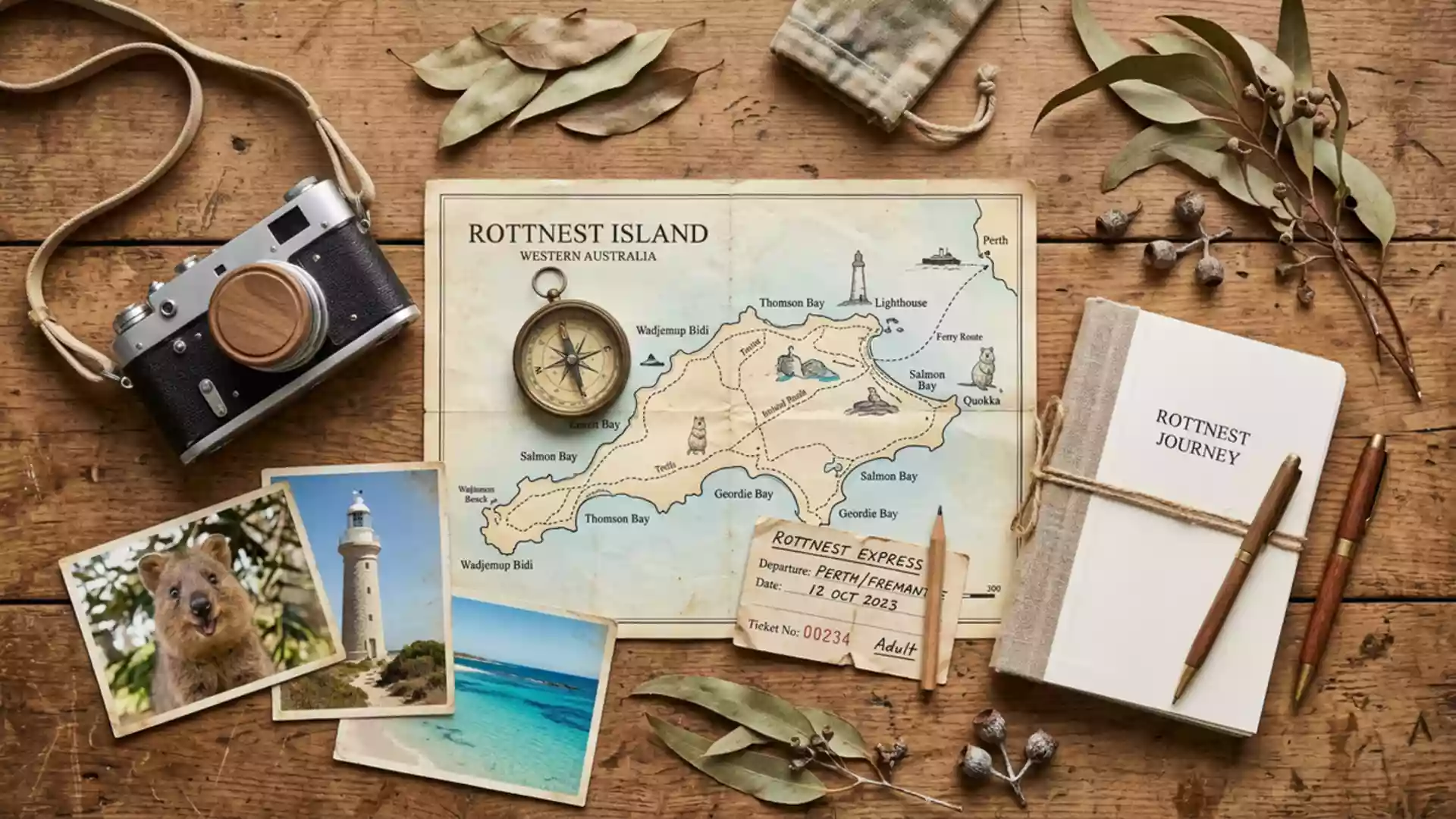
Off the coast of Perth in Western Australia, Rottnest Island sits as a low limestone island ringed by pale beaches and shallow reefs, known for quokkas and for a dense, sometimes painful history. The island is closely tied to the Whadjuk Noongar people, who knew it as Wadjemup, and its story runs from ancient occupation through a long period as an Aboriginal prison to its present role as a holiday destination.
Limestone, shallow reef and a small island off Perth
Rottnest Island lies offshore from the port city of Fremantle, facing the Indian Ocean and separated from the mainland by a relatively narrow stretch of water.offshore from Fremantle It is a low-lying island formed largely of aeolian limestone, with coastal terraces, shallow bays and fringing reefs that create a pattern of small coves and lagoon-like beaches.aeolian limestone The coastline combines long curving beaches with rocky points where waves break against the reef and rock shelves, and inland the terrain rises gently, carrying salt lakes that mark former marine inlets.
The island’s geology and isolation trace back to a time when sea levels were lower and Rottnest formed part of the mainland near what later became Perth. As sea levels rose several thousand years ago, the higher ground remained as an island while lower areas flooded to form the present channels and embayments.sea levels rose around 6,500 years ago Today, the island’s salt lakes, low dunes and coastal vegetation sit within a relatively compact area that can be traversed by road and path, with views out to the reef line and across towards the skyline of metropolitan Perth on clear days.
Wadjemup: Aboriginal occupation, Dutch naming and colonial settlement
Aboriginal artefacts and archaeological work indicate that Wadjemup, as the Whadjuk Noongar people know Rottnest Island, formed part of a wider cultural landscape long before it became isolated by rising seas.Aboriginal artefacts found on the island Human presence on the land that became the island reaches back tens of thousands of years, linked to Noongar use of the area for camping, gathering and ceremony when it was still connected to the mainland. Once the sea channel formed, regular habitation appears to have ceased, but Wadjemup retained significance within Noongar culture as part of a spiritual landscape.
European mariners encountered the island in the seventeenth century. In 1696 the Dutch sea captain Willem de Vlamingh came ashore and, seeing small, rat-like animals that he did not recognise, named the place “’t Eylandt ’t Rottenest”, or “Rats’ Nest Island” in Dutch.named the island 't Eylandt 't Rottenest These animals were quokkas, a small wallaby native to the island, whose presence still shapes how many visitors picture Rottnest.quokkas as rare marsupials After the Swan River Colony was established in the 1830s, settlers began using the island for salt harvesting, farming and fishing, and by the mid-nineteenth century a settlement at Thomson Bay had taken shape with stone buildings near the sheltered anchorage.settlers took up residence after 1829
Prison island, military outpost and holiday destination
From 1838 Rottnest Island entered a long period as an Aboriginal prison and forced labour camp. Over the remainder of the nineteenth century and into the early twentieth, thousands of Aboriginal men and boys from across Western Australia were incarcerated on the island under colonial law, housed in stone barracks and subjected to harsh discipline and labour.around 4,000 Aboriginal men and boys incarcerated The Quod, a distinctive quadrangular cell block built of local limestone, and associated institutional buildings stand as physical reminders of this chapter, alongside burial grounds where prisoners who died in custody were laid to rest.the prison cell block known as the Quod
The island’s institutional role shifted in the early twentieth century. The Aboriginal prison closed in the early 1900s, and in 1917 the Western Australian authorities designated Rottnest a Class A Reserve for public recreation and appointed a board to manage it as a place for holidays and leisure.declared a Class A Reserve in 1917 During the First and Second World Wars the island also served as a military site, with batteries, observation posts and other installations built to protect approaches to Fremantle, before the focus returned to its role as a coastal resort for people from Perth and elsewhere.World War II military base Present-day visits therefore take place in a landscape where holiday cottages, cycling routes and beaches coexist with former prison buildings and wartime structures, and where interpretation efforts increasingly highlight Wadjemup’s Aboriginal history alongside its recreational appeal.
Quokkas, heritage buildings and coastal paths
For many visitors, Rottnest Island is strongly associated with quokkas. These small marsupials, with rounded bodies and relatively short limbs, live across the island, particularly in areas with dense vegetation and shade.quokkas protected by sanctuary status Their presence contributed to the island’s Dutch name, and they remain a distinctive feature of any walk along the paths or around the settlement at Thomson Bay, where they may be seen near buildings and under trees.
The historic settlement area holds a cluster of nineteenth-century limestone buildings, many with verandas and simple colonial detailing, facing the sheltered waters of Thomson Bay.early settlement at Thomson Bay Some structures once formed part of the prison complex or administrative quarters and have since taken on new roles, including accommodation and visitor facilities, while others house services linked to the island’s contemporary use. Away from the main settlement, sealed roads and tracks loop around lakes and dunes, leading to viewpoints above the reefs and to beaches where the sea colours range from pale turquoise over sand to deep blue beyond the reef edge.
Visiting Rottnest Island: what travellers from Western Europe should know
- Rottnest Island lies off the coast of Western Australia near Perth, reached across the water from Fremantle and other departure points by passenger ferries and small aircraft.
- On the island, movement between the settlement at Thomson Bay, the lakes and the outer beaches involves walking or cycling along paved roads and sandy paths, with some undulating terrain and stretches exposed to sun and wind.
- Rottnest Island sits within Western Australia, where the official language is English and the currency is the Australian dollar.
- Entry requirements depend on your nationality; UK travellers can check the FCDO travel advice at gov.uk/foreign-travel-advice, Irish travellers the Department of Foreign Affairs at ireland.ie.
Searching for Rottnest Island on social platforms
These links open searches for Rottnest Island on each platform.
Frequently asked questions about Rottnest Island
Where is Rottnest Island in relation to Perth?
Rottnest Island lies off the coast of Western Australia, offshore from Fremantle near Perth, separated from the mainland by a relatively narrow marine channel.
What can visitors expect on a visit to Rottnest Island?
Visitors encounter a limestone island with beaches, shallow reefs, salt lakes, quokkas and historic buildings, including former prison structures and wartime installations alongside contemporary holiday facilities.
What makes Rottnest Island distinctive among coastal destinations?
Rottnest Island combines quokka habitat, layered Aboriginal and colonial history and accessible coastal terrain with salt lakes and reefs in a compact island setting near a major Australian city.