
Rottnest Island and the quokkas of Wadjemup
Published on 09/24/2026 at 04:28 | Editorial responsibility: Rafael Müller, Editor-in-Chief AD HOC NEWS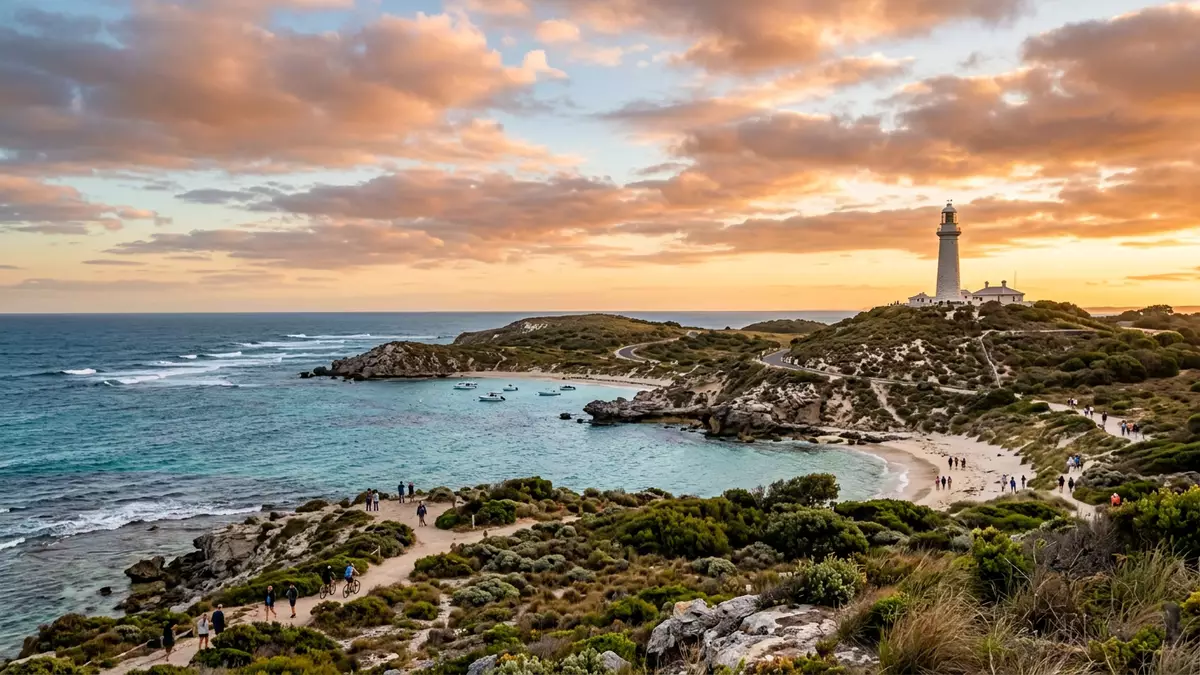
Rottnest Island is a low limestone island in the Indian Ocean, 19 km from Fremantle and 33 km from Perth. Its pale shores, salt lakes and native quokkas form a landscape closely associated with Wadjemup, the island’s Noongar name.
Rottnest Island: limestone, lakes and low horizons
Rottnest Island measures about 11 km from end to end and 4.5 km across at its widest point. Its highest ground reaches approximately 45 m above sea level, so the island’s outlook is shaped by low relief, open water and broad coastal skies. island dimensions
The island belongs to a chain of limestone islands and reefs along Western Australia’s continental shelf. Marine limestone, dune deposits, beaches and salt lakes form the visible fabric of the landscape. Bays indent the coast, while the interior contains vegetation, tracks and pale lake beds.
Rottnest Island is a Class A Reserve. Native flora and fauna receive protection across the island, including the quokka, known as kwoka in Noongar. These small marsupials are native to Wadjemup and live among the island’s natural vegetation.
Wadjemup and the history of the island
Wadjemup is the name used by the Whadjuk Noongar people. The island was connected to the mainland before rising seas separated it approximately 6,500 years ago. Archaeological evidence records Noongar occupation extending back tens of thousands of years. Noongar cultural history
In 1696, the Dutch navigator Willem de Vlamingh recorded the island and gave it a Dutch name meaning “Rats’ Nest Island”. The name referred to quokkas, which were mistaken for large rats. The English name that followed remains in use beside Wadjemup.
From 1838 to 1931, the island operated as an Aboriginal prison and forced labour camp. Thousands of Aboriginal men and boys from across Western Australia were incarcerated there. This history is visible in the island’s buildings, memorial places and surviving cultural landscape. the prison period
Quokkas, lighthouses and the Wadjemup Bidi
Quokkas are the animal most closely associated with Rottnest Island. They move through coastal scrub and settlement areas, where their rounded faces and compact bodies make them easy to recognise. They remain wild animals and must not be touched or fed.
Wadjemup Lighthouse rises from the island’s central high ground. The present tower dates from 1896 and reaches 38 m above the island. Inside, a tight spiral staircase climbs 155 steps. Bathurst Lighthouse stands at Bathurst Point, adding another navigation landmark to the island’s northern coast. the island’s lighthouses
The Wadjemup Bidi is a connected network of walking trails across the island. Its routes pass beaches, salt lakes, coastal cliffs, historic places and inland vegetation. The paths bring together the island’s natural and cultural features without reducing Rottnest Island to its quokkas alone.
Visiting Rottnest Island: what travellers from Western Europe should know
- Rottnest Island lies west of Fremantle and south-west of Perth. Ferries depart from Fremantle, North Fremantle, Perth city and Hillarys Boat Harbour, arriving at the Main Jetty in Thomson Bay.
- The island is low but exposed, with sandy beaches, limestone ground, salt lakes and coastal sections. The Wadjemup Lighthouse staircase contains 155 steps.
- Travel around the island is organised around bicycles, walking routes and island bus services. The Wadjemup Bidi links coastal and inland landscapes.
- The official language is English and the currency is the Australian dollar.
Searching for Rottnest Island on social platforms
These links open searches for Rottnest Island on each platform.
Frequently asked questions about Rottnest Island
Where is Rottnest Island?
Rottnest Island lies in the Indian Ocean off Western Australia, 19 km from Fremantle and 33 km from Perth.
What can visitors expect on Rottnest Island?
Visitors encounter beaches, salt lakes, limestone landscapes, walking trails, lighthouses, historic places and wild quokkas.
What makes Rottnest Island distinctive?
Its distinctive character comes from the combination of quokkas, Noongar cultural history, a former prison landscape and a low limestone island setting.


