
Roman Baths and Bath’s layered stone heart
Published on 09/01/2026 at 08:50 | Editorial responsibility: Rafael Müller, Editor-in-Chief AD HOC NEWS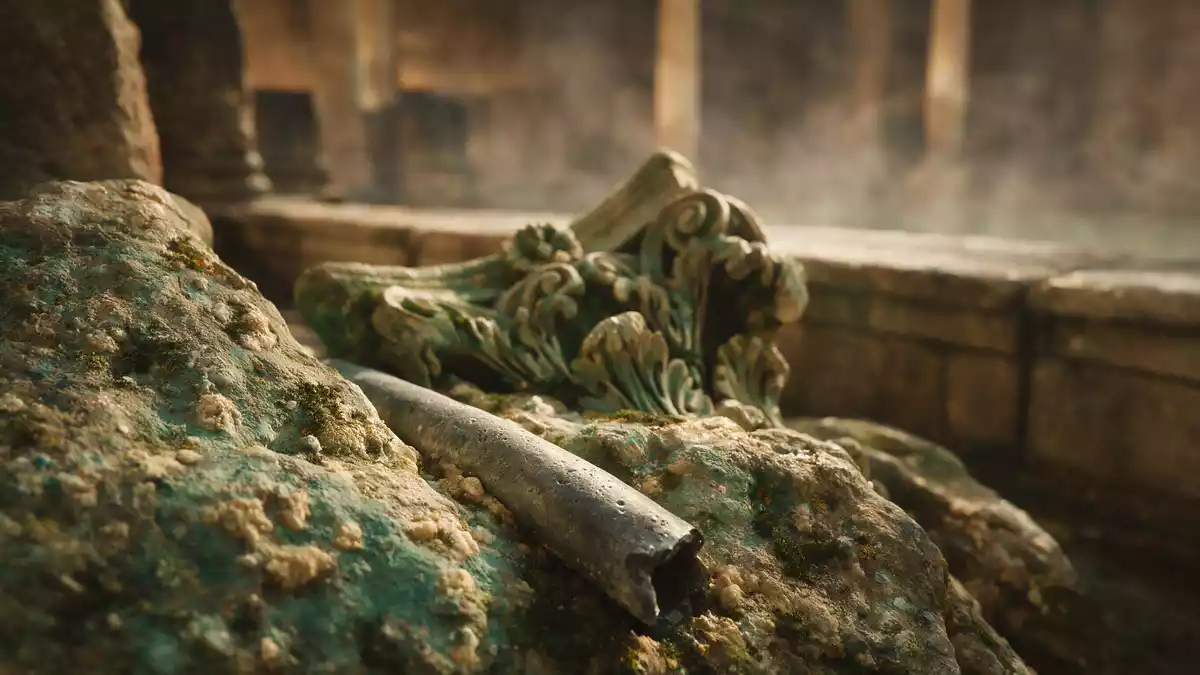
Roman Baths in Bath combine Roman remains, later street-level buildings and the city’s famous hot springs in one compact site. The core remains are tied to Aquae Sulis and to the reign of the emperor Claudius, while the standing visitor route belongs to a later age.
Stone, water and the Roman temple complex
The site centres on the sacred spring, the temple precinct and the great bathing complex. The Roman remains belong to the city’s long Roman past, and the World Heritage inscription covers Bath as a whole.
The Roman town of Aquae Sulis grew around the springs, and the name remains central to the history of the place. The temple of Sulis Minerva stands at the heart of that story, linking a British spring cult with Roman religious forms.
A later shell above an ancient site
The visible buildings at street level are later than the Roman fabric beneath them. The site therefore reads as a layered place, with excavated ruins below and a more recent museum setting above them.
That contrast makes the Roman Baths more than a set of preserved fragments. The place also holds the Sulis Minerva collection, which connects the ruins with objects from pre-Roman and Roman Britain.
Bath’s wider Roman and Georgian setting
Bath is a city shaped by Roman archaeology and Georgian town planning. The Roman remains sit within a wider urban landscape that was recognised in 1987 as a World Heritage Site.
The city’s hot springs have remained central to its identity, and Bath’s classical streets form a sharp contrast with the ancient stonework below. John Wood the Elder, John Wood the Younger and Robert Adam belong to that Georgian layer of the city’s history.
Visiting Roman Baths: what travellers from Western Europe should know
- The Roman Baths lie in Bath, Somerset, in south-west England, close to the city centre and the Abbey. The site is reached on foot through the historic core, and Bath Spa station serves the city.
- The remains sit below later buildings and around open-air water and stone structures. Steps, uneven surfaces and enclosed passages are part of the route.
- The complex centres on the sacred spring, the Roman temple and the bathing areas. The museum displays artefacts from pre-Roman and Roman Britain.
- Bath is an English-speaking city in the United Kingdom. The official language is English and the currency is the pound sterling.
Searching for Roman Baths on social platforms
These links open searches for Roman Baths on each platform.
Frequently asked questions about Roman Baths
Where are Roman Baths?
Roman Baths are in Bath, Somerset, in south-west England. The site sits in the historic centre close to the Abbey and Bath Spa station.
What does a visit include?
The route takes in Roman masonry, the sacred spring and the bathing complex beneath later buildings. A museum section displays objects from the Roman period.
What makes Roman Baths distinctive?
The place combines a Roman temple and bathing complex with later structures above it. The setting also belongs to Bath’s World Heritage landscape.


