
Rocky Mountain National Park and the long wall of peaks
Published on 08/21/2026 at 09:44 | Editorial responsibility: Rafael Müller, Editor-in-Chief AD HOC NEWS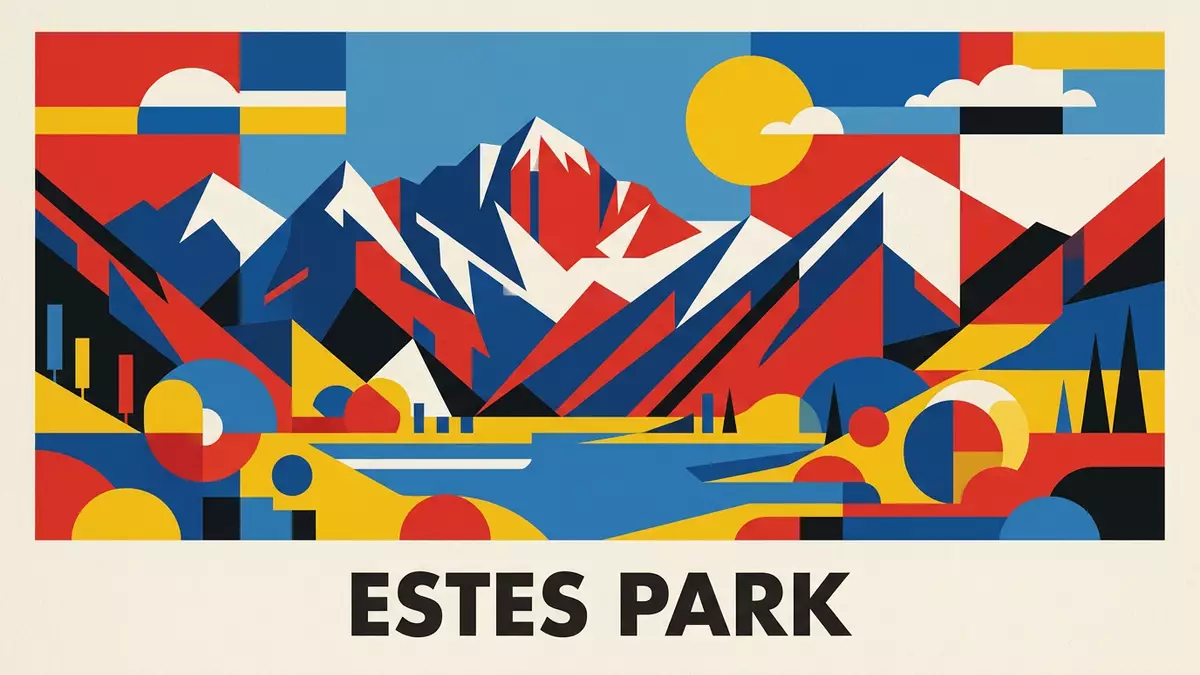
Rocky Mountain National Park rises west of Estes Park in Colorado, where Longs Peak gives the park a clear skyline. The park was established on 26 January 1915 and later received UNESCO biosphere reserve status in 1976.
Longs Peak and the Front Range skyline
The park belongs to the Front Range of the Rocky Mountains, and its mountains run in a strong north-south line. Longs Peak reaches 4,346 m (14,259 ft) and stands as the highest peak in the park.
That height matters less as a number than as a visual anchor. The mountain rises above a chain of high summits, ridges and alpine basins, with lower forested slopes below and open rock higher up.
Estes Park on the eastern edge
Estes Park sits at the eastern gateway to Rocky Mountain National Park and is tied closely to the park’s identity. The National Park Service has long described the town as the main base at the edge of the mountains.
The setting is straightforward and dramatic: a valley town beside a national park whose terrain climbs quickly into high country. Rocky Mountain National Park sits about 70 miles northwest of Denver, and the eastern entrance lies close to Estes Park.
Protected mountain country since 1915
Rocky Mountain National Park was established by act of Congress on 26 January 1915. UNESCO designated it a biosphere reserve in 1976, placing the park among protected mountain landscapes with recognised ecological value.
The park includes part of the Continental Divide, and its form is shaped by broad mountain ridges, tundra, lakes and forests. Longs Peak has carried its present name since the early nineteenth century, after earlier explorers recorded and renamed it.
Visiting Rocky Mountain National Park: what travellers from Western Europe should know
- The park is reached through Estes Park on the east side, with the west side linked through Grand Lake. US 36 and US 34 are the main approach roads named for the east side.
- The terrain reaches alpine levels quickly. Longs Peak rises to 4,346 m (14,259 ft), and several other named summits rise above 3,650 m (12,000 ft).
- The park contains mountain roads, valleys, forests and high ridgelines rather than a single compact centre. Trail Ridge Road is one of its best-known traverses.
- The official language is English and the currency is the United States dollar.
Searching for Rocky Mountain National Park on social platforms
These links open searches for Rocky Mountain National Park on each platform.
Frequently asked questions about Rocky Mountain National Park
Where is Rocky Mountain National Park?
It lies in north-central Colorado, west of Estes Park and within the Front Range of the Rocky Mountains. The park’s eastern entrance is the side most closely tied to the town.
What does a visit involve?
Expect high mountain terrain, long views, forested lower slopes and alpine country above. The park is spread across a broad mountain landscape rather than around a single compact landmark.
What makes Rocky Mountain National Park distinctive?
Its profile is defined by Longs Peak, the Continental Divide and a concentration of high summits, ridges and basins. The park also carries the status of a UNESCO biosphere reserve.


