
Rocky Mountain National Park and the high road above Estes Park
Published on 09/12/2026 at 14:22 | Editorial responsibility: Rafael Müller, Editor-in-Chief AD HOC NEWS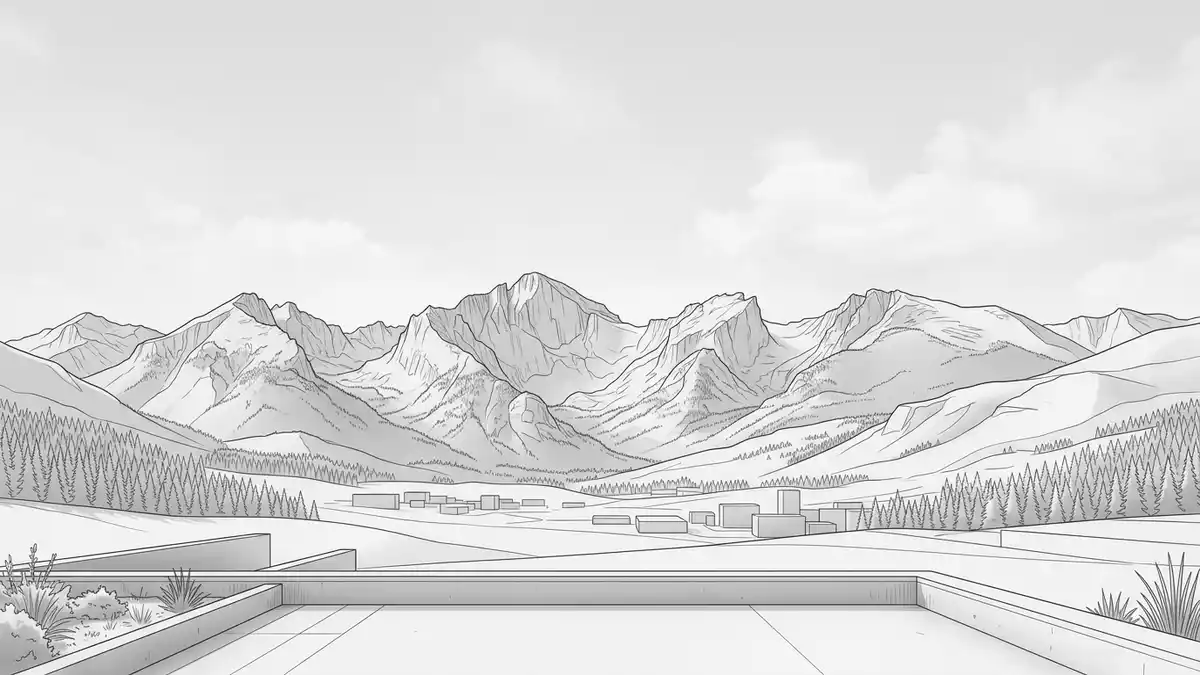
Rocky Mountain National Park spreads west of Estes Park in northern Colorado, lifting from forested valleys to bare alpine tundra and the high line of Trail Ridge Road across the Continental Divide. Established as a United States national park in 1915, it protects a large segment of the Front Range of the Rocky Mountains where montane woodland, subalpine forest and treeless tundra step upwards in distinct bands.
Mountains, forest and alpine tundra
Rocky Mountain National Park lies between the town of Estes Park on its eastern side and Grand Lake to the west, with the eastern and western slopes of the Continental Divide running through its middle.between Estes Park and Grand Lake The protected area covers 265,461 acres of federal land, forming a mountainous block of more than 1,000 km² where peaks, passes and high plateaus rise above glacial valleys.265,461 acres of federal land
The landscape is cut by the headwaters of the Colorado River in the park’s north-west, while streams on the eastern side flow towards the Great Plains. Lower slopes carry mixed conifer and deciduous woodland, giving way to dense evergreen forest at mid-altitude and then to open tundra above treeline. At these heights the ground is shaped by frost, wind and lingering snow, leaving patches of hardy vegetation among rock outcrops and shallow basins. From many viewpoints the contrast between wooded valleys and bare high ridges is clear, especially where the Continental Divide forms a prominent skyline.
Trail Ridge Road, the highway over the sky country
Trail Ridge Road is the paved highway that crosses Rocky Mountain National Park from Estes Park to Grand Lake, following U.S. Highway 34 for about 48 miles between the eastern and western entrances.Trail Ridge Road crosses the park It climbs from valley forest into alpine tundra and reaches a high point at 12,183 ft (3,713 m) above sea level, where it ranks as the highest continuous paved road in the United States.highest continuous paved road Along its length the highway spends around 11 miles above treeline, with long sections where only low vegetation and rock lie beside the tarmac.11 miles above treeline
The route crosses the Continental Divide at Milner Pass and passes near Fall River Pass before curving past high viewpoints and the Alpine Visitor Center, which stands near the summit area at an elevation of 11,796 ft (3,595 m).Alpine Visitor Center near the summit On the eastern side, Trail Ridge Road links directly with entrance stations near Estes Park, including the Beaver Meadows Entrance Station on U.S. Highway 36 and the Fall River Entrance Station on U.S. Highway 34.entrance stations near Estes Park As it climbs, the highway reveals wide views over cirques, high meadows and neighbouring summits, illustrating how the park brings vehicle travellers into terrain that would otherwise demand a long ascent on foot.
Gateways, visitor centres and protected status
Rocky Mountain National Park has several entrances, with three on the east side near Estes Park and one on the west near Grand Lake.three eastern entrances The Beaver Meadows Visitor Center near Estes Park serves as park headquarters and is listed as a National Historic Landmark, its building designed by the Frank Lloyd Wright School of Architecture at Taliesin West.Beaver Meadows Visitor Center headquarters Across the park, a network of visitor centres provides orientation, background on geology and ecology, and information about trails and high-country access.
The park was created on 26 January 1915 after a conservation effort involving figures such as Enos Mills from the Estes Park area, James Grafton Rogers of Denver and J. Horace McFarland of Pennsylvania.established on 26 January 1915 In 1976 it gained recognition as a UNESCO Biosphere Reserve, underlining the international importance of its mountain ecosystems and the range of habitats from valley woodland to high tundra.UNESCO Biosphere Reserve designation These formal protections frame Rocky Mountain National Park not only as a scenic destination but as a long-term conservation area for flora, fauna and geomorphological features of the central Rocky Mountains.
Visiting Rocky Mountain National Park: what travellers from Western Europe should know
- Rocky Mountain National Park lies west of Estes Park in north-central Colorado, reached on the eastern side by U.S. Highway 34 and U.S. Highway 36 and on the western side near Grand Lake via U.S. Highway 34.
- The terrain ranges from forested valleys to high alpine tundra, with substantial altitude gain on roads and trails and long stretches where exposure to wind and weather is part of any journey.
- The park is in the United States, where the official language is English and the currency is the United States dollar.
- Entry requirements depend on your nationality; UK travellers can check the FCDO travel advice at gov.uk/foreign-travel-advice, Irish travellers the Department of Foreign Affairs at ireland.ie.
Searching for Rocky Mountain National Park on social platforms
These links open searches for Rocky Mountain National Park on each platform.
Frequently asked questions about Rocky Mountain National Park
Where is Rocky Mountain National Park located?
Rocky Mountain National Park lies in north-central Colorado in the United States, between the town of Estes Park on the east and Grand Lake on the west.
What should visitors expect on a first visit?
Visitors encounter a large mountain landscape with strong altitude contrasts, road access into high tundra via Trail Ridge Road and a network of visitor centres and trailheads in the valleys.
What makes Rocky Mountain National Park distinctive among mountain parks?
Its combination of a major paved highway reaching 12,183 ft (3,713 m) across alpine tundra and the formal protection of a broad range of Rocky Mountain ecosystems gives it a character that links high road travel with conservation.


