

Rock Islands: limestone labyrinth of Palau’s southern lagoon
Published on 08/23/2026 at 10:07 | Editorial responsibility: Rafael Müller, Editor-in-Chief AD HOC NEWS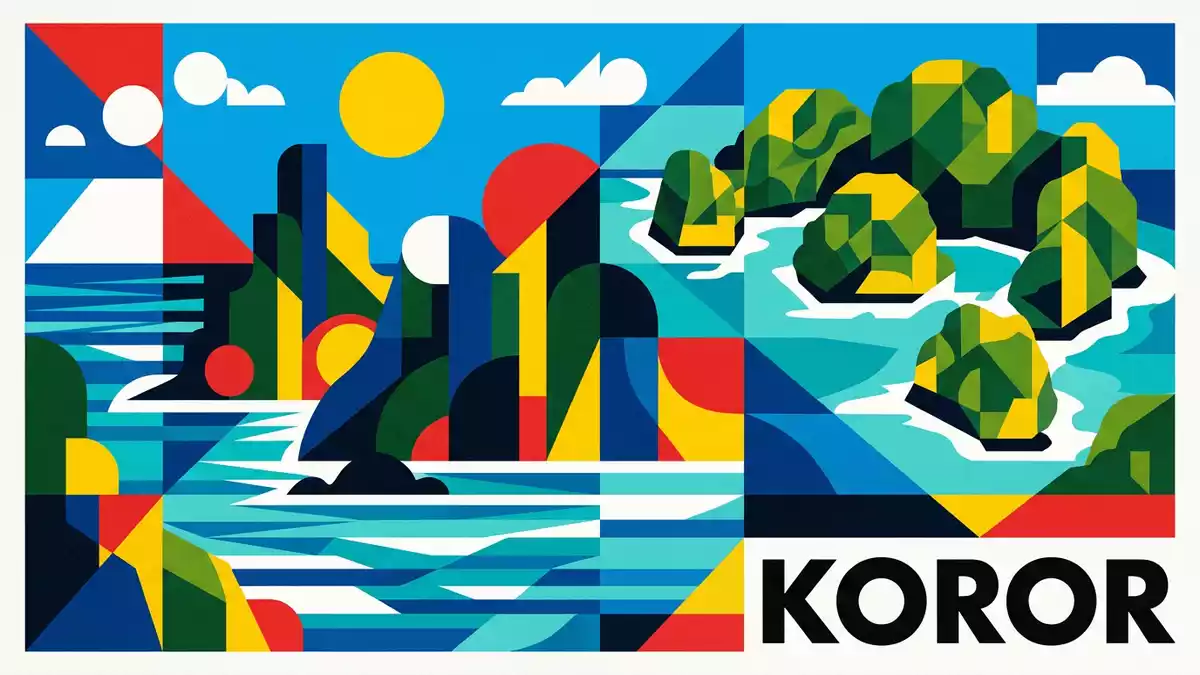
South of Koror in the Pacific nation of Palau, the Rock Islands rise from a turquoise lagoon as steep-sided limestone islets draped in dense green forest. Recognised in 2012 as the mixed natural and cultural UNESCO World Heritage site Rock Islands Southern Lagoon, they combine an intricate seascape with traces of long human presence.
Limestone islands scattered across a protected lagoon
The Rock Islands sit in the Southern Lagoon of Palau, between the larger islands of Koror and Peleliu in Koror State. The World Heritage property covers a predominantly marine area of around 100,200 hectares, which includes coral reefs, shallow marine habitats and hundreds of small islands grouped within a broader buffer zone of protected waters.The World Heritage property Many of the islands are formed from uplifted coralline limestone that has been weathered and undercut, so that steep vegetated slopes rise directly from the lagoon.
Descriptions of the site refer to about 445 uninhabited limestone islands within the protected area.The nomination dossier for Rock Islands Southern Lagoon The islands vary in size from small outcrops to larger masses with interior basins, and together they form a maze of channels, bays and coves enclosed by a barrier reef. From the water, the contrast between the dark rock, the bright foliage and the pale shallows gives the archipelago a distinctive profile.
A mixed World Heritage site of nature and culture
Rock Islands Southern Lagoon was inscribed on the World Heritage List in 2012 as Palau’s first World Heritage Site and one of a limited number worldwide recognised for both cultural and natural values.The inscription decision The listing notes the ecological diversity of the coral reefs and marine habitats, the large number of marine lakes and the way in which the limestone islands record the geological history of uplift and erosion in this part of Micronesia.
The cultural side of the inscription reflects long use of the Rock Islands by Palauan communities. Archaeological investigations have identified traces of former village sites and rock art on some of the islands, indicating that people lived in and traversed this lagoon over extended periods.The Rock Islands entry The Palauan name Chelbacheb appears alongside the English name in descriptions of the archipelago, underlining its role in local history as well as in international conservation.
Marine lakes, reefs and travel through the maze
Among the most striking features of the Rock Islands are the many marine lakes scattered within the larger landmasses. Documents connected with the World Heritage nomination describe more than 50 such lakes, which are bodies of seawater separated from the open lagoon by limestone walls yet still linked to it through fissures and channels in the rock.The detailed nomination file One of the best known is Jellyfish Lake, also called Ongeim’l Tketau, where large populations of jellyfish inhabit a marine lake surrounded by forested slopes.
Beyond the lakes, the wider lagoon is characterised by coral reefs, submarine shelves and deeper channels, which together support diverse marine life.An overview of Palau’s World Heritage site Travel through the Rock Islands generally follows narrow passes between limestone walls, revealing sand beaches, overhanging vegetation and sudden views across more open stretches of water. From boats moving at low speed, the layered rock and the vertical changes between shallow and deep water can be seen at close range.
Visiting Rock Islands: what travellers from Western Europe should know
- Rock Islands lie to the south of Koror in Palau’s Southern Lagoon and are reached by boat from Koror, passing beneath road bridges out towards the open lagoon.
- Landings typically take place on small sand beaches or simple jetties at the edge of forested limestone slopes, and walking routes may involve uneven ground and short climbs.
- The lagoon forms part of a tropical maritime climate zone, and conditions on the water range from strong sun on open stretches to shade beneath overhanging vegetation.
- The official language is Palauan and the currency is the United States dollar.
- Entry requirements depend on your nationality; UK travellers can check the FCDO travel advice at gov.uk/foreign-travel-advice, Irish travellers the Department of Foreign Affairs at ireland.ie.
Searching for Rock Islands on social platforms
These links open searches for Rock Islands on each platform.
Frequently asked questions about Rock Islands
Where are the Rock Islands located?
The Rock Islands are in Koror State in Palau, lying in the Southern Lagoon between the larger islands of Koror and Peleliu in the western Pacific.
What can visitors expect on a trip into the Rock Islands?
Boat trips weave between steep forested limestone islets, with views of coral reefs, sand beaches and, on some routes, access points to marine lakes such as Jellyfish Lake.
What makes Rock Islands distinctive compared with other island groups?
The combination of hundreds of uninhabited limestone islands, enclosed marine lakes, rich coral reefs and archaeological traces has led to recognition as a mixed natural and cultural World Heritage site.


