
Rock Islands and the lagoon of limestone domes near Koror
Published on 09/07/2026 at 19:05 | Editorial responsibility: Rafael Müller, Editor-in-Chief AD HOC NEWS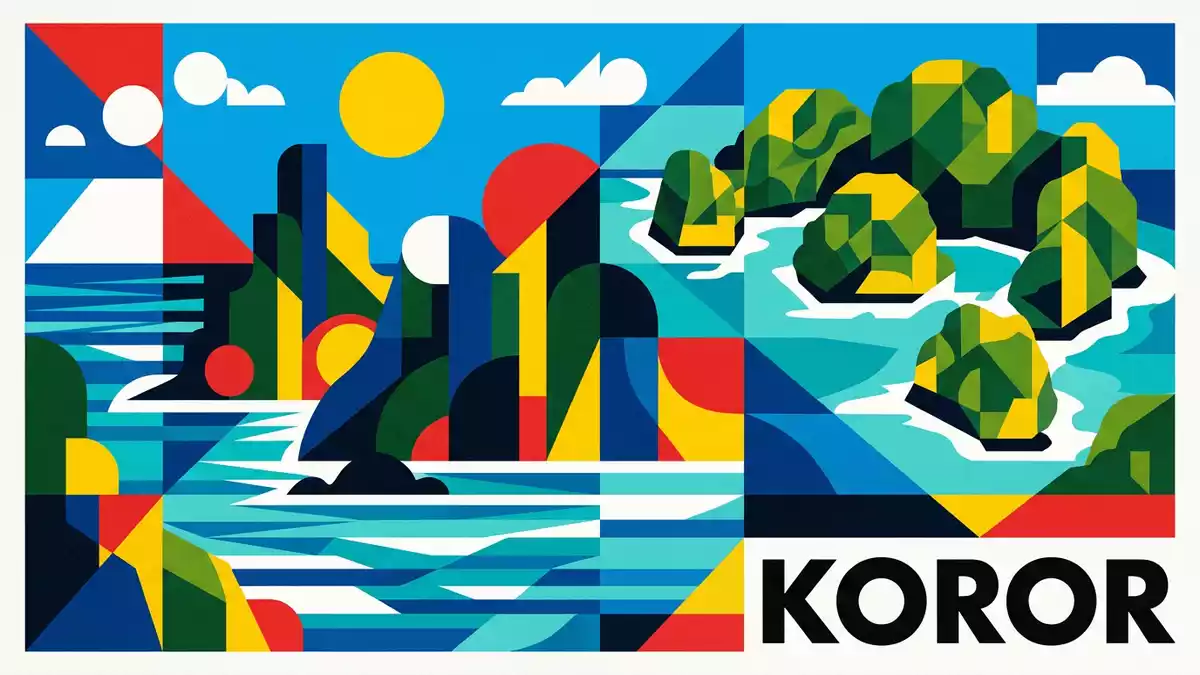
Rock Islands in Koror, Palau, are a scattered maze of small forested limestone domes rising from a shallow turquoise lagoon, where caves, cliffs and hidden lakes reshape the idea of an island landscape. Recognised as the Rock Islands Southern Lagoon on the UNESCO World Heritage List since 2012, this protected seascape brings together coral reefs, marine lakes and uninhabited islets in a single, intricate marine setting.
Limestone domes in a sheltered southern lagoon
The Rock Islands occupy a broad swathe of Palau’s Southern Lagoon between the main volcanic island of Babeldaob and the smaller island of Peleliu, south of the town of Koror. Within this lagoon hundreds of raised limestone islands rise from shallow water, their bases undercut by waves into outlines that resemble inverted mushrooms when seen from a boatRock Islands in Koror. Rainfall and the tropical climate support dense forest on their upper slopes, so from a distance the islands appear as rounded green domes scattered across the pale lagoon.
Seen on a chart, the Rock Islands Southern Lagoon forms a rough triangle of water and land enclosed by a barrier reef that separates the sheltered lagoon from the open Pacific. The World Heritage inscription describes an area of about 100,200 ha containing a complex of coral reefs, channels and shallow marine habitats where lagoon waters meet the reef edgeRock Islands Southern Lagoon area. Within this space the limestone domes rise in clusters and lines, creating narrow passages, enclosed bays and cliff-fringed anchorages that give boat travel through the Rock Islands the character of a winding journey between steep, forested walls.
A mixed World Heritage site of nature and culture
Rock Islands Southern Lagoon holds an unusual place on the UNESCO List as a mixed site recognised for both natural and cultural values, reflecting the way geology, ecology and long-standing human use meet within the lagoonmixed World Heritage status. The inscription in 2012 records criteria that relate to exceptional natural beauty, ecological processes and biodiversity alongside archaeological traces of earlier settlement and cultural practices on some of the islands2012 inscription criteria. For travellers, that combined status translates into a landscape where spectacular seascapes sit alongside sites whose significance extends beyond scenery.
Ecologically, the lagoon holds coral reefs with a wide range of coral species and reef fish communities, spanning outer reef walls, drop-offs and calmer coral gardens in the shallows. The World Heritage datasheet notes several hundred recorded coral species in the area and a network of marine habitats that support turtles, reef fish and other marine life across the lagoon’s expansebiodiverse coral reefs. On land, forested slopes, caves and shorelines form part of traditional routes and sites for Palauan communities, adding layers of meaning not immediately visible from the water but integral to the designation.
Jellyfish Lake and the hidden waters within the islands
One of the best-known individual features within the Rock Islands is Jellyfish Lake, known in Palauan as Ongeim’l Tketau, lying within the interior of the island of Eil Malk. It is described as a marine lake enclosed by the limestone of the island, with its saltwater connected to the surrounding lagoon through channels in the rockJellyfish Lake on Eil Malk. The lake extends for several hundred metres and reaches tens of metres in depth at its deepest points, creating a layered water column distinct from the open lagoon.
Jellyfish Lake is widely noted for its dense population of golden jellyfish sharing the enclosed waters with other marine species adapted to the lake environmentgolden jellyfish in the lake. For visitors, access to the lake involves boat travel through the Rock Islands from Koror and a short walk inland across Eil Malk from a small landing area, bringing a change from the open lagoon to the enclosed basin of the lake. The combination of a forested limestone island, an inland marine lake and the surrounding reef-fringed lagoon encapsulates the layered character of the Rock Islands as a whole, where open ocean, sheltered lagoon, enclosed lakes and steep vegetated slopes sit within short distances of one another.
Visiting Rock Islands: what travellers from Western Europe should know
- Rock Islands lie south of Koror in Palau’s Southern Lagoon, between the larger island of Babeldaob and the smaller island of Peleliu, and are reached by boat from Koror.
- Most viewpoints, beaches and lakes within the Rock Islands are accessible only by water, and visits usually involve stepping from boats onto small sandy coves or simple landing points on the limestone shore.
- The terrain on the islands is steep in places, with forested slopes, uneven limestone surfaces and footpaths that can include sections of steps or short climbs.
- The official language of Palau is Palauan and the currency is the United States dollar.
- Entry requirements depend on your nationality; UK travellers can check the FCDO travel advice at gov.uk/foreign-travel-advice, Irish travellers the Department of Foreign Affairs at ireland.ie.
Searching for Rock Islands on social platforms
These links open searches for Rock Islands on each platform.
Frequently asked questions about Rock Islands
Where are Rock Islands in relation to Koror?
Rock Islands lie in Palau’s Southern Lagoon within Koror State, south of Koror, between the larger island of Babeldaob and the smaller island of Peleliu.
What should travellers expect on a visit to Rock Islands?
Travellers encounter forested limestone islands rising from shallow lagoon waters, coral reefs, small beaches and, on some trips, inland marine lakes such as Jellyfish Lake.
What makes Rock Islands distinctive among Pacific island landscapes?
The combination of raised limestone domes, a protected lagoon, extensive coral reef habitats and enclosed marine lakes, recognised in the 2012 UNESCO mixed World Heritage inscription, gives Rock Islands a layered character rare in a single site.


