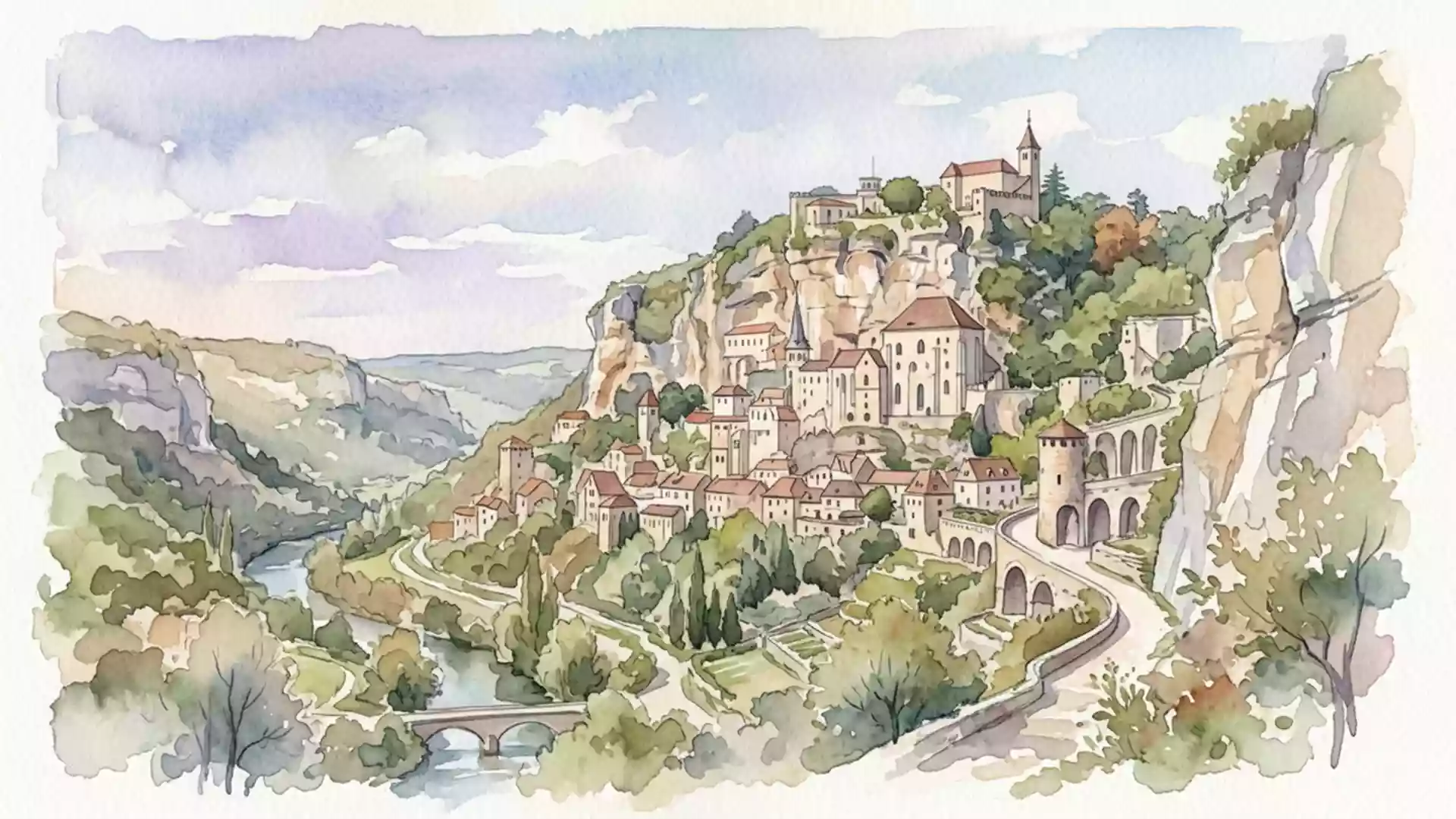
Rocamadour on a cliff of stone and pilgrimage
Published on 09/05/2026 at 13:26 | Editorial responsibility: Rafael Müller, Editor-in-Chief AD HOC NEWS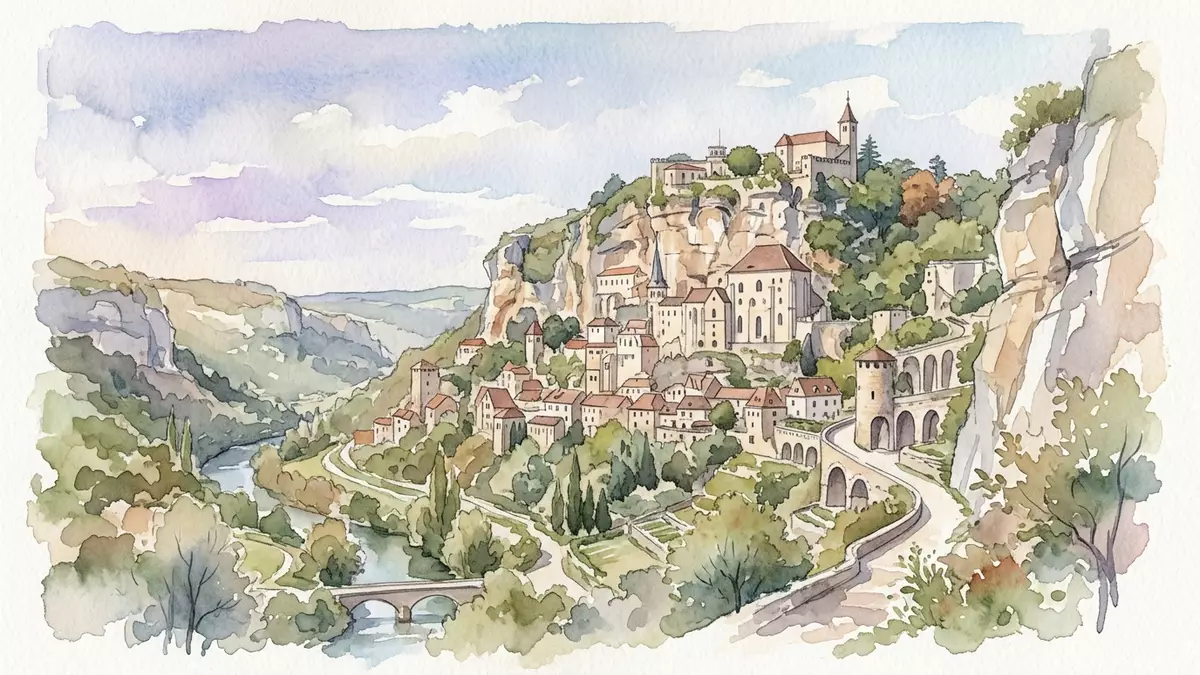
Rocamadour rises in three levels above the Alzou Canyon, with stone houses below, churches in the middle and a castle above. The village is one of France’s major UNESCO World Heritage Sites and a long-standing stop on the Way of Saint James. Its profile is as memorable as its religious history, because the whole settlement is clipped to the cliff in a single vertical sweep.
Stone, steps and the cliffside sanctuary
The settlement is built against limestone and arranged on a steep face that drops into the canyon. Its most striking line is the climb of the Great Staircase, a direct route between the lower village and the sanctuary above. The sanctuary includes chapels, the Basilica of Saint-Saviour and the crypt of Saint Amadour, all packed into the rock-facing middle tier.
The Romanesque-Gothic basilica and the linked sacred buildings give Rocamadour its layered silhouette. The village also carries the name of Saint Amadour, whose cult is tied to the site’s devotional life and to the Black Madonna in the Chapel of Our Lady. That pairing of cliff, stair and shrine is the place’s defining physical fact.
From early worship to medieval fame
Rocamadour’s religious identity reaches back to the early Middle Ages, when devotion to the Virgin Mary took root here. The name of Saint Amadour, and the account of a preserved body found in 1166, belong to the site’s core legend and history. The sanctuary’s development in the twelfth century made the village a major pilgrimage centre, and that role still shapes how it is read.
The village sits within the wider landscape of Quercy, where limestone plateaux and deep valleys give the settlement its dramatic setting. The castle above the sanctuary adds another layer to the profile, with defensive walls standing over the religious buildings below. Rocamadour is therefore not only a sacred place, but also a compact example of medieval settlement stacked into a cliff.
Rocamadour’s upper castle and lower lanes
The upper castle overlooks the village from the cliff edge, while the lower lanes run through old houses and gates. The main street is car-free, and the old town keeps a tight, enclosed feel between the rock walls and the canyon.
Gates such as Porte Basse and Porte du Figuier mark the approach into the historic core. Together with the sanctuary, they show how Rocamadour is organised as a sequence of thresholds, each one higher than the last.
Visiting Rocamadour: what travellers from Western Europe should know
- Rocamadour lies in the Causses du Quercy Regional Nature Park, just south-west of Padirac in the Dordogne Valley. It is reached through the valley roads that serve the village and its upper sanctuary.
- The place is steep, with 216 steps on the Great Staircase between the lower village and the sanctuary. Much of the visit follows uneven stone surfaces and tight passageways.
- The village is tied to the pilgrimage route of Saint James, and the sanctuary remains the historical core of the settlement. The Basilique Saint-Sauveur, the crypt and the Chapel of Our Lady are the key names to remember.
- The limestone cliff, the stone houses and the medieval gates are the main visible elements on site. The whole place is compact, with its buildings stacked into a narrow vertical plan.
Searching for Rocamadour on social platforms
These links open searches for Rocamadour on each platform.
Frequently asked questions about Rocamadour
Where is Rocamadour?
Rocamadour is in south-western France, in the Dordogne Valley and within the Causses du Quercy Regional Nature Park. It stands near Padirac, high on a limestone cliff.
What does a visit involve?
The village is built in tiers and the route through it is steep. The Great Staircase, the sanctuary and the upper castle define the experience.
What makes Rocamadour distinctive?
Its cliffside layout, pilgrimage history and stacked religious buildings make it immediately recognisable. The basilica, crypt and chapel sit directly against the rock.