Robben Island from prison island to place of memory
Published on 09/09/2026 at 06:28 | Editorial responsibility: Rafael Müller, Editor-in-Chief AD HOC NEWS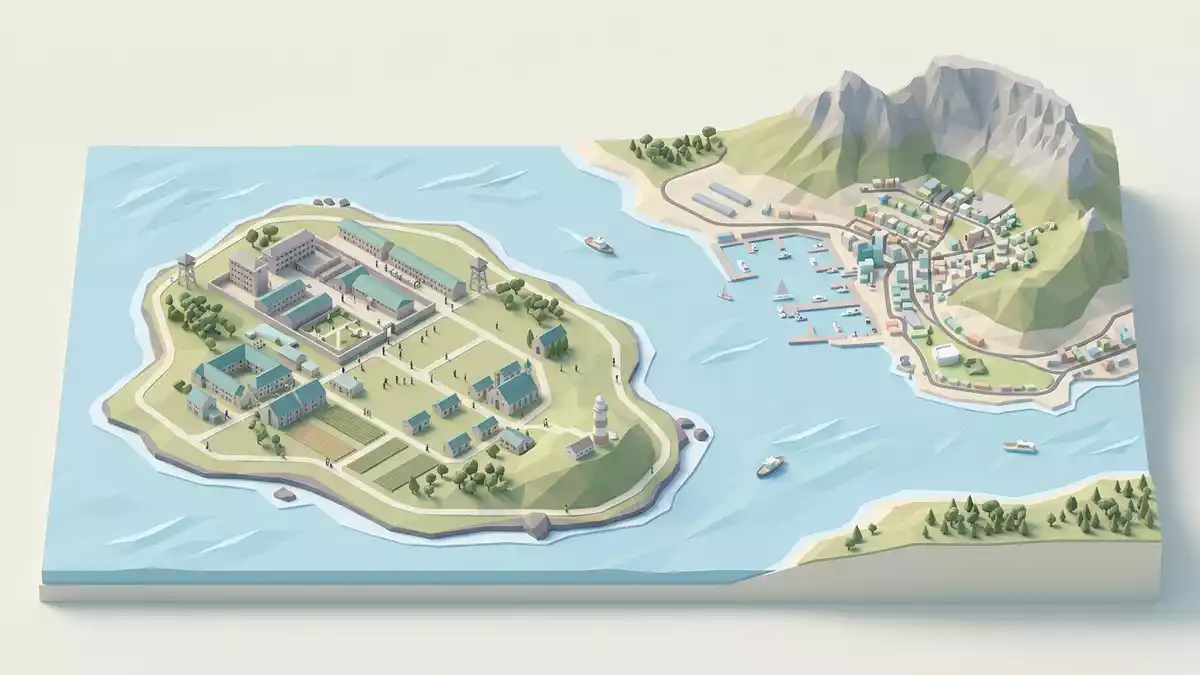
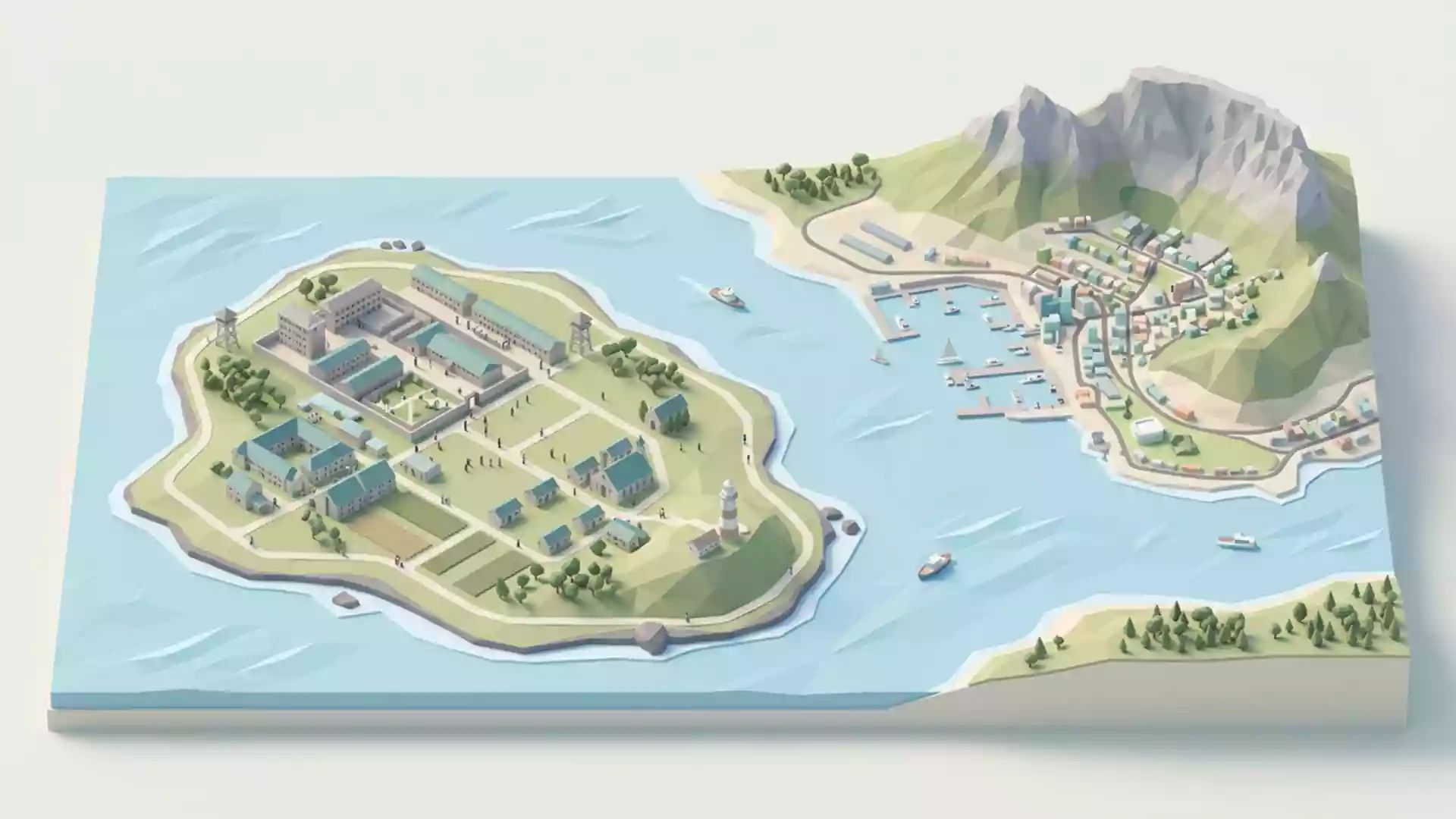
Robben Island off Kapstadt in South Africa is a low, windswept island whose buildings and shoreline still carry the marks of centuries of isolation and imprisonment. It lies in Table Bay within sight of the city and has become a place where South Africa’s difficult path towards democracy is written into the fabric of an ordinary landscape.
An island shaped by centuries of exile
Robben Island sits in Table Bay off the Atlantic coast of South Africa’s Western Cape, roughly north of the modern city centre of Kapstadt. It forms a flat platform of land in the bay, separated from the mainland by cold ocean water and strong currents that historically made escape attempts extremely hazardous.Table Bay off the Western Cape coast The Dutch name of the island refers to seals, and maritime charts from the sixteenth and seventeenth centuries show it as a stopping point for ships rounding the Cape between Europe and Asia.
From the seventeenth century onwards, administrations based in Kapstadt repeatedly used Robben Island as a place to send those they wanted to keep apart from society. Early colonial authorities under the Dutch East India Company and later the British crown maintained facilities there for convicts and others judged unsuitable for life on the mainland.Dutch and British penal colony Over the nineteenth century the island held a leper colony and accommodated people classified as mentally ill, adding hospital structures to the older prison buildings.hospital for socially unacceptable groups Fortifications and a lighthouse followed, marking the island’s role both in maritime navigation and coastal defence.
Robben Island and the apartheid-era prison
The most widely known chapter in Robben Island’s history belongs to the second half of the twentieth century, when it served as a maximum-security prison under South Africa’s apartheid system. From the mid-1960s the authorities used the island to hold male political prisoners, many of them members of the African National Congress and other liberation movements.maximum security prison for political prisoners Within its high-fenced precincts, blocks of cells and work yards formed a contained world separated by sea from the everyday life of Kapstadt.
Among those imprisoned on Robben Island was Nelson Mandela, the lawyer and activist who later became South Africa’s first black president in 1994. He spent 18 years of his 27-year incarceration on the island, much of that time in a small cell in the main maximum-security complex.Mandela’s 18 years on the island Mandela arrived on Robben Island as a life prisoner after the Rivonia Trial of 1964 and remained there until 1982, when he and other senior prisoners were transferred to Pollsmoor Prison on the mainland.life sentence and transfer in 1982 The prison buildings, exercise yards and quarry sites that remain on the island today speak directly to that period of segregation and punishment.
From working prison to museum and World Heritage Site
Robben Island continued to function as a prison into the early 1990s, with political prisoners released in stages as South Africa moved towards negotiated change.end of prison use and release of prisoners The final criminal inmates left in 1996, ending more than three centuries in which various authorities had used the island to isolate people from the mainland.prison and military base between the seventeenth and twentieth centuries In 1997 Robben Island was established as a museum, marking an institutional shift from working prison to place of remembrance and public learning.museum and national monument
Two years later, in 1999, Robben Island was inscribed as a UNESCO World Heritage Site, recognising its importance as a site of memory in the story of South Africa’s transition from apartheid to democracy.UNESCO World Heritage inscription in 1999 The designation acknowledges not only the prison buildings from the late twentieth century but also the older structures associated with hospital use, fortification and other forms of isolation.buildings from different periods of use The island is also recognised as a South African National Heritage Site, ensuring that its layered history is protected within national law.National Heritage Site designation
Visiting Robben Island: what travellers from Western Europe should know
- Robben Island lies in Table Bay north of central Kapstadt and is reached by boat from the city’s waterfront district, crossing the bay to the island’s small harbour.
- The island is largely flat with low vegetation, and visits involve walking on level roads and paths through former prison precincts and around exposed courtyards.
- The official language is Afrikaans and English is widely used; the currency is the South African rand.
- Entry requirements depend on your nationality; UK travellers can check the FCDO travel advice at gov.uk/foreign-travel-advice, Irish travellers the Department of Foreign Affairs at ireland.ie.
Searching for Robben Island on social platforms
These links open searches for Robben Island on each platform.
Frequently asked questions about Robben Island
Where is Robben Island in relation to Kapstadt?
Robben Island lies in Table Bay off the Atlantic coast, roughly north of central Kapstadt and within sight of the city’s skyline on clear days.
What should visitors expect on a visit to Robben Island?
Visitors encounter working harbour structures, former prison buildings, roadways across open ground and views back to Kapstadt and the surrounding mountains.
What makes Robben Island distinctive as a heritage site?
Robben Island combines a long record of forced isolation with specific sites linked to Nelson Mandela’s imprisonment, and is recognised as a UNESCO World Heritage Site.