
Robben Island: a flat island of memory in Table Bay
Published on 09/15/2026 at 20:03 | Editorial responsibility: Rafael Müller, Editor-in-Chief AD HOC NEWS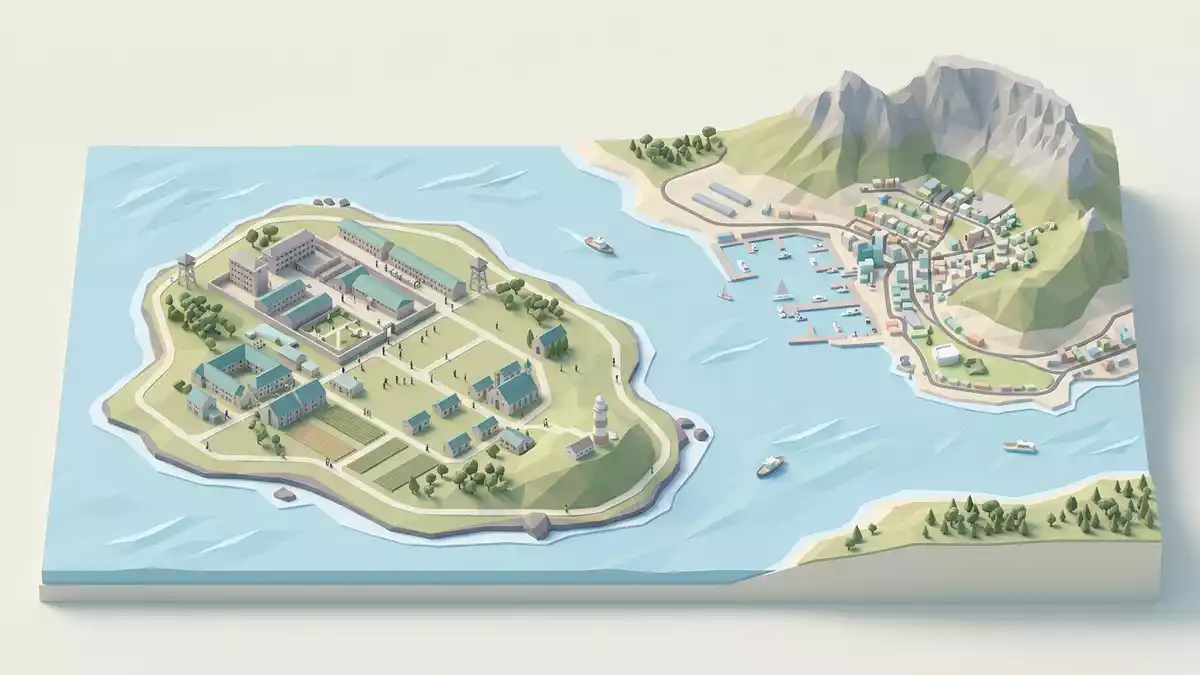
Robben Island is a low, windswept island lying in Table Bay off Cape Town, South Africa, where a former maximum?security prison has become a museum of memory and a World Heritage landscape.
An island shaped by centuries of confinement
The island lies in Table Bay in the Western Cape, within clear sight of Cape Town’s skyline and the line of Table Mountain on the mainland.Table Bay location Its history as a place of confinement stretches back to the seventeenth century, when Dutch colonial authorities began using the island as a penal colony for people removed from the mainland.mid?seventeenth?century penal use Over the nineteenth century the island also served as a leper colony and received people judged insane, adding layers of institutional buildings to the flat terrain.leper colony and asylum
Fortifications dating from the Second World War remain on parts of Robben Island, recalling its use as a coastal military base during that period.military installations A lighthouse installed in the nineteenth century rises above the generally low profile of the island, marking the shipping route into Table Bay and signalling the island’s long interaction with passing vessels.lighthouse in 1864 Alongside these structures, traces of earlier agricultural use and service buildings reflect periods when the island formed part of the provisioning system for ships and the colony.
The apartheid?era prison and Nelson Mandela’s cell
Robben Island is most closely associated with the apartheid period, when the South African government converted the island into a maximum?security prison for political opponents in 1961.conversion into maximum?security prison The prison complex occupies a section of the island and includes long, single?storey blocks of cells, exercise yards and service buildings arranged around enclosed courtyards. Nobel laureate Nelson Mandela was imprisoned on Robben Island for 18 years of his 27?year incarceration, and his small cell in one of the blocks has become a focal point of visits.Mandela’s 18 years on the island
Other leading figures in the African National Congress and allied movements were also held in this maximum?security section during the 1960s, 1970s and 1980s, giving the island a central place in the history of resistance to apartheid.political prisoners under apartheid Political prisoners were released from Robben Island in 1991, and the prison ceased operation entirely in 1996 after the end of apartheid and the advent of multi?racial democracy.closure of prison in 1996 Guided tours on the island use former cell blocks, courtyards and working spaces to convey the daily routines of imprisonment and the political organising that took place within the constraints of the facility.
From prison complex to museum and World Heritage Site
Robben Island was declared a national monument and opened as a museum in 1997, marking a shift from functioning prison to site of interpreted history.museum opening in 1997 In 1999 UNESCO inscribed the island on the World Heritage List as a cultural site, recognising its role as a symbol of the triumph of democracy and human rights over oppression and racism.World Heritage inscription in 1999 The museum organisation manages the former prison buildings, the lighthouse and several other historic structures, presenting them within the broader landscape of the island.
Visitors who reach Robben Island encounter a combination of heritage interpretation and open coastal scenery, with views across the water to Cape Town framed by the low shoreline and sparse vegetation.Robben Island prison tour Former prisoners have played documented roles in guiding and narrating tours, adding first?hand perspectives to the physical remains of cell blocks, quarries and institutional infrastructure.historical overview of Robben Island The overall layout of the site now combines conserved structures with marked routes through the complex, giving the island a second life as a landscape of remembrance.
Visiting Robben Island: what travellers from Western Europe should know
- Robben Island lies off Cape Town in Table Bay, and visitor ferries depart from the Victoria and Alfred Waterfront district at the city’s harbour.
- On the island, visits involve walking through former prison buildings and across exposed coastal terrain, with paved surfaces, steps and uneven ground in some outdoor areas.
- Robben Island is reached as part of organised trips from Cape Town, combining the sea crossing with guided movement through the museum site and prison complex.
- The official language is Afrikaans and the currency is the South African rand.
- Entry requirements depend on your nationality; UK travellers can check the FCDO travel advice at gov.uk/foreign-travel-advice, Irish travellers the Department of Foreign Affairs at ireland.ie.
Searching for Robben Island on social platforms
These links open searches for Robben Island on each platform.
Frequently asked questions about Robben Island
Where is Robben Island in relation to Kapstadt?
Robben Island lies in Table Bay off Cape Town in South Africa’s Western Cape province, within viewing distance of the city’s harbour and Table Mountain.
What can visitors expect on a visit to Robben Island?
Visitors travel by boat from Cape Town to the island, then follow guided routes through former maximum?security prison buildings and across exposed coastal areas.
What makes Robben Island distinctive among historic sites?
The island combines centuries of use as a place of confinement with the late twentieth?century maximum?security prison where Nelson Mandela and other political prisoners were held.


