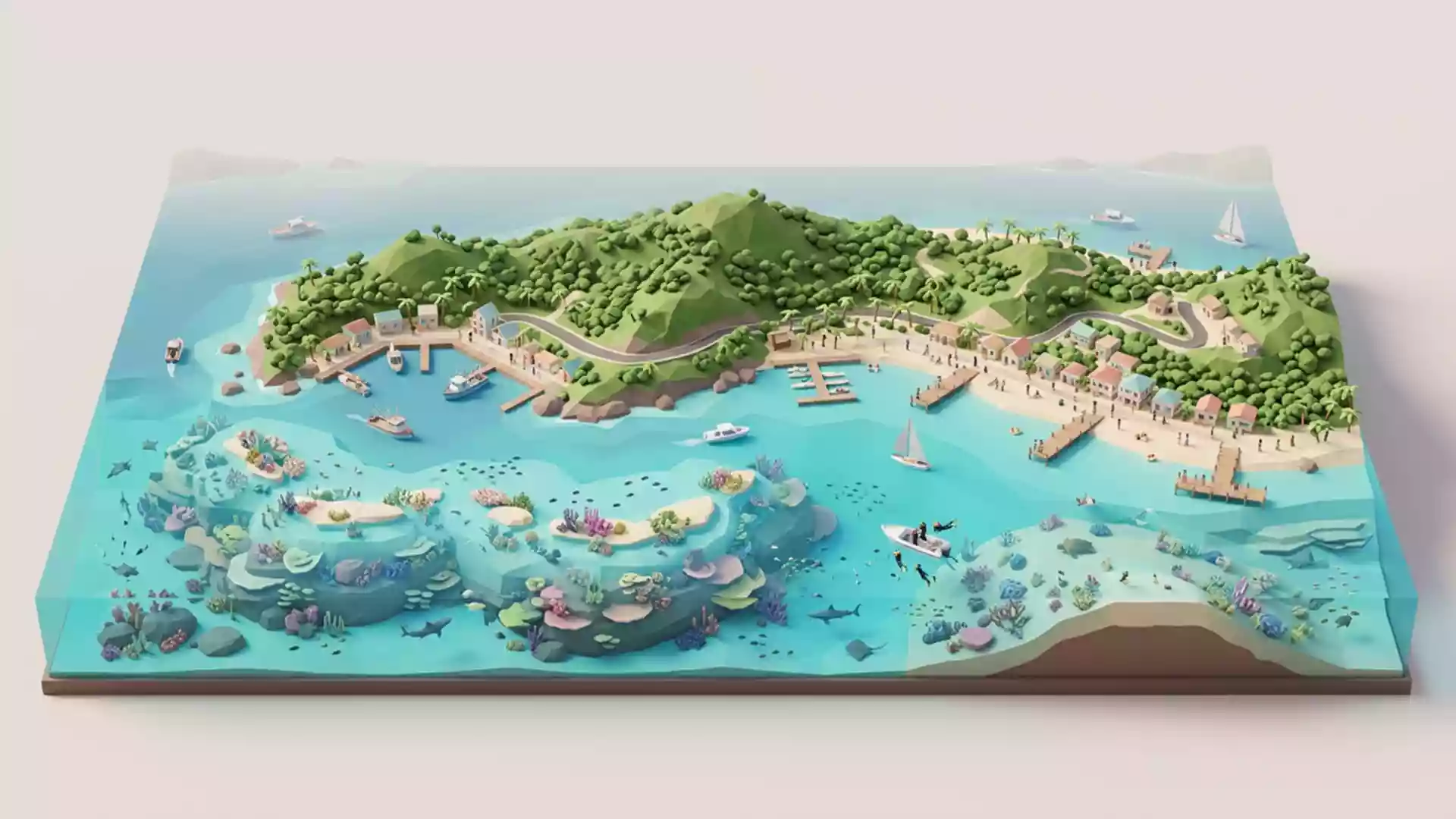
Roatan Reef along the Mesoamerican Barrier near Roatan
Published on 08/22/2026 at 09:21 | Editorial responsibility: Rafael Müller, Editor-in-Chief AD HOC NEWS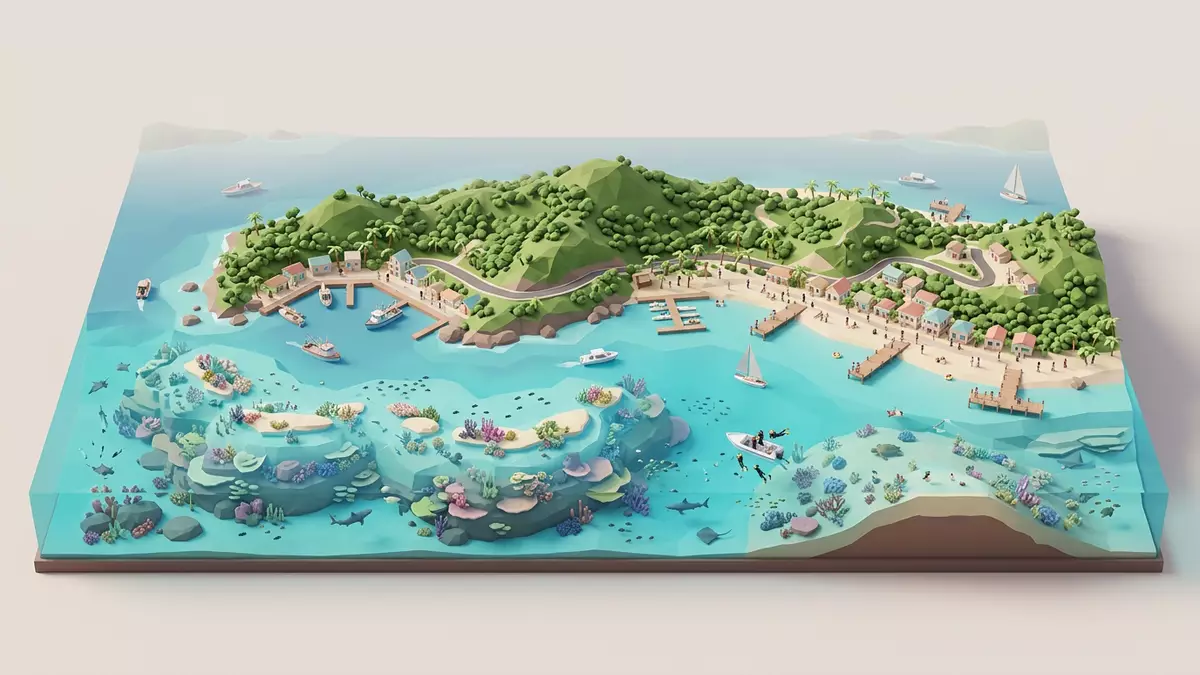
Roatan Reef wraps around the island of Roatan in Honduras, forming the local section of the vast Mesoamerican Barrier Reef and creating an intricate underwater landscape of coral formations, sand channels and deep blue drop-offs. As part of the barrier system that runs along the coasts of Mexico, Belize, Guatemala and Honduras, Roatan Reef gives this Caribbean island its characteristic fringe of living coral close to shore.Roatan’s coral reefs
Roatan Reef as part of the Mesoamerican Barrier
Roatan lies in the Bay Islands of Honduras in the western Caribbean Sea, several dozen kilometres off the country’s northern coast, with its elongated island shape running roughly east to west.Roatán is an island in the Caribbean Along much of this coastline, Roatan Reef forms a fringe of coral that sits relatively close to land and then drops away towards deeper water. This reef band belongs to the wider Mesoamerican Barrier Reef, a system recognised as the second-largest barrier reef in the world after Australia’s Great Barrier Reef.the Roatan Barrier Reef, part of the Mesoamerican Barrier Reef
From Mexico’s Yucatán Peninsula down to the Bay Islands of Honduras, the Mesoamerican Barrier Reef runs for hundreds of miles, linking Roatan Reef with coral systems off Belize, Guatemala and other Honduran islands.the Mesoamerican Barrier Reef, a vast coral ecosystem shared with Mexico, Belize and Guatemala On Roatan, this marine continuum sits within the Bay Islands National Marine Park, a protected area declared for its ecological and natural importance that encompasses coral reefs, seagrass, wetlands and beaches around several islands.Bay Islands National Marine Park
Underwater landscapes and coral habitats
Seen from a boat or underwater, Roatan Reef appears as a series of coral ridges, walls and gardens separated by sandy channels and patches of seagrass. Along the northwest coast near West End and West Bay, coral formations lie in bands parallel to the shore, where snorkellers and divers encounter hard corals, soft corals and reef fish over clear, shallow water.Its northwest coast is bordered by a coral reef Further out, the reef edge drops towards deeper water, forming walls and overhangs that give the underwater landscape a pronounced sense of relief.
On the south-western side of Roatan, Cordelia Banks has been designated a Site of Wildlife Importance and contains one of the last remaining healthy patches of staghorn coral in the Mesoamerican region, underlining the ecological significance of Roatan Reef as coral habitat.Cordelia Banks Site of Wildlife Importance Across the Bay Islands National Marine Park, reef zones sit alongside seagrass beds and beaches, forming interconnected marine ecosystems that support fish, invertebrates and coastal communities through fisheries and tourism.marine ecosystems such as coral reefs, seagrass, wetlands and beaches
Roatan Reef as a destination around Roatan
Roatan is the largest of the Bay Islands and lies off the northern coast of Honduras, roughly north of mainland ports and south of tourist regions around Mexico’s Yucatán Peninsula.Roatán is fringed by the Mesoamerican Barrier Reef Juan Manuel Gálvez International Airport on Roatan connects the island with flight routes from North American and Canadian cities, and the island’s coastal communities act as gateways to nearby reef sites.Juan Manuel Gálvez International Airport (RTB) on Roatán
West End, West Bay and other settlements along the north and west coasts sit close to Roatan Reef, with coral starting relatively near the shoreline and continuing outwards towards the barrier edge.The West End and West Bay area is the hotspot for snorkeling in Roatán From these bays, boats head to named reef sites such as Blue Channel, Sea Quest and Butchers Bank, where deeper water and more vertical reef structures lend themselves to scuba dives. Closer to shore, areas such as Half Moon Bay offer coral within swimming reach for strong swimmers, with the reef forming an underwater extension of the island’s coastal landscape.Half Moon Bay
Visiting Roatan Reef: what travellers from Western Europe should know
- Roatan Reef surrounds Roatan in the Bay Islands of Honduras in the western Caribbean Sea, several dozen kilometres off the country’s northern coast; the island is reached by air to Juan Manuel Gálvez International Airport on Roatan and onward by road to coastal communities.
- Many access points to Roatan Reef involve boarding small boats from beaches or jetties and entering the water by ladders or directly from the vessel, so visitors encounter boat decks, moving surfaces and open-water swimming rather than shore-based walking routes.
- On snorkel sites close to shore such as Half Moon Bay or parts of West Bay, reaching the coral involves swimming out from the beach over sandy shallows until the reef band begins, requiring confidence in the water and awareness of changing depth.
- Roatan lies outside the UK, Ireland and the EU. Entry requirements depend on your nationality; UK travellers can check the FCDO travel advice at gov.uk/foreign-travel-advice, Irish travellers the Department of Foreign Affairs at ireland.ie.
Searching for Roatan Reef on social platforms
These links open searches for Roatan Reef on each platform.
Frequently asked questions about Roatan Reef
Where is Roatan Reef located?
Roatan Reef surrounds the island of Roatan in the Bay Islands of Honduras in the western Caribbean Sea, off the country’s northern coast.
What can visitors expect when exploring Roatan Reef?
Visitors encounter coral bands, sandy channels and reef walls lying close to shore, reached by boat or by swimming out from beaches such as West Bay and Half Moon Bay.
What makes Roatan Reef distinctive among Caribbean reefs?
Roatan Reef forms the southern section of the Mesoamerican Barrier Reef, recognised as the second-largest barrier reef system on Earth and protected in parts as a marine park.