
Ribat of Monastir, Tunisia’s stone fortress by the sea
Published on 09/16/2026 at 22:43 | Editorial responsibility: Rafael Müller, Editor-in-Chief AD HOC NEWS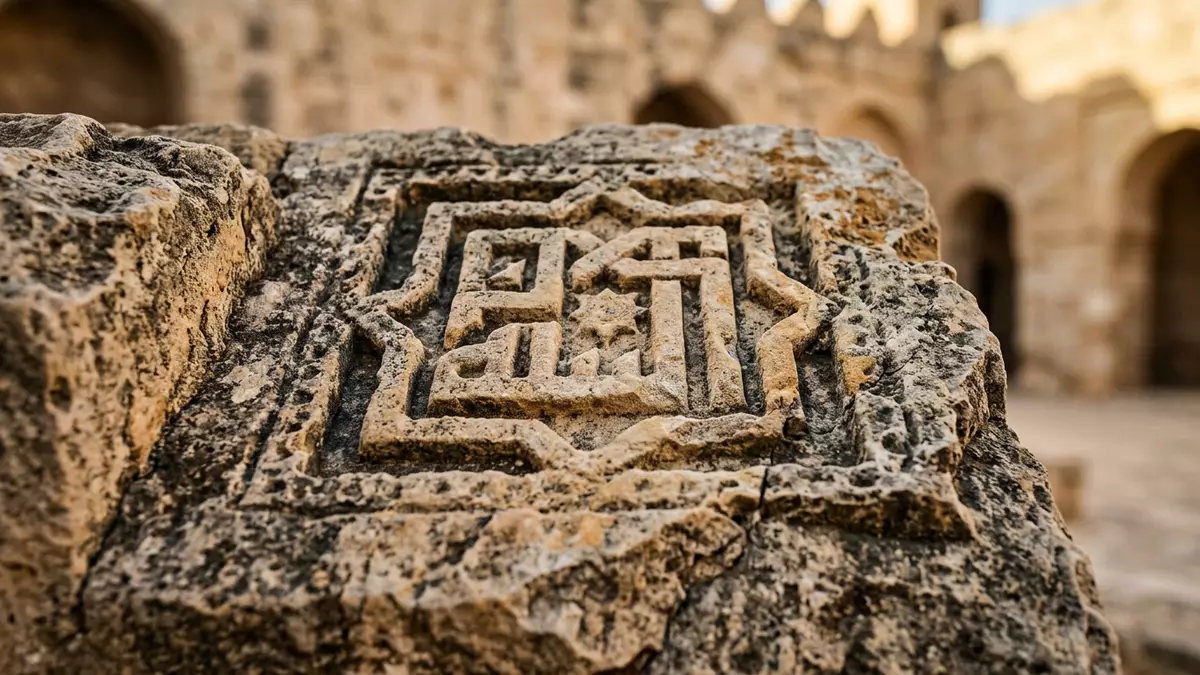
Ribat of Monastir is a compact stone fortress on the seafront of Monastir in Tunisia, where thick walls, towers and stacked terraces rise above the Mediterranean. Built in the eighth century as an early Islamic ribat under the Abbasid-era governor Harthama ibn Ayan, it has been enlarged over later periods into a multi-level complex that still dominates the city’s shoreline.Built in 796 CE as a ribat anchors its story in the wider history of the Maghreb.
Stone geometry above the Mediterranean
Ribat of Monastir stands directly beside the old harbour of Monastir on Tunisia’s central-eastern coast, its outer walls forming a near-rectangular block of stone that meets the sea on several sides.The fortress is described as a defensive Islamic structure in Monastir and its siting beside the water makes that function immediately visible. Honey-coloured masonry, laid in courses of dressed stone, rises in tiers so that courtyards, passages and rooftop platforms stack above one another within a compact footprint.
The earliest core of the ribat forms a regular plan, with facades strengthened by towers at the corners and a prominent watchtower in the south-eastern part of the enclosure.The original plan with corner towers and a watchtower reflects Mesopotamian influences on military architecture brought into Ifr?qiya during the Abbasid period. Later Aghlabid and Fatimid extensions added further ranges on the north and south sides, so that the fortress reads as layers of construction rather than a single phase; the differences in masonry and layout between older and newer sections are visible as one moves through the interior.
Cells, courtyards and a watchtower
Inside Ribat of Monastir, a main courtyard gives access to rooms that once housed the murabitun, the religiously motivated volunteers who combined military service with devotional life.The fortress functioned as an Islamic ribat where accommodation cells and prayer spaces formed part of its defensive fabric. Narrow stairways climb from one level to another, and small openings in the walls look out over the city and the sea. A section known as the women’s ribat forms a smaller courtyard behind the museum, with its own prayer room and series of rooms built into the enclosing walls.The women’s ribat with separate courtyard and prayer room survives as part of the complex.
The watchtower, or nador, rises above the other structures and is accessed by interior stairways that pass through thick stonework before emerging onto upper terraces.Construction is recorded in 181 H / 796 CE with later enlargements, and the tower’s position in the south-eastern angle reflects its role as a lookout over both land and sea approaches. From the upper platforms of the ribat, the harbour, the medina rooftops and other coastal landmarks of Monastir come into view, underlining how closely the fortress is tied to the maritime landscape of the Sahel coast.
From Abbasid stronghold to museum and monument
The ribat began as an Abbasid-era stronghold under Harthama ibn Ayan, the emir of Ifr?qiya, whose building programme in 796 CE established Ribat of Monastir as the first ribat in North Africa.The first North African ribat at Monastir marked a new type of coastal outpost on the Maghreb shore. Over the following centuries the complex grew, with Aghlabid work extending the northern side and Fatimid construction in the tenth century adding further structures to the south.Aghlabid and Fatimid phases on the north and south sides give the ribat its multi-period character, visible in the different heights and forms of its walls.
In its present form, Ribat of Monastir serves both as a monument and as a museum of Islamic art, with a prayer room housing coins, ceramics and historic photographs related to Monastir and the wider region.A small Museum of Islamic Art occupies part of the prayer room, while the classification of the ribat as a protected historic monument in Tunisia confirms its status within national heritage.The fortress is listed as a historic monument in Tunisia and continues to define the skyline of Monastir’s waterfront, its stone geometry contrasting with the marina and later urban development nearby.
Visiting Ribat of Monastir: what travellers from Western Europe should know
- Ribat of Monastir stands beside the harbour on the seafront of Monastir, a coastal city on the Gulf of Hammamet in eastern Tunisia, reached by road links from Sousse and Mahdia and by flights into Monastir-Habib Bourguiba International Airport.
- Within the fortress, movement between levels involves narrow stairways, uneven stone steps and rooftop terraces without shade, so walking surfaces are hard and gradients can feel steep in places.
- The ribat lies close to Monastir’s old medina, the marina and the Bourguiba Mausoleum, making it easy to combine a visit to the fortress with short walks through the historic centre and along the waterfront.
- The official language is Arabic and the currency is the Tunisian dinar.
- Entry requirements depend on your nationality; UK travellers can check the FCDO travel advice at gov.uk/foreign-travel-advice, Irish travellers the Department of Foreign Affairs at ireland.ie.
Searching for Ribat of Monastir on social platforms
These links open searches for Ribat of Monastir on each platform.
Frequently asked questions about Ribat of Monastir
Where is Ribat of Monastir located?
Ribat of Monastir stands beside the harbour on the seafront of Monastir, a coastal city on Tunisia’s central-eastern Mediterranean shore along the Gulf of Hammamet.
What can visitors expect inside the fortress?
Visitors encounter stone courtyards, accommodation cells, prayer rooms and stairways leading to rooftop terraces and a watchtower, together forming a multi-level early Islamic coastal stronghold.
What makes Ribat of Monastir distinctive among fortresses?
Its foundation in 796 CE under Harthama ibn Ayan as the first North African ribat, multi-period expansions and combination of defensive architecture with religious spaces make it a distinctive monument on Tunisia’s Sahel coast.


