
Reserva Nacional de Paracas where desert touches the Pacific
Published on 09/09/2026 at 06:12 | Editorial responsibility: Rafael Müller, Editor-in-Chief AD HOC NEWS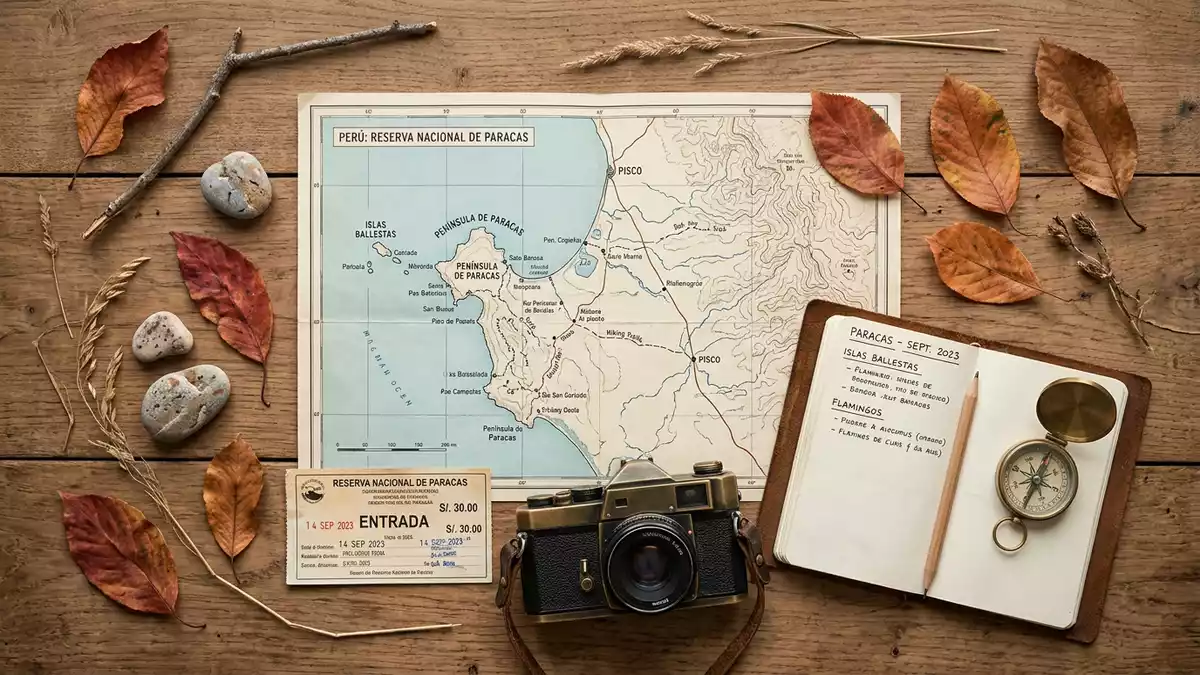
Reserva Nacional de Paracas on Peru’s south-central Pacific coast is a protected landscape where the coastal desert reaches the ocean in broad sweeps of sand, cliffs and sea. Established as a national reserve on 25 September 1975, it brings the Paracas Peninsula and adjoining marine waters in the Ica region under one continuous frame of protection.
Desert peninsula and Pacific shoreline
Reserva Nacional de Paracas occupies an arid peninsula and surrounding coastal waters in the department of Ica, near the town of Paracas and south of Pisco along the shoreline. The protection area lies in the coastal desert of south-western Peru, in the districts of Paracas in the province of Pisco and Salas in the province of Ica, where wind-shaped plains run to abrupt sea-facing edges.coastal desert of south-western Peru
Across both land and sea, the reserve spans about 335,000 hectares (827,801 acres), with roughly two thirds of that surface extending offshore into the cold waters of the Peruvian current and one third covering the desert peninsula and nearby islands.covers an area of 335,000 hectares Bays with shallow marine waters, rocky shores and long sandy beaches sit alongside headlands and islands, giving the coastline within the reserve a varied outline against the Pacific.
Protected status on land and sea
Reserva Nacional de Paracas holds formal recognition as a national reserve in Peru and forms part of the country’s national system of natural protected areas, covering both terrestrial and marine ecosystems under one designation.única área natural protegida del Perú It is classified in IUCN category VI as a protected area managed for the sustainable use of natural ecosystems and habitats, reflecting its role in balancing conservation with human use in a desert–sea setting.IUCN category VI protected area
Beyond its national status, Reserva Nacional de Paracas is recognised internationally as a Ramsar wetland of global importance, with a Ramsar site covering 335,000 hectares designated on 30 March 1992.Ramsar site covering 335,000 hectares The reserve has also been identified as a Western Hemisphere Shorebird Reserve Network site of regional importance, reflecting the presence of large numbers of shorebirds on its beaches and mudflats along the Pacific flyway.WHSRN Site of Regional Importance
Land, sea and the Paracas wind
On land, much of Reserva Nacional de Paracas consists of wide desert plains and low hills made of sedimentary rocks, carved by the persistent Paracas winds into surfaces of sand and gravel. These winds, which are part of the reserve’s character, shape dunes and exposed rock and carry fine particles towards the shoreline, where cliffs rise above the sea and viewpoints overlook long stretches of surf breaking on remote beaches.Paracas winds shaping the desert
Offshore, marine ecosystems inside the reserve belong to the cold sea of the Peruvian current and the Pacific coastal desert ecoregions, combining nutrient-rich waters with arid terrestrial surroundings.cold sea of the Peruvian current Around bays and islands, shallow waters, rocky shores and sandy beaches form habitats for marine wildlife, including resident and migratory shorebirds recorded in high numbers, alongside other coastal species adapted to the meeting line between desert and ocean.more than 20,000 shorebirds annually
Visiting Reserva Nacional de Paracas: what travellers from Western Europe should know
- Reserva Nacional de Paracas lies in the Ica region of southern Peru along the Pacific, near the town of Paracas and south of Pisco on the coastal road network.
- Much of the reserve’s terrain is desert, with exposed plains, dunes and cliff-top viewpoints, so approaches on foot can involve walking over sand and uneven ground.
- Inland areas and sea-facing cliffs stand close to the shoreline, with viewpoints that look across bays and islands, so weather and sea conditions can shape how the landscape is experienced.
- The official language is Spanish and the currency is the Peruvian sol.
- Entry requirements depend on your nationality; UK travellers can check the FCDO travel advice at gov.uk/foreign-travel-advice, Irish travellers the Department of Foreign Affairs at ireland.ie.
Searching for Reserva Nacional de Paracas on social platforms
These links open searches for Reserva Nacional de Paracas on each platform.
Frequently asked questions about Reserva Nacional de Paracas
Where is Reserva Nacional de Paracas?
Reserva Nacional de Paracas is on Peru’s south-central Pacific coast in the Ica region, around the Paracas Peninsula near the town of Paracas and south of Pisco.
What can visitors expect from the landscape?
Visitors encounter desert plains, dunes and low hills leading to cliffs above the Pacific, along with bays, sandy beaches and offshore islands within the protected area.
What makes Reserva Nacional de Paracas distinctive?
Its defining feature is the meeting line between the Paracas desert and the Pacific Ocean, protected across both land and sea within a single national reserve recognised under international conservation frameworks.


