
Reserva Nacional de Paracas where desert meets the Pacific
Published on 09/19/2026 at 22:50 | Editorial responsibility: Rafael Müller, Editor-in-Chief AD HOC NEWS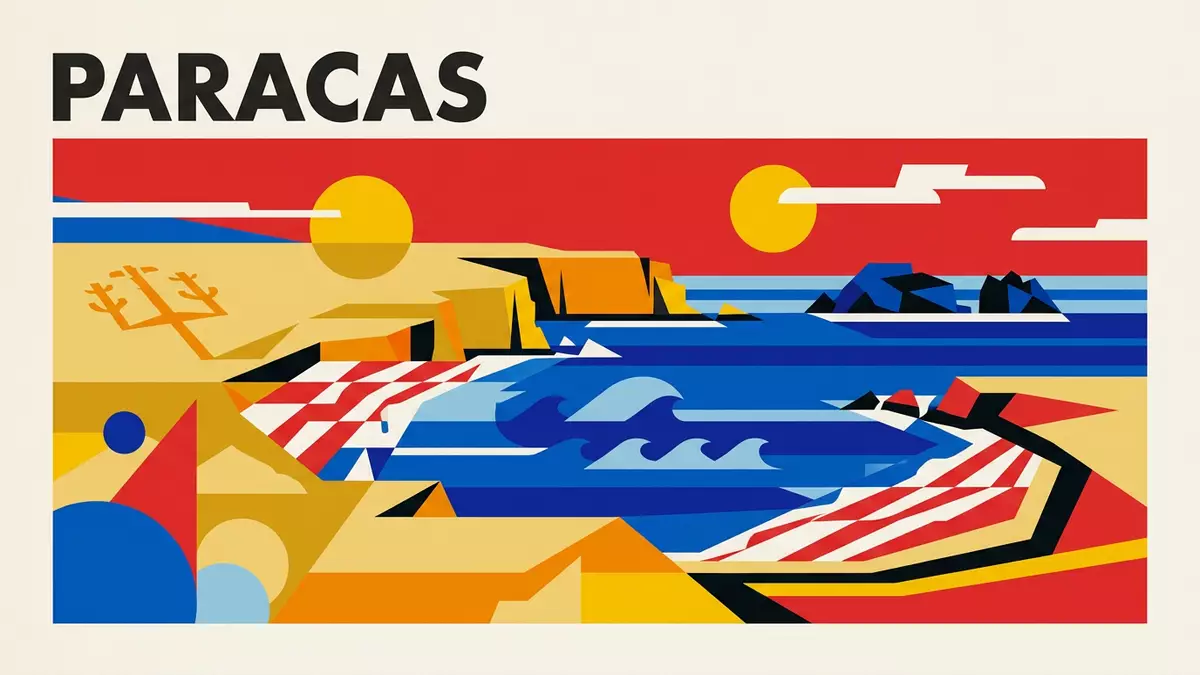
On the south-central Pacific coast of Peru, Reserva Nacional de Paracas stretches around the Paracas Peninsula as a protected landscape where coastal desert meets open ocean in one broad reserve of land and sea. Established as a national reserve on 25 September 1975, it lies in the department of Ica near the town of Paracas and the provincial centre of Pisco, bringing arid terrain and marine waters under the same protection in a single coastal setting.
Desert peninsula and Pacific shoreline
Reserva Nacional de Paracas occupies a peninsula and adjoining shoreline on Peru’s Ica coast, wrapping around bays and headlands that face directly onto the Pacific Ocean south of Pisco.on Peru’s south-central coast in the department of Ica The reserve extends across districts in the province of Pisco and neighbouring areas in the province of Ica, with desert plains on land and surrounding marine waters forming a continuous protected area.the region of Ica in south-west Peru
The protected area covers about 335,000 hectares (around 3,350 km²), combining terrestrial desert with extensive Pacific waters that include bays, shallow coastal seas, rocky shores and sandy beaches.it covers an area of 335,000 hectares On land, wide plains of sand and gravel belong to the coastal desert of south-western Peru, while cliffs and bluffs rise above the ocean in places, creating viewpoints over the shoreline and islands scattered just offshore.bays opening between rocky headlands backed by desert plains
A protected meeting of desert and cold sea
Reserva Nacional de Paracas was designated as a national reserve on 25 September 1975 and later recognised internationally for its coastal and marine ecosystems, including inscription as a Ramsar wetland site in 1992.designation date 30 March 1992 as a Ramsar site Its protected surface reflects the ecoregions of the cold sea influenced by the Peruvian current and the Pacific coastal desert, bringing together arid landforms and productive marine areas in a single conservation unit.representative of the cold Peruvian current and coastal desert
Within this landscape, desert surfaces, cliffs and low hills form the setting for coastal features such as bays and inlets, while offshore areas include islands and shallow waters used by marine wildlife, including shorebirds and other species connected with the cold Humboldt-influenced sea.designation as a site of regional importance for shorebirds The mixture of coastal desert and ocean makes Reserva Nacional de Paracas one of Peru’s larger protected coastal zones, with both geological and marine elements forming part of its character as a reserve.a national protection area with a surface of 3,350 km²
Wildlife and conservation status
Reserva Nacional de Paracas protects habitats that support a range of flora and fauna associated with coastal desert and the adjacent sea, including shorebirds that use the reserve as a stopover and staging area and marine animals adapted to the cold waters off the Peruvian coast.its importance for Nearctic shorebirds Species recorded in the reserve include numerous birds, mammals and fish, along with marine plants such as algae, reflecting the productivity of the coastal sea and the shelter provided by bays and shorelines.more than 400 species of flora and fauna recorded
Recognition as a Ramsar site and as a shorebird area of regional importance places Reserva Nacional de Paracas within international networks of protected wetlands and coastal habitats, underlining the significance of its combined desert and marine ecosystems for conservation in Peru.Ramsar Sites Information Service entry The reserve also forms part of the country’s national system of protected areas, with management directed toward conserving natural resources along the Paracas Peninsula and its coastal waters.managed by Peru’s national protected-areas agency
Visiting Reserva Nacional de Paracas: what travellers from Western Europe should know
- Reserva Nacional de Paracas lies near the town of Paracas on Peru’s south-central Pacific coast, reached by road connections that link the Ica region with Lima and other parts of the country.
- The terrain in the reserve includes stretches of desert, coastal plains and some cliff sections above the sea, so visiting viewpoints or walking in exposed areas involves movement over sandy or gravel surfaces with little shade.
- The reserve borders the Pacific Ocean and includes marine areas around bays and islands, so boat excursions operate from the surrounding coast to reach parts of the protected waters and nearby offshore features.
- The official language is Spanish and the currency is the Peruvian sol.
- Entry requirements depend on your nationality; UK travellers can check the FCDO travel advice at gov.uk/foreign-travel-advice, Irish travellers the Department of Foreign Affairs at ireland.ie.
Searching for Reserva Nacional de Paracas on social platforms
These links open searches for Reserva Nacional de Paracas on each platform.
Frequently asked questions about Reserva Nacional de Paracas
Where is Reserva Nacional de Paracas located?
Reserva Nacional de Paracas is on Peru’s south-central Pacific coast in the department of Ica, near the town of Paracas and south of Pisco.
What can visitors expect in the landscape?
The reserve combines coastal desert plains, bays and headlands with Pacific waters, so visitors encounter arid terrain alongside shorelines and offshore islands.
What makes Reserva Nacional de Paracas distinctive?
It brings together subtropical coastal desert and cold, productive sea in one protected area, recognised nationally and internationally for its combined land and marine ecosystems.


