
Reichstagsgebaude in Berlin and its glass crown of democracy
Published on 09/19/2026 at 16:42 | Editorial responsibility: Rafael Müller, Editor-in-Chief AD HOC NEWS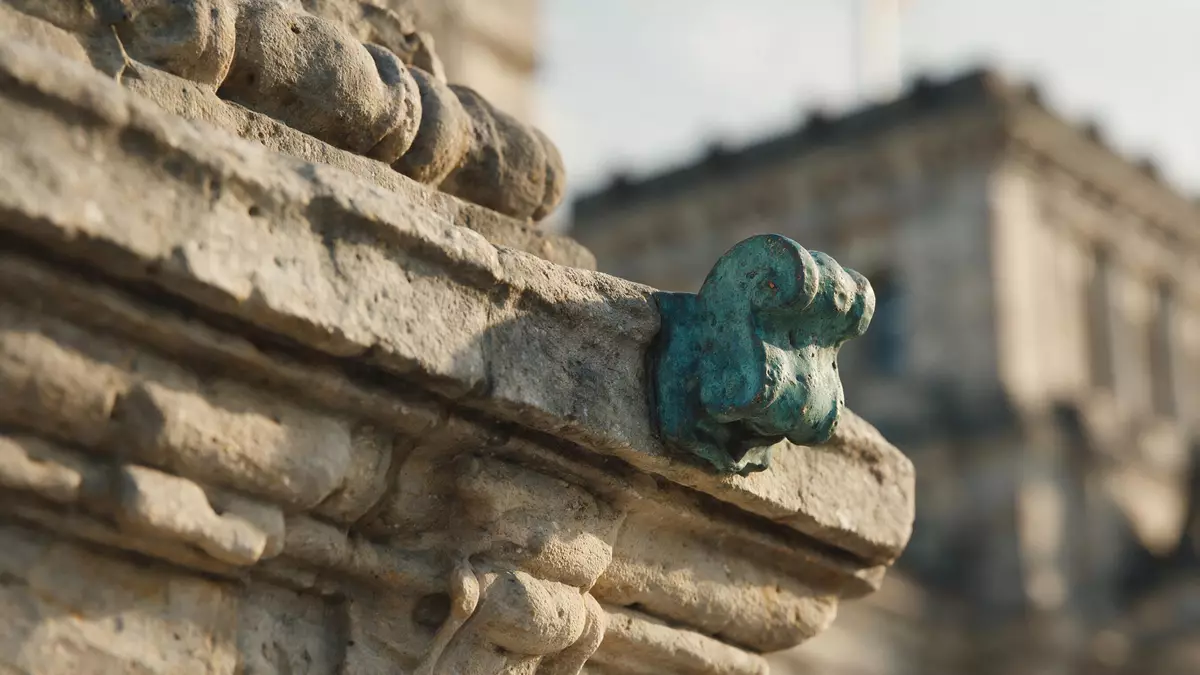
Reichstagsgebaude in Berlin is a nineteenth-century parliamentary building whose rebuilt interior and glass dome make Germany’s federal legislature unusually visible as architecture. Completed in 1894 to designs by architect Paul Wallot, the stone shell now houses the Bundestag and carries a contemporary roofscape dominated by a transparent dome.
From imperial parliament to rebuilt Bundestag home
Reichstagsgebaude stands on Platz der Republik in Berlin’s Mitte district, west of the Brandenburg Gate and close to the River Spree. The Neo-Renaissance building was designed by Paul Wallot during the era of the German Empire and was completed in 1894 as the seat of the Reichstag, the imperial parliament.designed by Paul Wallot The exterior combines rusticated stone walls, corner pavilions and a central portal, giving it the monumental presence associated with late nineteenth-century state architecture.late nineteenth-century state architecture
The building is intertwined with key moments in German history. In 1916 the inscription “Dem Deutschen Volke” was added to the main façade, aligning the parliament with the German people rather than the monarchy.inscription Dem Deutschen Volke On 9 November 1918, Philipp Scheidemann proclaimed the republic from a balcony, symbolising the transition to the Weimar Republic.Philipp Scheidemann proclaimed the republic A devastating fire in February 1933 severely damaged the interior, and the wartime battle for Berlin left the structure a ruin, making Reichstagsgebaude a physical record of the Empire, the Weimar period, National Socialism and the division of Germany.
Norman Foster’s reconstruction and the glass dome
After German reunification in 1990, a full reconstruction of Reichstagsgebaude was commissioned, with British architect Norman Foster selected to redesign the building.architect Norman Foster His project retained the historic façades while reworking the interior as a modern parliamentary complex and adding a new glass dome above the plenary chamber. The Bundestag met in the building following this reconstruction, and Reichstagsgebaude has been the permanent seat of the German federal parliament since 1999.permanent seat since 1999
The dome sits on the roof terrace and rises above the stone volume, its glass structure contrasting with the older masonry. Inside, visitors encounter a double-helix system of ramps that spirals upwards along the inner surface of the dome, framing views down into the parliamentary chamber and out across Berlin. The glass construction reflects and refracts light, and the open centre of the dome carries a mirrored core that directs daylight into the hall below. From the roof terrace, the skyline reveals landmarks such as the Brandenburg Gate, the towers along Unter den Linden and the course of the Spree, setting Reichstagsgebaude within the broader cityscape.roof terrace and city views
Layout, surroundings and architectural details
Reichstagsgebaude occupies a large plot bordered by Platz der Republik and Scheidemannstrasse, with lawns extending in front of the main façade. The central entrance stands beneath a portico whose columns support a pediment carrying the “Dem Deutschen Volke” inscription, while wings extend to each side, giving the building a balanced plan. Inside, the reconstructed plenary hall forms the heart of the complex, surrounded by office wings, circulation areas and exhibition spaces that trace the building’s history.Mitte district monument
The exterior masonry carries marks of the twentieth century, including graffiti by Soviet soldiers from 1945 that have been preserved inside the building as historical traces.Soviet graffiti preserved Around Reichstagsgebaude, the government quarter includes the Paul-Löbe-Haus and other Bundestag buildings, linked by underground and surface connections that integrate the historic parliament house into a contemporary complex of ministries and offices.government quarter context
Visiting Reichstagsgebaude: what travellers from Western Europe should know
- Reichstagsgebaude stands at Platz der Republik in the central Berlin district of Mitte, west of Brandenburg Gate and near the River Spree, and is reached by Berlin’s local public transport network.
- The building has multiple staircases, internal ramps in the dome and a broad roof terrace, so a visit involves walking across large interior spaces and ascending sloped paths.
- Nearby landmarks include Brandenburg Gate on Pariser Platz and the memorials and ministries of the government quarter, which frame Reichstagsgebaude within a dense ensemble of official buildings.
- The official language is German and the currency is the euro.
Searching for Reichstagsgebaude on social platforms
These links open searches for Reichstagsgebaude on each platform.
Frequently asked questions about Reichstagsgebaude
Where is Reichstagsgebaude located in Berlin?
Reichstagsgebaude stands on Platz der Republic in the Mitte district of Berlin, west of Brandenburg Gate and close to the River Spree and the government quarter.
What can visitors expect during a visit to Reichstagsgebaude?
Visitors encounter a historic stone exterior, a reconstructed modern parliamentary interior, a roof terrace and a glass dome with internal ramps and views over Berlin.
What makes Reichstagsgebaude distinctive among European parliamentary buildings?
Reichstagsgebaude combines a nineteenth-century Neo-Renaissance shell with Norman Foster’s transparent dome above the plenary hall, making the functioning national parliament part of the architectural experience.


