
Reichstagsgebaude and its glass dome as a window onto German history
Published on 08/30/2026 at 14:40 | Editorial responsibility: Rafael Müller, Editor-in-Chief AD HOC NEWS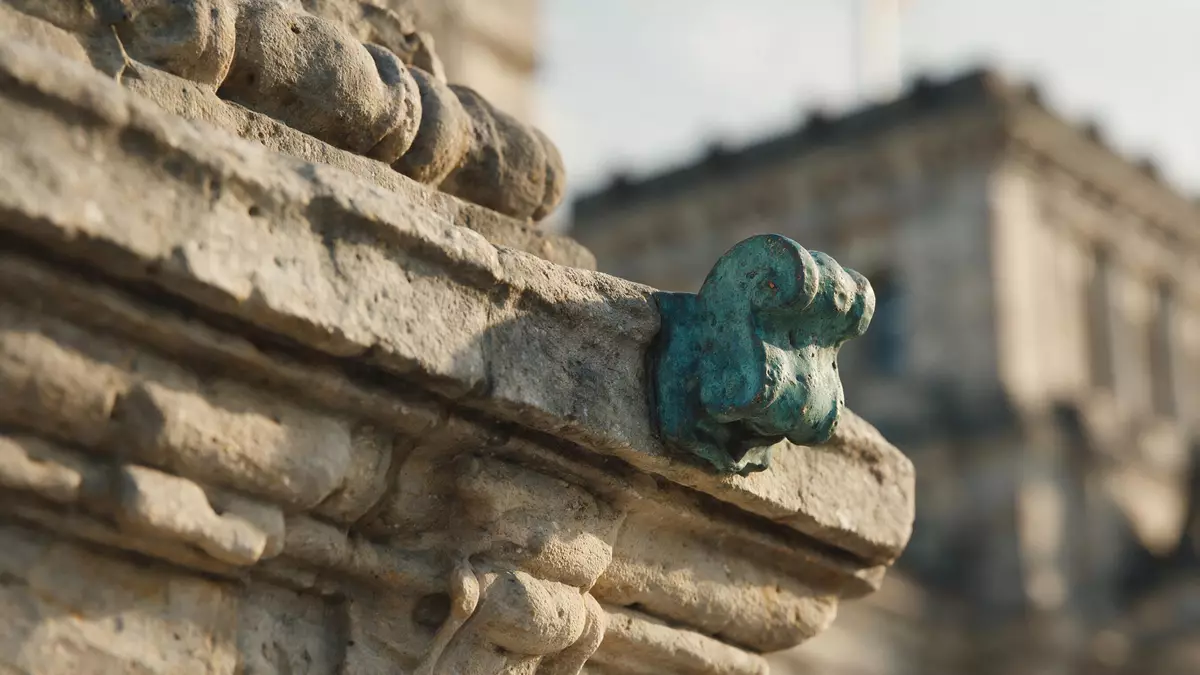
Reichstagsgebaude in Berlin is a nineteenth-century parliamentary building crowned by a contemporary glass dome, where German history and present-day democracy share the same stone walls and steel ribs. Designed by architect Paul Wallot in the late nineteenth century and fundamentally reworked by Norman Foster in the 1990s, it stands on Platz der Republik as the formal seat of the Bundestag and a symbol of Germany’s parliamentary government.
A neo-Renaissance shell shaped by empire and republic
Reichstagsgebaude was constructed for the parliament of the German Empire, rising between 1884 and 1894 on the left bank of the River Spree in Berlin’s Tiergarten district. Its architect, Paul Wallot, combined neo-Renaissance forms with grand sculptural decoration, giving the building a monumental footprint and a heavily articulated stone façade.constructed between 1884 and 1894 The plan centres on a large assembly hall, surrounded by offices and committee rooms arranged in wings around courtyards.
The building became the seat of the Reichstag legislature of both the German Empire and the Weimar Republic, placing it at the core of political life in Germany from the early twentieth century onwards.seat of the Reichstag legislature In November 1918, during the German Revolution, the proclamation of the republic was made from one of its windows, binding the architecture of Reichstagsgebaude to a shift from monarchy to parliamentary democracy.proclamation of the republic in 1918 The building later suffered severe damage in the Reichstag fire of February 1933 and during the Second World War, leaving its shell standing but its interior largely unusable.
From damaged shell to Bundestag and Foster’s transformation
After the war, Reichstagsgebaude was partially restored in the 1960s, with architect Paul Baumgarten responsible for a modernised interior that allowed exhibitions and special events to take place inside the historic envelope.restoration in the 1960s The building remained without its original historic dome and did not yet serve as the full working seat of the federal parliament.
Following the decision in 1991 to move Germany’s parliamentary functions from Bonn to Berlin, Reichstagsgebaude was selected as the future seat of the unified Bundestag. A major international competition awarded the commission for the building’s transformation to British architect Sir Norman Foster, whose conversion was completed in 1999.conversion completed in 1999 Inside, the former imperial parliament was reorganised into a modern working environment, with a new plenary chamber, contemporary offices and up-to-date communications infrastructure integrated behind the preserved historic façades.
The glass dome above the debating chamber
The most visible element of Foster’s redesign is the glass dome that rises above the rebuilt assembly chamber. This structure, completed in 1999 and engineered in collaboration with steel-and-glass specialists, takes the form of a circular shell with a mirrored central cone rising from the roof of the hall below.glass dome completed in 1999 Visitors ascend the dome via paired spiral ramps that wind around the cone, reaching a viewing platform with a 360-degree panorama of Berlin’s cityscape.
From the ramps and the platform, visitors can look down into the debating chamber of the Bundestag, seeing the semi-circular seating and desks arranged for federal representatives. The mirrored cone directs daylight into the chamber and forms a geometric centrepiece within the dome. The glass construction contrasts sharply with the masonry mass of the nineteenth-century building and visually links the parliament to its urban surroundings, including the nearby Brandenburg Gate and the Tiergarten park.glass dome above the plenary hall
Visiting Reichstagsgebaude: what travellers from Western Europe should know
- Reichstagsgebaude stands on Platz der Republik in central Berlin, west of the Brandenburg Gate and close to the wide green area of the Tiergarten. It is reached by city transport, with nearby stops on Berlin’s S-Bahn and U-Bahn networks.
- Approaching the building on foot involves crossing broad paved areas around Platz der Republik. Inside, the ascent to the dome follows gently sloping spiral ramps, and movement between levels in the parliamentary areas uses staircases and lifts.
- The official language is German and the currency is the euro.
Searching for Reichstagsgebaude on social platforms
These links open searches for Reichstagsgebaude on each platform.Frequently asked questions about Reichstagsgebaude
Where is Reichstagsgebaude located in Berlin?
Reichstagsgebaude stands on Platz der Republik in the central government district of Berlin, close to the Brandenburg Gate and the Tiergarten park.
What can visitors expect inside Reichstagsgebaude?
Visitors encounter a historic parliamentary building that houses the Bundestag, with a contemporary plenary chamber and access to a glass dome reached by spiral ramps.
What makes Reichstagsgebaude distinctive among Berlin’s landmarks?
The combination of Paul Wallot’s nineteenth-century neo-Renaissance stone architecture with Norman Foster’s transparent glass dome above the debating chamber gives Reichstagsgebaude a distinctive profile in Berlin’s cityscape.


