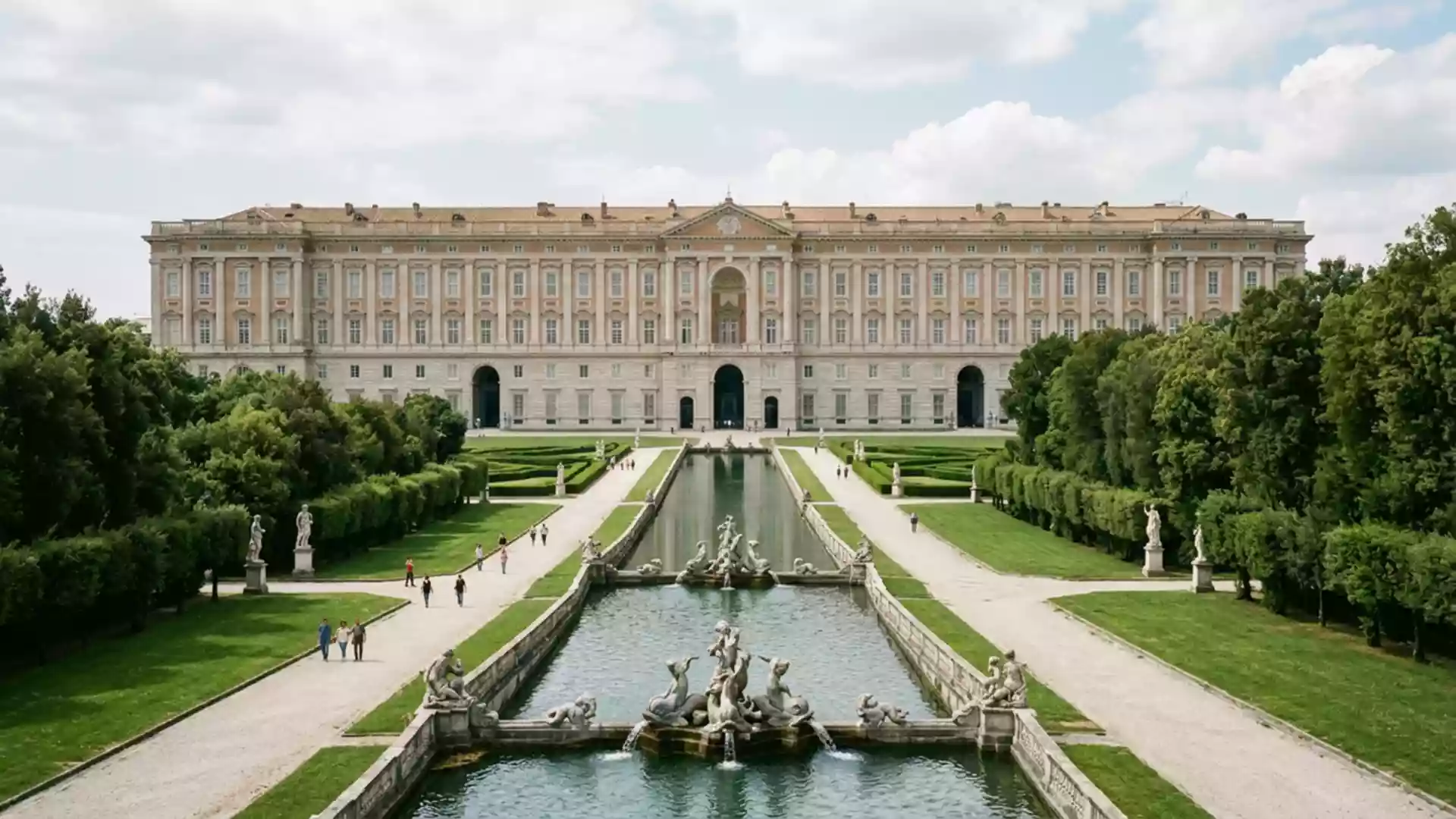
Reggia di Caserta, an eighteenth?century palace of grand scale
Published on 09/02/2026 at 09:30 | Editorial responsibility: Rafael Müller, Editor-in-Chief AD HOC NEWS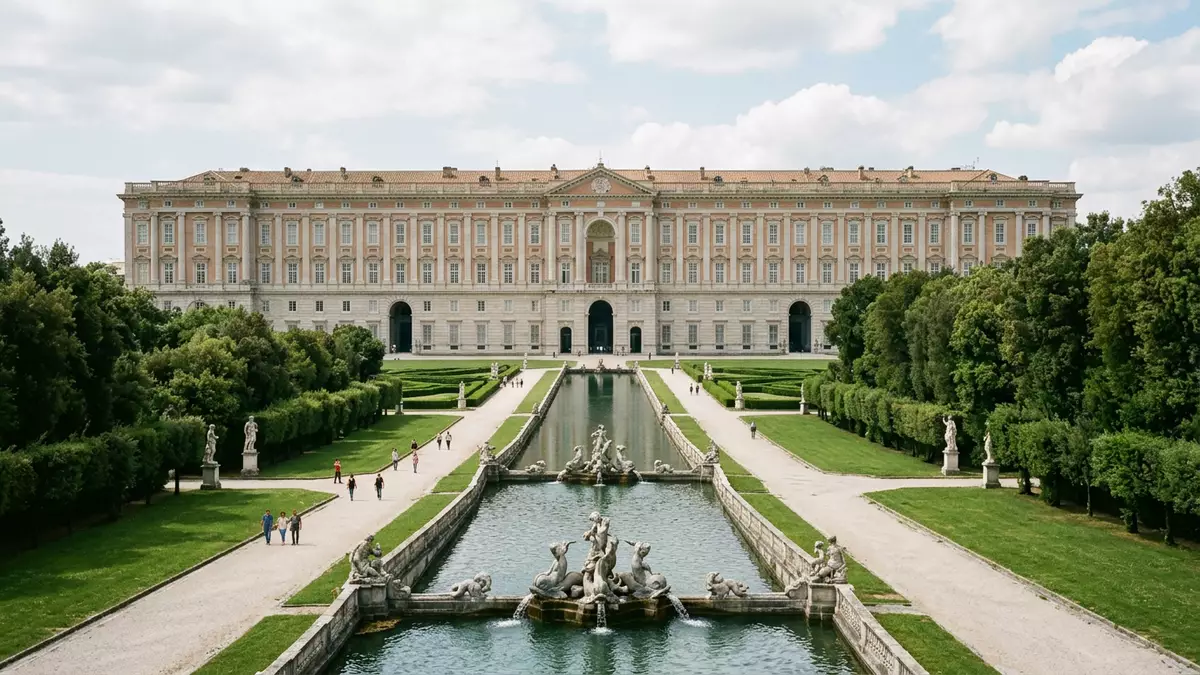
Reggia di Caserta in Caserta is an eighteenth?century royal palace conceived for the Bourbon rulers of the Kingdom of Naples, bringing architecture and landscape together on an exceptional scale in southern Italy. Commissioned by Charles VII of Bourbon in the 1750s and designed by architect Luigi Vanvitelli, the palace complex became a signature work of the late Baroque and early Neoclassical period.
An eighteenth?century palace built for the Bourbons
The starting point for understanding Reggia di Caserta is its role as a royal residence for the Bourbon dynasty that governed the Kingdom of Naples in the eighteenth century. Charles VII of Bourbon, later Charles III of Spain, commissioned the new palace from Luigi Vanvitelli around the early 1750s, with construction beginning in 1752 and extending through the later decades of that century.commissioned by Charles VII of Bourbon The project was intended to create a principal seat for the Neapolitan Bourbons inland from Naples, set in the town of Caserta in the Campania region of southern Italy.former royal palace in Caserta, Campania
Luigi Vanvitelli, one of the leading architects of his generation, developed a monumental design that combined influences from Baroque palace architecture with classical order and symmetry.commissioned by King Charles of Bourbon and designed by Luigi Vanvitelli The building rises over multiple floors above a broad base and is arranged around large internal courtyards, with grand staircases and ceremonial spaces aligned along central axes.five?storey royal palace set around internal courtyards Inside, royal apartments, reception halls and service rooms form a sequence that reflects eighteenth?century court life and ceremonial practice.
Scale, layout and the palace interior
Reggia di Caserta is notable for its sheer size among European royal residences of the eighteenth century, with a built footprint extending across tens of thousands of square metres.one of the largest palaces erected in Europe during the eighteenth century The palace rises over five storeys above ground and contains a large number of rooms organised in wings around its courtyards.five floors and extensive interior space Long corridors connect suites of chambers, while monumental staircases link the ground level to the principal piano nobile, where the most formal rooms are located.
Among the interiors, visitors encounter grand halls decorated with stucco work, frescoes and decorative finishes characteristic of the late eighteenth century. Ceremonial spaces such as the grand staircase and vestibules frame the approach to the royal apartments, while chapels and galleries sit within the same architectural envelope.Royal Staircase and vestibules within the palace The palace building is constructed in masonry, with façades articulated by regular window openings, cornices and classical detailing that align with Vanvitelli’s carefully planned composition.
Palace, park and UNESCO World Heritage landscape
Reggia di Caserta forms the centre of a broader monumental complex that integrates architecture, formal gardens and hydraulic engineering into one planned landscape. Extending from the palace, the Royal Park is laid out along a long axis, with terraces, avenues and water features stretching towards the distant hills.Royal Park created under Luigi Vanvitelli and his son Carlo Within this park, cascades, basins and fountains are aligned in sequence, supplied by the Caroline Aqueduct that brings water from the surrounding area.
The wider complex includes the Royal Park, the English Garden, the San Silvestro Wood and the Caroline Aqueduct, together with the San Leucio Belvedere on neighbouring heights.complex including Royal Palace, Royal Park, English Garden, Bosco di San Silvestro and Caroline Aqueduct In 1997 this eighteenth?century ensemble was inscribed on the UNESCO World Heritage List under the title “Reggia di Caserta del XVIII secolo con il Parco, l’Acquedotto vanvitelliano e il Complesso di San Leucio”, recognising its outstanding value as a planned royal landscape.UNESCO World Heritage Site since 1997 The palace today functions as a museum within this protected setting, with the historic interiors and the surrounding grounds forming a single visitable complex.
Visiting Reggia di Caserta: what travellers from Western Europe should know
- Reggia di Caserta stands in the city of Caserta in the Campania region of southern Italy, north of Naples, and is reached by rail services to Caserta station and by road connections from the wider region.
- The monumental complex combines the palace with the Royal Park and other landscaped areas, and visiting the interiors involves moving between multiple floors and through long corridors and staircases.
- The palace and its grounds lie within Italy; the official language is Italian and the currency is the euro.
- The wider setting includes the San Leucio complex and the Caroline Aqueduct in the surrounding landscape, which form part of the same UNESCO inscription.
Searching for Reggia di Caserta on social platforms
These links open searches for Reggia di Caserta on each platform.
Frequently asked questions about Reggia di Caserta
Where is Reggia di Caserta located?
Reggia di Caserta stands in the city of Caserta in the Campania region of southern Italy, inland to the north of Naples.
What should visitors expect on a visit?
Visitors encounter an extensive palace interior with royal apartments, ceremonial halls and staircases, together with the Royal Park and other landscaped areas forming a planned eighteenth?century royal complex.
What makes Reggia di Caserta distinctive?
The palace and its grounds form one of the largest eighteenth?century royal residences in Europe, conceived by Luigi Vanvitelli for the Bourbon rulers and recognised as a UNESCO World Heritage Site.