
Recife Antigo, the island quarter where Recife began
Published on 09/12/2026 at 14:58 | Editorial responsibility: Rafael Müller, Editor-in-Chief AD HOC NEWS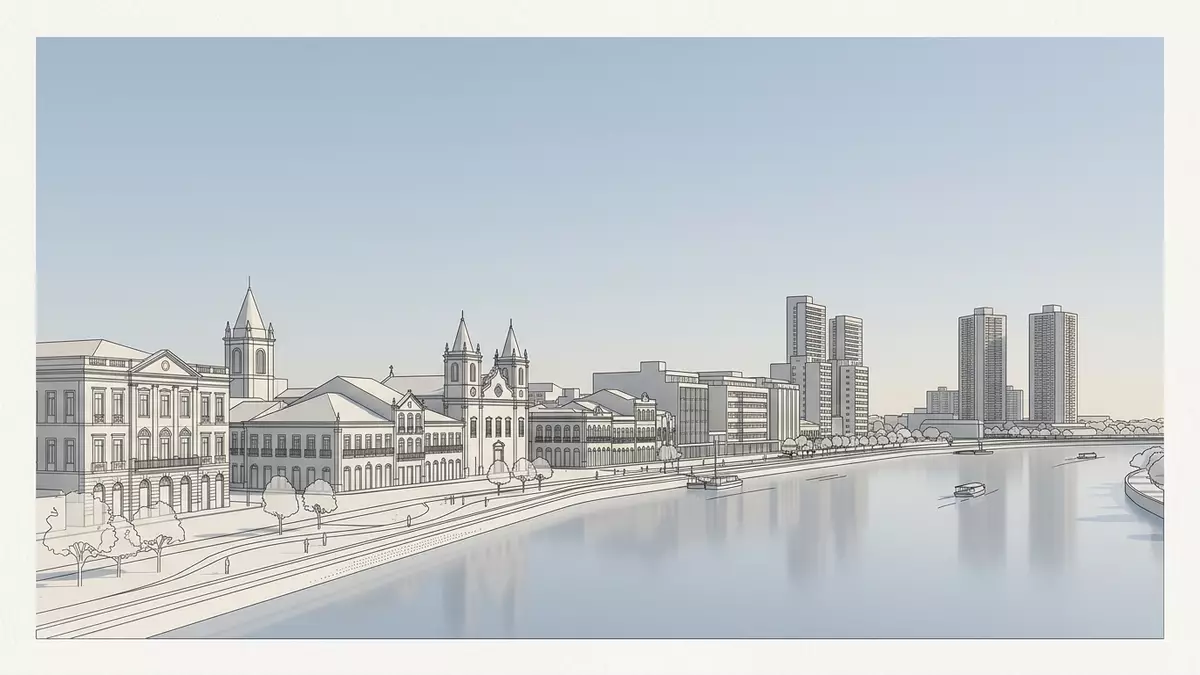
Recife Antigo is the historic island quarter of Recife in north-eastern Brazil, where the city’s earliest streets and harbour spaces still line up between river channels and the Atlantic docks. Officially known as Bairro do Recife, this district grew from a sixteenth-century Portuguese port into a compact urban area of cobbled lanes, waterfront squares and reworked warehouses that continues to reflect Recife’s origins as a major trading city.
An island of streets between rivers and harbour
Recife Antigo occupies the Island of Recife at the eastern edge of the historic centre, bordered by the Capibaribe and Beberibe rivers on one side and the harbour basins on the other, so that many streets have water on at least one flank.Recife Antigo on the Island of Recife Bridges carry road traffic across the channels to the rest of Recife, underlining that this is a distinct island quarter rather than a simple waterfront strip.linked to the city by bridges
The ground here is low and close to the tidal edge, which gives Recife Antigo an urban fabric of quays, embankments and streets that often run parallel to the water before turning back inland. The official neighbourhood name Bairro do Recife covers this island area, whose position at the mouth of the rivers made it a natural site for a harbour and for the city’s earliest planned streets.historic waterfront quarter of Recife
From sugar port to historic centre
The origins of Recife Antigo lie in the sixteenth century, when Portuguese settlers established a harbour here to ship sugar cane from Pernambuco to Europe, a trade that shaped much of north-eastern Brazil.Recife Antigo in the sugar era The early settlement occupied the island frontage, with narrow streets laid out close to the docks and warehouses that stored sugar and other goods. During the seventeenth century, under Dutch occupation between 1630 and 1654, Recife Antigo went through a phase of urbanisation that left visible traces in the street pattern and in certain historic buildings.marks of Dutch-period planning
Several churches, civic buildings and merchants’ houses in Recife Antigo date from colonial and imperial periods, including examples of baroque and neoclassical architecture that front onto the main streets and squares.colonial and imperial buildings Former bank headquarters and harbour offices, built in masonry and decorated with painted façades, now share the quarter with more recent cultural institutions housed in converted port warehouses. This mix of periods makes Recife Antigo a compact record of how Recife developed from a sugar harbour into a wider Atlantic port city.
Marco Zero and the waterfront squares
At the heart of Recife Antigo lies Praça Rio Branco, widely known as Marco Zero, the square that marks the origin point of Recife and serves as the reference location for measuring road distances from the city.Marco Zero de Recife A metal plaque set into the paving records this status, describing Marco Zero as the point from which distances to the lands of Pernambuco are calculated.inscription at Marco Zero Around the square stand historic buildings and cultural venues that face the water, reinforcing its role as both civic space and harbour-side landmark.
From Marco Zero, the waterfront continues along quays lined with port buildings that have taken on new uses, including craft centres and cultural spaces that occupy former warehouses.craft centre in Armazém 11 Streets such as Rua da Moeda lead from the inner parts of the quarter towards this waterside, opening onto views across the river and towards structures such as the Parque de Esculturas Francisco Brennand, which stands offshore in the harbour and can be reached by small boats leaving from near the square.route from Rua da Moeda to Marco Zero
Visiting Recife Antigo: what travellers from Western Europe should know
- Recife Antigo forms the Bairro do Recife on the Island of Recife, at the point where the Capibaribe and Beberibe rivers meet the Atlantic, connected to the wider city by road bridges.
- Much of the quarter is flat and paved, though older streets can have uneven cobbles, and some historic buildings are reached by internal staircases.
- Prominent landmarks within the district include Praça Rio Branco at Marco Zero, waterfront quays along Avenida Alfredo Lisboa and cultural venues installed in former port warehouses.
- The official language is Portuguese and the currency is the Brazilian real.
- Entry requirements depend on your nationality; UK travellers can check the FCDO travel advice at gov.uk/foreign-travel-advice, Irish travellers the Department of Foreign Affairs at ireland.ie.
Searching for Recife Antigo on social platforms
These links open searches for Recife Antigo on each platform.Frequently asked questions about Recife Antigo
Where is Recife Antigo within Recife?
Recife Antigo occupies the Island of Recife, a historic quarter bordered by the Capibaribe and Beberibe rivers and the Atlantic harbour, forming the eastern part of the city’s historic centre.
What should visitors expect when walking through Recife Antigo?
Visitors encounter cobbled lanes, colonial and later civic buildings, waterfront squares such as Marco Zero and former port warehouses that now house cultural and social spaces.
What makes Recife Antigo distinctive among Brazilian historic districts?
Its combination of an island setting between rivers and harbour, a role as Recife’s earliest port quarter and the presence of Marco Zero as the city’s origin point gives Recife Antigo a particular historical focus.


