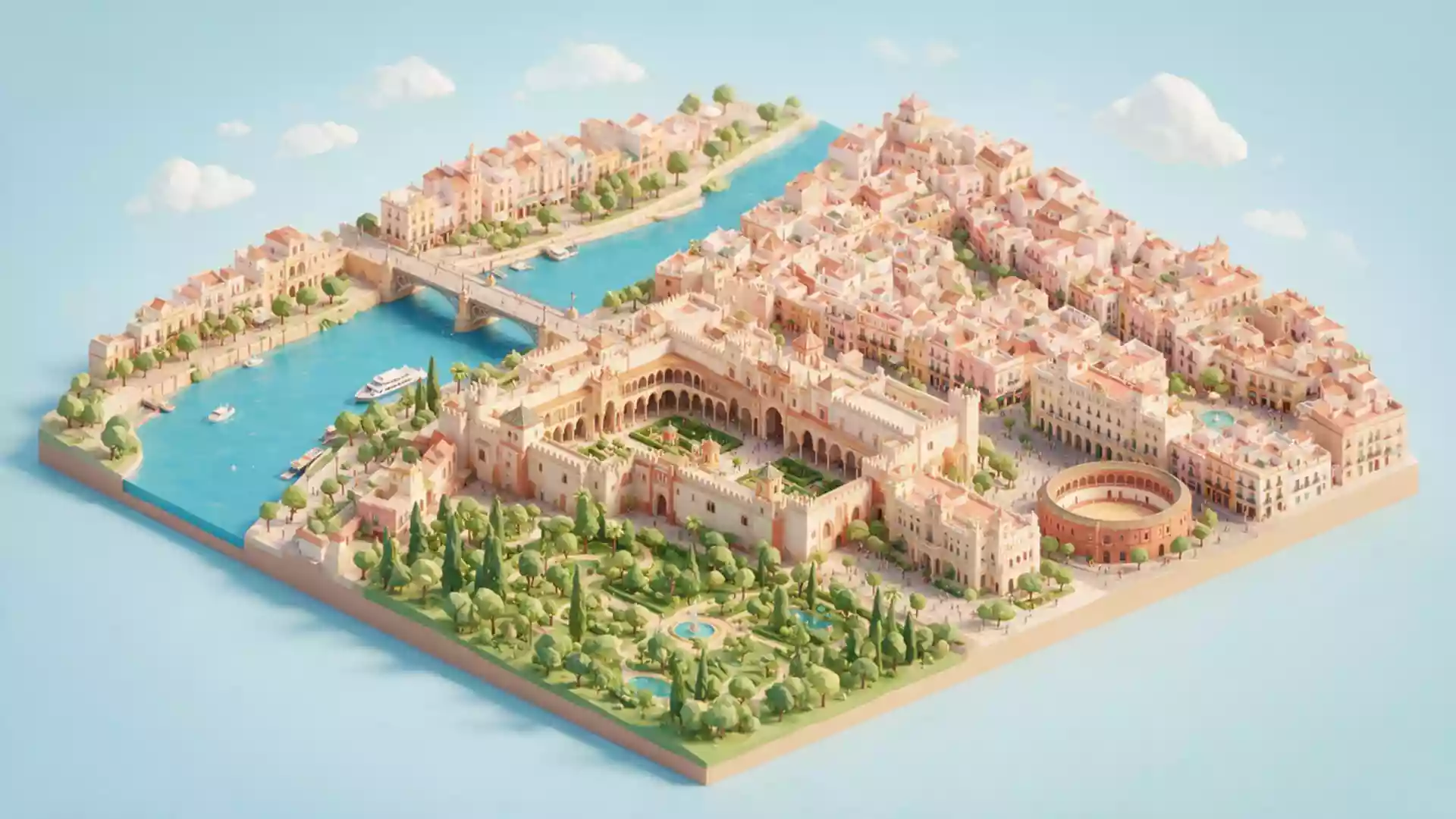
Real Alcazar de Sevilla, a living palace of layered history
Published on 08/30/2026 at 14:27 | Editorial responsibility: Rafael Müller, Editor-in-Chief AD HOC NEWS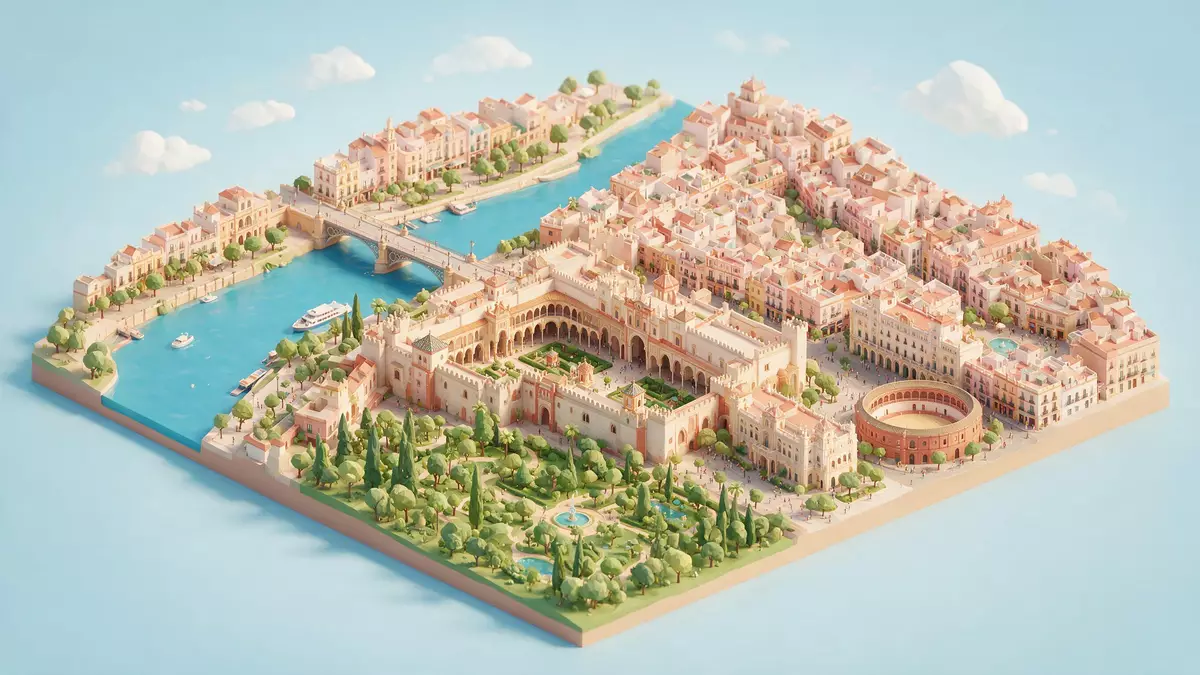
Real Alcazar de Sevilla is a fortified royal palace in Sevilla where Islamic foundations, Mudéjar ornament and later Gothic and Renaissance additions share the same courtyards and gardens in a single enclosed complex. Built and rebuilt from the early Middle Ages onwards, it remains a working royal residence and forms part of the UNESCO-listed ensemble with Sevilla’s cathedral and Archivo de Indias, tying its architecture directly to Spain’s broader imperial and religious history.Cathedral, Alcázar and Archivo de Indias
From Moorish fortress to royal palace
The story of Real Alcazar de Sevilla begins with an Islamic citadel raised on this site in the tenth century, when Sevilla formed part of Al-Andalus under Umayyad rule.fortified palace since the 10th century Those first walls and fortified enclosures established the palace’s relationship with the city and the nearby river port, laying out a defended compound that later dynasties adapted rather than erased. Under later rulers, including Abd al-Rahman III and the eleventh-century king Al-Mutamid, the complex took on more recognisable palace functions, with courtyards and residential halls woven into the defensive structure.fortified palace whose remains can still be seen
The Christian conquest of Sevilla in 1248 under Ferdinand III of Castile marked another decisive phase, but it did not break the palace’s continuity of use.Ferdinand III took Seville from the Moors Ferdinand III adopted the Alcazar as his residence and died here in 1252, embedding the complex into Castilian royal life.Ferdinand III chose the Alcázar as his place of residence His son Alfonso X ordered the construction of a Gothic palace within the existing Islamic compound, adding ribbed vaults, pointed arches and stone halls that reflected the architectural language of thirteenth-century Castile while still sitting behind the older fortress walls.
Mudéjar splendour and a changing architectural palette
The part of Real Alcazar de Sevilla that most visitors recognise today is the Mudéjar palace commissioned in the fourteenth century by Pedro I of Castile, sometimes known as Pedro the Cruel.Mudéjar Palace built between 1356 and 1366 Built in the 1360s, this palace reuses the earlier enclosure but overlays it with dense stucco, carved wooden ceilings and tiled surfaces that draw heavily on Islamic craft traditions while serving a Christian monarch. Its rooms, including the Salón de Embajadores and the courtyard known as Patio de las Doncellas, are framed by arcades and intricate geometric decoration, turning the inner palace into a sequence of highly worked interiors.
Mudéjar is the dominant style at Real Alcazar de Sevilla, yet the complex also carries Gothic, Renaissance, Baroque and later elements added by successive rulers over several centuries.Mudéjar dominant with later additions The Gothic palace of Alfonso X introduces heavier masonry and medieval Christian imagery, while Charles V’s Renaissance rooms and tapestry halls overlay the medieval core with classical proportions and new decorative cycles.wide range of styles combining Muslim, Gothic, Renaissance and Baroque Later Baroque and Romantic touches appear in details and refurbishments, meaning a walk through the complex passes visibly from Islamic fragments to Gothic stonework and on to richly coloured Mudéjar ornament and Renaissance spaces within a single visit.
Gardens, setting and continued royal use
Beyond its palaces, Real Alcazar de Sevilla is defined by its extensive gardens, laid out in terraces and enclosed plots that stretch southwards from the main buildings.group of palatial buildings and extensive gardens Paths run between pavilions, planted beds and water features, with high walls and galleries creating framed views back towards the palace façades. The relationship between architecture and greenery is central here: palace rooms often open directly onto garden spaces, and the fortified perimeter still defines the edge of this green world inside the historic city.
Real Alcazar de Sevilla stands in Sevilla’s historic centre, beside the great Gothic cathedral and close to the Archivo de Indias, forming a dense cluster of major monuments from different eras.historic centre of Seville next to the Cathedral It continues to serve as an official residence for the Spanish royal family when in the city, making it one of the oldest royal palaces in Europe still in active use for visiting heads of state.used even today as the Spanish royal family's residence That ongoing function adds a contemporary layer to the experience: formal state rooms sit alongside centuries-old Mudéjar courtyards and medieval fortifications, all within the same walled ensemble.
Visiting Real Alcazar de Sevilla: what travellers from Western Europe should know
- Real Alcazar de Sevilla stands in the historic centre of Sevilla, close to the cathedral and Archivo de Indias, with entrances facing the streets around the Patio de Banderas.Downtown Sevilla (Santa Cruz district)
- Several palace levels and garden terraces are linked by staircases and uneven stone paths, so a visit involves walking on historic surfaces and climbing steps between different areas of the complex.
- The palace and gardens lie within Sevilla’s Santa Cruz district, a compact part of the city where narrow streets lead directly to other landmarks and shaded squares.
- The official language is Spanish and the currency is the euro.
Searching for Real Alcazar de Sevilla on social platforms
These links open searches for Real Alcazar de Sevilla on each platform.
Frequently asked questions about Real Alcazar de Sevilla
Where is Real Alcazar de Sevilla located?
Real Alcazar de Sevilla stands within Sevilla’s historic Santa Cruz district, beside the cathedral and near the Archivo de Indias in southern Spain.
What should visitors expect inside the palace complex?
A visit leads through fortified walls, Mudéjar and Gothic palaces, richly decorated halls and extensive gardens, with historic staircases and stone paths linking the different areas.
What makes Real Alcazar de Sevilla distinctive among European palaces?
It combines Islamic-era fortifications, a fourteenth-century Mudéjar palace and later Gothic and Renaissance additions, while still serving as a royal residence within the UNESCO-listed centre of Sevilla.