
Real Alcazar de Sevilla, a layered royal palace in stone
Published on 09/18/2026 at 14:46 | Editorial responsibility: Rafael Müller, Editor-in-Chief AD HOC NEWS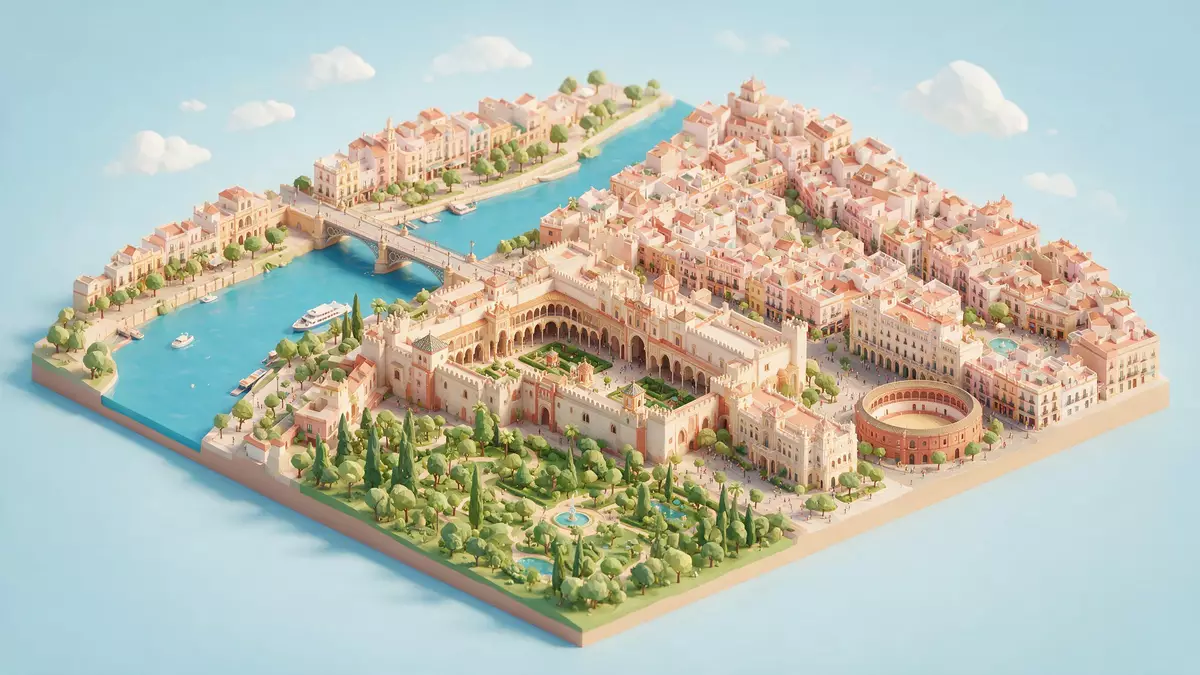
Real Alcazar de Sevilla is a fortified royal palace complex in Sevilla where Islamic foundations, a fourteenth?century Mudéjar residence and later Gothic and Renaissance wings share a single enclosure of walls, courtyards and gardens. Its buildings grew from an early medieval citadel into a layered royal residence that still carries the architecture and ornament of successive rulers in one dense site.
From Islamic citadel to royal palace
The history of Real Alcazar de Sevilla begins with an Islamic fortified compound raised on this ground in the early Middle Ages, when Sevilla formed part of Al?Andalus under Umayyad rule. Early palaces and defensive walls from this period established a plan of enclosed courts and halls that later dynasties adapted, so that parts of the complex still follow the outlines of the Muslim citadel.Islamic-era citadel
After the Castilian conquest of Sevilla in 1248 under Ferdinand III of Castile, the compound became a royal residence for the Christian kings and gained new stone buildings alongside the earlier structures.royal residence for the kings of Castile In the thirteenth century Alfonso X ordered the construction of a Gothic palace within the walls, introducing ribbed vaults and pointed arches that brought the architectural language of Castilian Europe into the former Islamic fortress.Gothic palace under Alfonso X
The Mudéjar heart of the complex
The core of what many visitors recognise as Real Alcazar de Sevilla today is a fourteenth?century Mudéjar palace commissioned by Pedro I of Castile, built inside the older compound in the later 1350s and early 1360s.Mudéjar palace for Pedro I This residence uses brick, tile, carved stucco and timber to create richly ornamented facades and interiors, with inscriptions and geometric patterns that draw directly on Islamic craft within a Christian royal setting.
The palace is widely recognised as one of the most important examples of Mudéjar architecture on the Iberian Peninsula, and it sits beside Gothic halls and later Renaissance rooms within the same compound.preeminent example of Mudéjar style Walking through Real Alcazar de Sevilla means passing from courtyards edged by delicate arcades into heavier stone interiors and on into Renaissance chambers, while remaining inside one continuous royal residence that was shaped from the thirteenth century onwards.
Gardens, UNESCO status and a living residence
Beyond its palaces, Real Alcazar de Sevilla includes extensive historic gardens that have been cultivated since at least the late Middle Ages and reshaped during the Renaissance.gardens existed since the late Middle Ages These gardens combine Moorish orchard traces, Renaissance layouts and later romantic additions, set among fountains, ponds and tiled walks that extend the ornamental language of the palaces into the open air.gardens of the Real Alcázar Palace
Real Alcazar de Sevilla forms part of a UNESCO World Heritage ensemble with Sevilla Cathedral and the Archivo de Indias, recognised since 1987 for how these monuments together express key phases of the city’s history from Islamic rule to the Spanish empire.UNESCO World Heritage Site since 1987 The Spanish royal family continue to use parts of the palace for official occasions, giving Real Alcazar de Sevilla the distinction of being among Europe’s longstanding royal residences that remain in active use.Royal Alcázar still in use as a palace
Visiting Real Alcazar de Sevilla: what travellers from Western Europe should know
- Real Alcazar de Sevilla stands in the historic centre of Sevilla, close to Sevilla Cathedral and the Archivo de Indias, within the compact core of the Andalusian capital.
- The palace complex is enclosed by defensive walls and contains numerous courtyards, halls and gardens, so a visit involves walking on stone surfaces and garden paths with frequent changes between interior and exterior spaces.
- The site lies near the Guadalquivir river and is reached on foot from central districts such as Santa Cruz, with approaches that pass through narrow historic streets before reaching the fortified entrances.
- The official language is Spanish and the currency is the euro.
Searching for Real Alcazar de Sevilla on social platforms
These links open searches for Real Alcazar de Sevilla on each platform.
Frequently asked questions about Real Alcazar de Sevilla
Where is Real Alcazar de Sevilla?
Real Alcazar de Sevilla stands in the historic centre of Sevilla in southern Spain, close to Sevilla Cathedral and the Archivo de Indias.
What can visitors expect inside the palace complex?
Visitors encounter fortified walls, Mudéjar courtyards, Gothic and Renaissance halls and extensive historic gardens, all contained within one enclosed royal residence.
What makes Real Alcazar de Sevilla distinctive among European palaces?
It combines Islamic, Mudéjar, Gothic and Renaissance architecture in a single complex and continues to serve as a royal residence while forming part of a UNESCO World Heritage ensemble.


