
Rapa Nui's stone landscape around Hanga Roa
Published on 09/12/2026 at 19:44 | Editorial responsibility: Rafael Müller, Editor-in-Chief AD HOC NEWS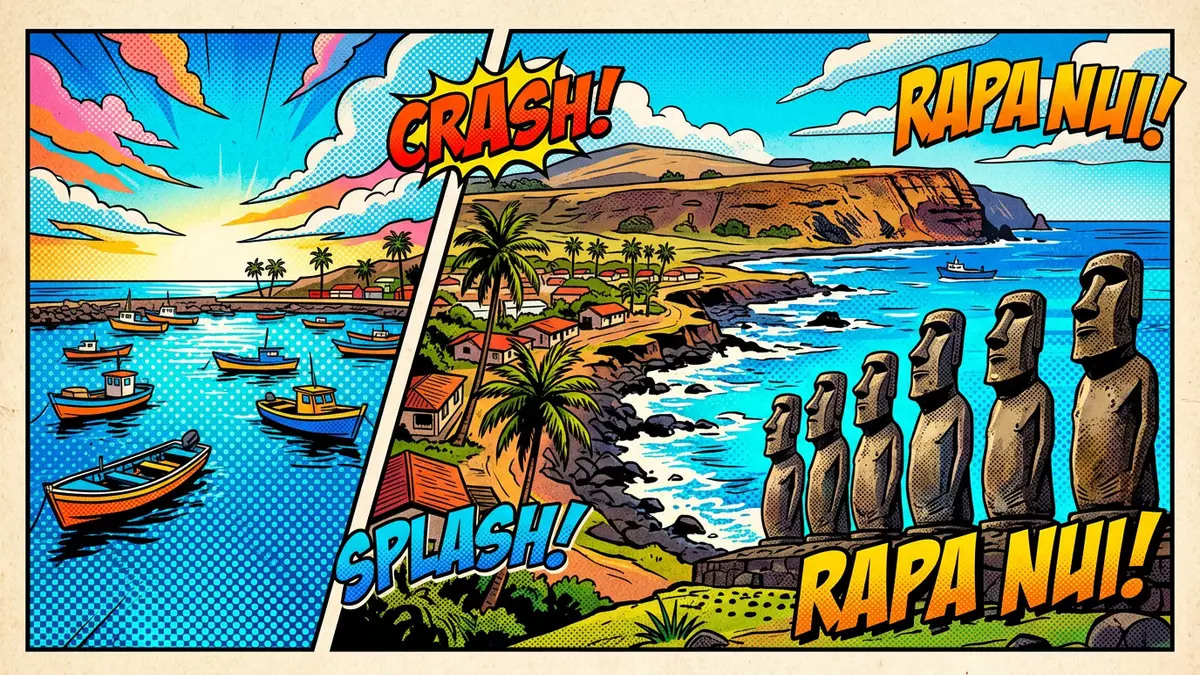
Rapa Nui is the indigenous name of Easter Island, and its most recognisable landscape is the spread of moai, ahu and volcanic rock around Hanga Roa. The island belongs to Chile and the cultural park carries UNESCO World Heritage status.UNESCO World Heritage status
Moai, ahu and a Polynesian legacy
The island’s heritage is rooted in a Polynesian settlement tradition that reached the island around A.D. 300. From the tenth to the sixteenth century, communities built shrines and carved monumental stone figures that still define Rapa Nui’s identity.Polynesian settlement
The best-known figures are the moai, stone statues set on ceremonial platforms called ahu. Many are carved from volcanic tuff, and the island’s archaeological remains include statues, platforms, rock art, caves and settlement traces.volcanic tuff
Hanga Roa and the inhabited coast
Hanga Roa is the main town and harbour, on the island’s west coast. It lies between the volcanic forms of Terevaka and Rano Kau, and it is the centre of daily life on Rapa Nui.main town and harbour
The town’s present character reflects a long period of concentration of settlement in one place. The parish church of Santa Cruz dates from December 1937, and Mataveri Airport lies close to the town, linking the island to the outside world.Santa Cruz parish church
Landscape, protection and ceremonial sites
Rapa Nui National Park covers a large part of the island and includes major ceremonial places such as Orongo and Rano Raraku. The park is also linked to the national historic monument designation of 1935, which gives the island a formal protected status.national historic monument
Orongo stands on the rim of Rano Kau, with stone dwellings and petroglyphs associated with the birdman cult. Rano Raraku is the quarry slope where many moai were carved, leaving figures in different stages of completion across the hillside.Rano Raraku
Visiting Rapa Nui: what travellers from Western Europe should know
- Hanga Roa is the island’s main settlement, and Mataveri Airport lies beside it. The town is also the base for reaching the island’s archaeological sites.
- The island’s terrain is volcanic, with slopes, crater rims and exposed rock. Some ceremonial sites sit on coastal edges or higher ground.
- The official language is Spanish and the currency is the Chilean peso.
- Entry requirements depend on your nationality; UK travellers can check the FCDO travel advice at gov.uk/foreign-travel-advice, Irish travellers the Department of Foreign Affairs at ireland.ie.
Searching for Rapa Nui on social platforms
These links open searches for Rapa Nui on each platform.
Frequently asked questions about Rapa Nui
Where is Rapa Nui?
Rapa Nui is Easter Island, a Chilean island in the Pacific. Hanga Roa is its main town and harbour.
What should a visit involve?
Expect a volcanic island with archaeological sites, coastal viewpoints and a town that serves as the island’s base. The landscape includes stone platforms, carved statues and crater slopes.
What makes Rapa Nui distinctive?
The island is defined by Polynesian monumental sculpture, especially the moai and their ceremonial platforms. Its cultural landscape combines archaeology, volcanic forms and a long island history.


