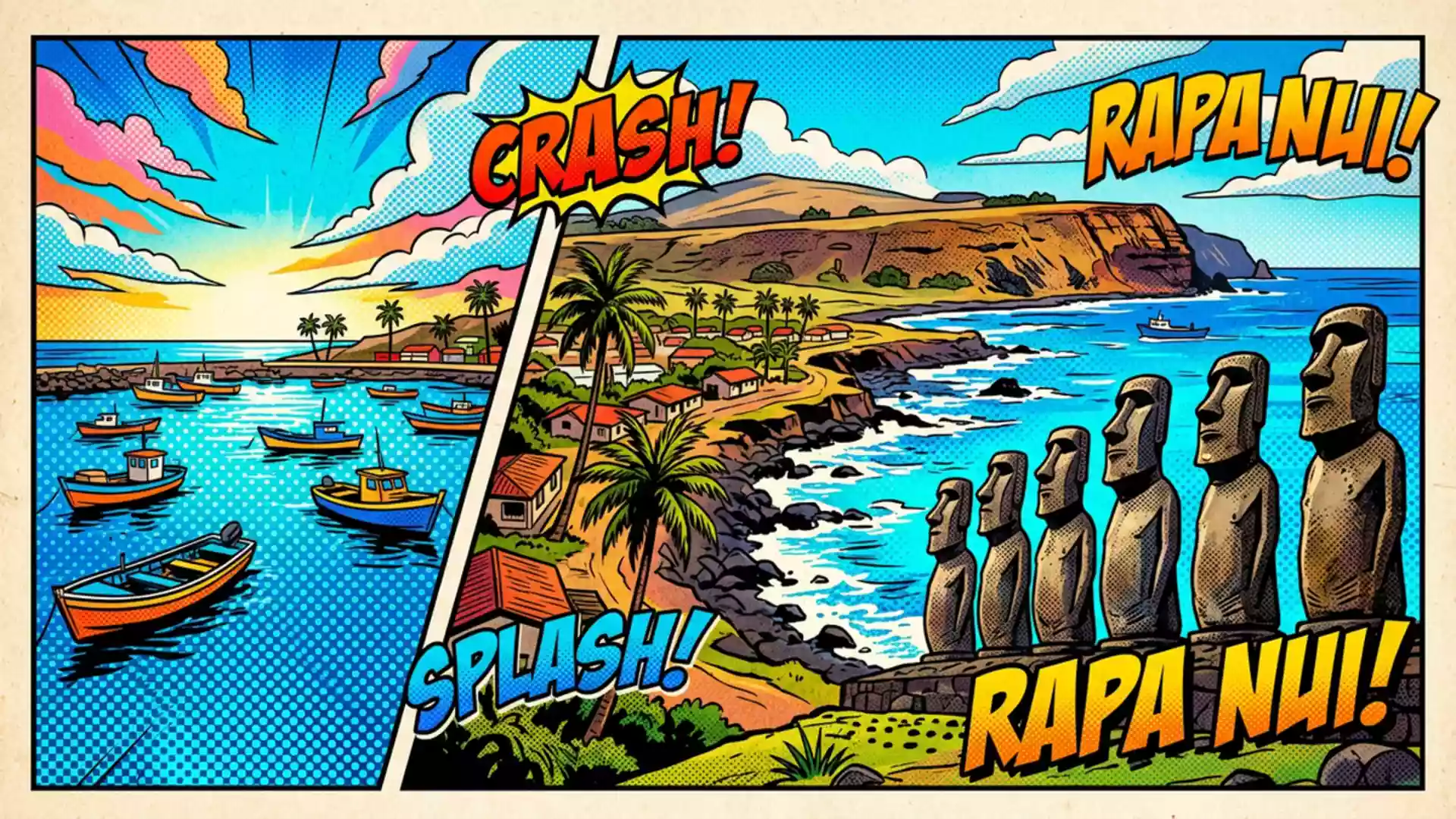
Rapa Nui’s stone guardians and the Pacific town of Hanga Roa
Published on 09/11/2026 at 17:19 | Editorial responsibility: Rafael Müller, Editor-in-Chief AD HOC NEWS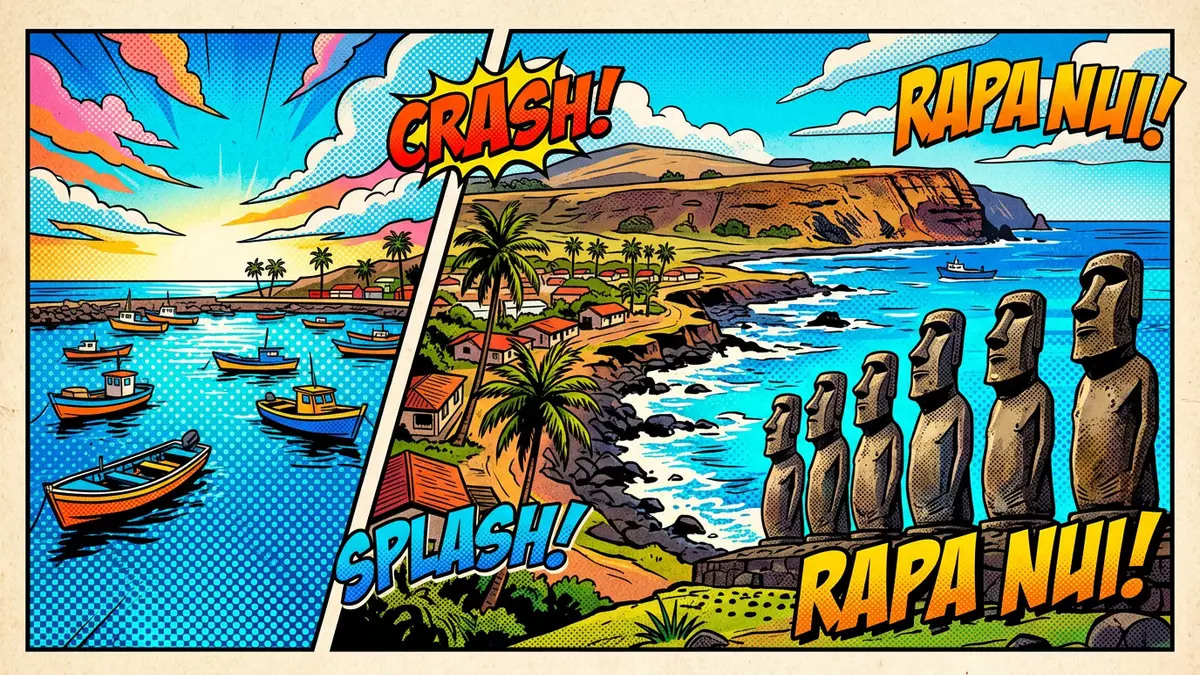
Rapa Nui, better known in English as Easter Island, lies far out in the Pacific Ocean, with the modern life of Hanga Roa framed by ancestral moai statues and volcanic slopes. The island forms a special territory of Chile and belongs administratively to the Valparaíso Region, with Hanga Roa as its seat. The commune of Isla de Pascua has Hanga Roa as its centre.
Volcanic island in the far eastern Pacific
Rapa Nui rises from the southeastern Pacific Ocean at the far eastern edge of the Polynesian Triangle, formed by volcanic activity that built an isolated island of dark rock and rolling grassland. Administratively it belongs to Chile’s Valparaíso Region as the commune of Isla de Pascua, a status that sets it apart within the country’s map as an oceanic territory centred on a single island seat. Easter Island’s designation as a special territory of Chile reflects this remote position. The coastline runs in low cliffs and rocky bays, with the settlement of Hanga Roa occupying a sheltered stretch on the western side between the volcanic forms of Terevaka and Rano Kau.
The broader Rapa Nui landscape carries both open slopes and coastal platforms, with traces of ancient settlement spread across the island. Archaeological and historical work points to a Polynesian voyaging group arriving from Eastern Polynesia, with studies placing first settlement around 600 to 1,000 CE and some evidence suggesting arrival near 1200 CE. Work on the island’s prehistoric phases describes the Ahu Moai Expansion between 1000 and 1680 and the Decline of Huru Moai leading to the first European visit in 1722.
Hanga Roa: long bay town at the edge of the Pacific
Hanga Roa is the main town and harbour of Rapa Nui, the only urban centre on the island and the place where almost all inhabitants live. In both Spanish and Rapa Nui usage, the name is linked to the phrase “long bay”, reflecting the settlement’s location along a broad curve of coast on the island’s western side. The town lies in lowlands between the volcanic forms of Maunga Terevaka and Rano Kau, with streets, houses and small public spaces set against the Pacific surf and the green interior slopes. Descriptions of Hanga Roa as the main town and harbour emphasise its role as administrative centre.
The demographic story of Rapa Nui has been shaped by outside contact and confinement. In the nineteenth century slave raids from Peru and epidemic disease caused a severe collapse in population, with surviving lineages concentrated in and around Hanga Roa. Chile annexed the island in 1888, and for decades much of the land was leased as a sheep ranch while islanders were restricted to the settlement in one corner of the island. Accounts note that Rapa Nui people were confined to Hanga Roa from the late nineteenth century into the twentieth century, a period when traditional house forms were replaced by European-style stone and wood buildings and the town became the focus of life on the island. Ethnographic summaries of Rapa Nui describe this shift towards a single settlement.
Moai statues and ceremonial platforms across Rapa Nui
Rapa Nui is particularly known for its moai, monumental stone figures raised on ceremonial platforms along the coast and inland slopes. Research and park documentation record nearly 900 of these figures, with many grouped on ahu, the platforms that line parts of the shoreline. Within Rapa Nui National Park, the protected area covers more than 300 ceremonial platforms and hundreds of statues, forming a landscape of megalithic sculpture and archaeological remains. Descriptions of Rapa Nui National Park highlight around 887 moai and over 300 platforms as key elements.
The carving and raising of moai took place over centuries. Studies of the island’s culture note that the Ahu Moai Expansion phase between about 1000 and 1680 involved the development of large platforms and statues, followed by a period of decline and re-adaptation before European arrival in 1722. The moai themselves stand as elongated figures carved from volcanic rock, some with separate stone hats placed on their heads, and with faces turned inland from their platforms. Archaeological work places their main construction between roughly the thirteenth and sixteenth centuries. The concentration of moai and ahu within the boundaries of Rapa Nui National Park led to recognition as a World Heritage Site, formally recording the island’s megalithic cultural heritage at international level. UNESCO documentation on Rapa Nui National Park sets out this inscription.
Visiting Rapa Nui: what travellers from Western Europe should know
- Rapa Nui lies in the southeastern Pacific Ocean and forms a special territory of Chile, reached by air links from mainland Chile to the island’s airport near Hanga Roa.
- The terrain combines low coastal cliffs, rocky bays and inland volcanic slopes, with approaches to many moai platforms involving uneven ground and sections on foot over grass or rock.
- Hanga Roa stretches along a west-facing bay between the volcanic forms of Maunga Terevaka and Rano Kau, so walking in the town brings frequent views towards the Pacific and towards the inland hills.
- The official language is Spanish and the currency is the Chilean peso.
- Entry requirements depend on your nationality; UK travellers can check the FCDO travel advice at gov.uk/foreign-travel-advice, Irish travellers the Department of Foreign Affairs at ireland.ie.
Searching for Rapa Nui on social platforms
These links open searches for Rapa Nui on each platform.
Frequently asked questions about Rapa Nui
Where is Rapa Nui and what is its status within Chile?
Rapa Nui is an island in the southeastern Pacific Ocean and a special territory of Chile, forming the commune of Isla de Pascua in the Valparaíso Region.
What can visitors expect when they arrive in Hanga Roa?
Visitors encounter a small town along a long bay on the western coast, with houses, harbour areas and streets set between the Pacific shoreline and volcanic slopes.
What makes Rapa Nui distinctive among Pacific islands?
The concentration of moai statues on ceremonial platforms, the documented phases of Ahu Moai expansion and decline, and the island’s World Heritage status together distinguish Rapa Nui.