
Rapa Nui National Park and the stone landscapes of Hanga Roa
Published on 09/21/2026 at 06:40 | Editorial responsibility: Rafael Müller, Editor-in-Chief AD HOC NEWS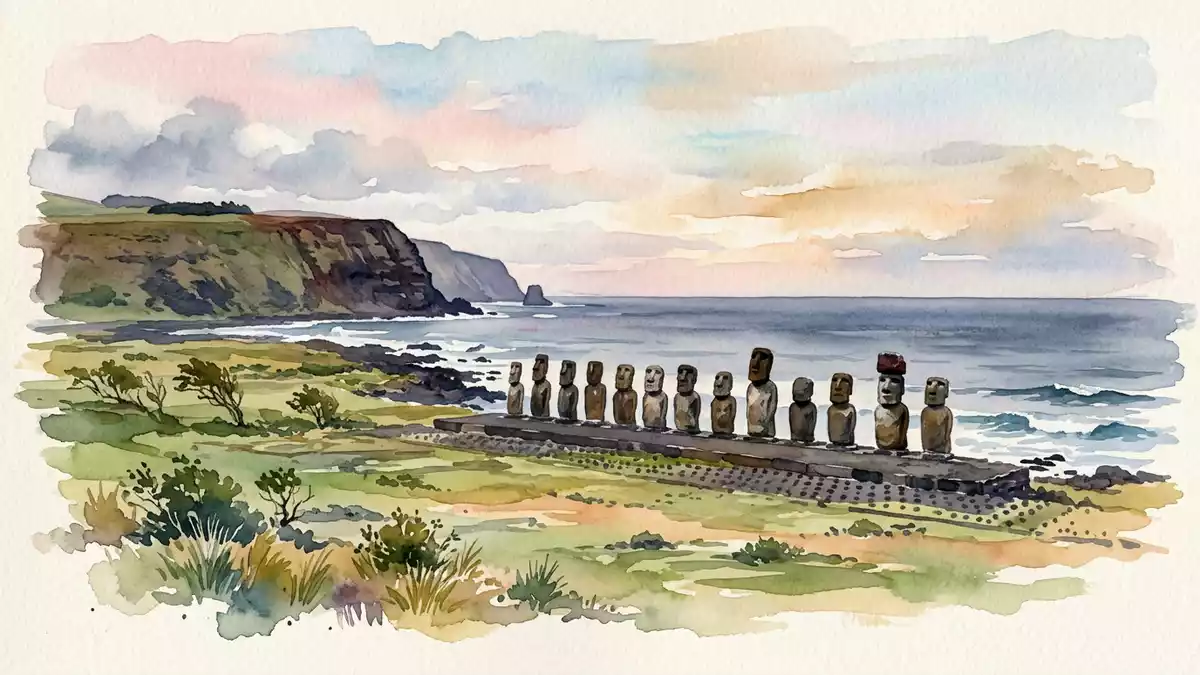
Rapa Nui National Park on Easter Island in Chile is a cultural landscape where ancestral stone figures, volcanic craters and the Pacific Ocean meet around Hanga Roa. The park was created as a protected area in 1935 and has been recognised as a UNESCO World Heritage Site since 1995, reflecting the outstanding archaeological record of the Rapa Nui people.UNESCO World Heritage Site since 1995
Stone ancestors across an isolated Pacific island
Rapa Nui National Park covers much of Easter Island, surrounding the small town of Hanga Roa and extending to coastal headlands, inland plains and volcanic slopes.covers much of Easter Island Easter Island itself lies thousands of kilometres west of continental Chile in the south-eastern Pacific, forming one of the most remote inhabited islands in the world.one of the most remote inhabited islands
Within this territory, the park protects an extensive archaeological landscape created by the Rapa Nui culture between the tenth and sixteenth centuries, including the large carved stone figures known as moai and the ceremonial platforms on which many of them stand.moai and ceremonial platforms The archaeological record also encompasses stone dwellings, rock art sites, quarries where the moai were carved, caves and other structures that together form a dense landscape of ancestral monuments.dense landscape of ancestral monuments
Volcanic terrain and the archaeology of Rapa Nui
Rapa Nui National Park sits on an island shaped by volcanic activity, and several volcanic cones form central features of the protected area. Among them is Rano Raraku, a crater that served as the principal quarry for the moai statues, where many unfinished figures remain partly embedded in the rock.principal quarry for the moai Other volcanic sites include Orongo, a ceremonial village located near a crater and cliffs above the ocean, associated with later ritual practices of the island’s inhabitants.Orongo ceremonial village
Across the park, the archaeological remains are set in a terrain of grasslands, coastal lava formations and slopes that descend towards the sea. The scale of the protected area is substantial, with the World Heritage property occupying several thousand hectares and encompassing a large portion of the island’s surface.several thousand hectares Within this space, visitors encounter ahu platforms with standing moai near the shoreline, stone houses, agricultural features such as rock gardens, and routes that once linked ceremonial centres.stone houses and rock gardens
World heritage status and community management
The Chilean state designated Rapa Nui as a National Park and national historic monument in 1935, recognising the importance of preserving the island’s archaeological landscapes.National Park and historic monument in 1935 In 1995, the park was inscribed on the UNESCO World Heritage List as property number 715, under cultural criteria that highlight monumental sculpture, ceremonial architecture and the relationship between these works and the island environment.property number 715 on the World Heritage List
Management of Rapa Nui National Park involves both national institutions and the Rapa Nui community. The park is protected under Chilean law as a National Monument, and a concession agreement grants responsibilities to the Ma’u Henua indigenous community for conservation and visitor management.concession managed by the Ma’u Henua community This framework seeks to safeguard the thousands of archaeological remains within the park, including hundreds of moai statues, ceremonial platforms and associated sites that reflect the island’s Polynesian heritage.thousands of archaeological remains
Visiting Rapa Nui National Park: what travellers from Western Europe should know
- Rapa Nui National Park surrounds Hanga Roa on Easter Island in the Pacific; travellers reach the island by air from mainland Chile and continue from the island’s airport to the town.
- The terrain in the park includes coastal lava formations, grassy slopes and volcanic craters, and many archaeological sites are reached on foot along paths over uneven ground.
- Rapa Nui lies within Chile, where the official language is Spanish and the currency is the Chilean peso.
- Entry requirements depend on your nationality; UK travellers can check the FCDO travel advice at gov.uk/foreign-travel-advice, Irish travellers the Department of Foreign Affairs at ireland.ie.
Searching for Rapa Nui National Park on social platforms
These links open searches for Rapa Nui National Park on each platform.
Frequently asked questions about Rapa Nui National Park
Where is Rapa Nui National Park located?
Rapa Nui National Park is on Easter Island in the Pacific Ocean, within Chile, and surrounds the town of Hanga Roa.
What should visitors expect when exploring the park?
Visitors encounter moai statues on ceremonial platforms, volcanic craters and an extensive archaeological landscape set in grasslands and coastal lava terrain.
What makes Rapa Nui National Park distinctive?
The park combines monumental stone sculpture, ceremonial architecture and volcanic scenery on one of the world’s most remote inhabited islands, recognised as a UNESCO World Heritage Site.


