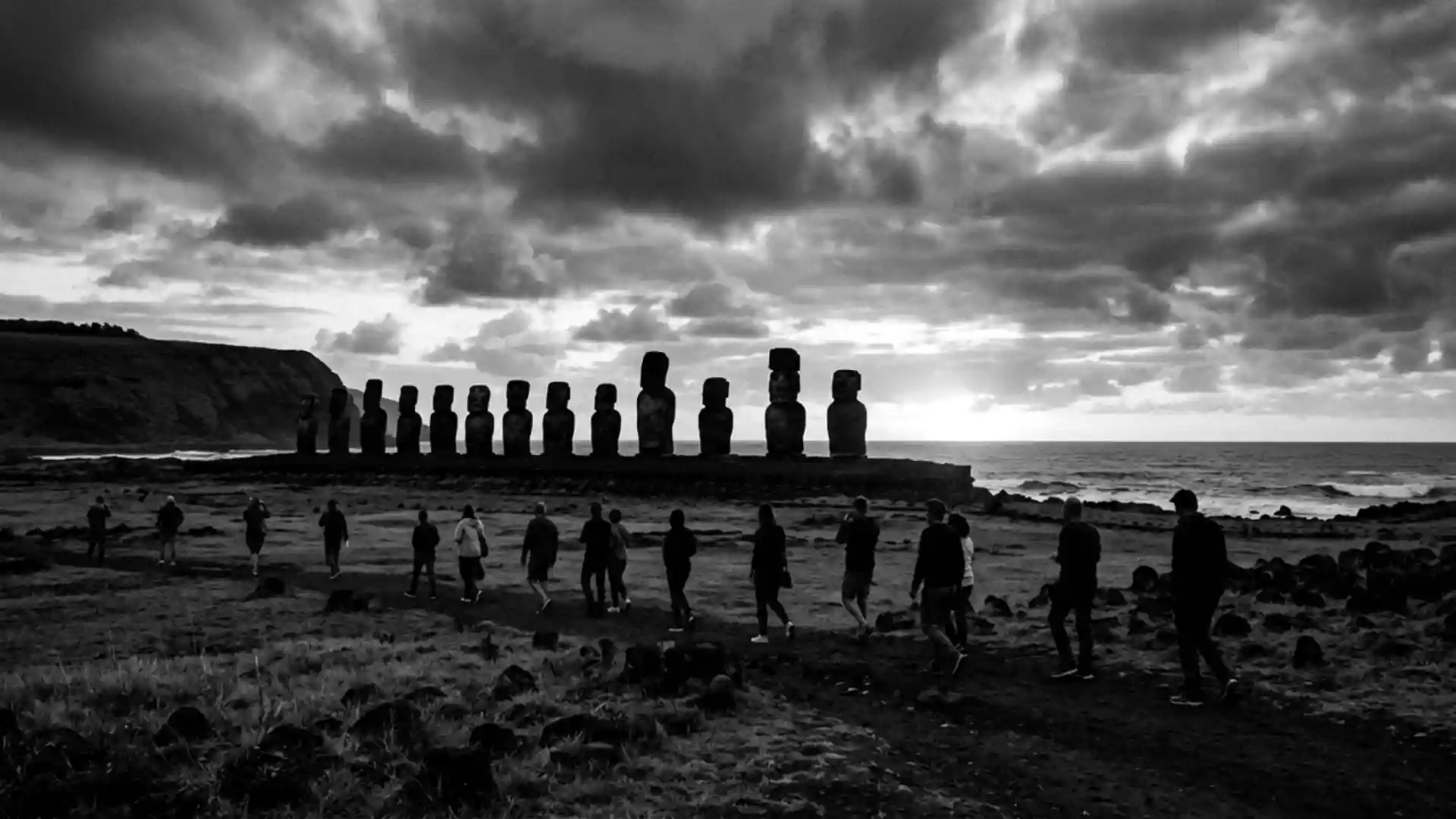
Rapa Nui National Park and the stone faces of the Pacific
Published on 09/02/2026 at 09:31 | Editorial responsibility: Rafael Müller, Editor-in-Chief AD HOC NEWS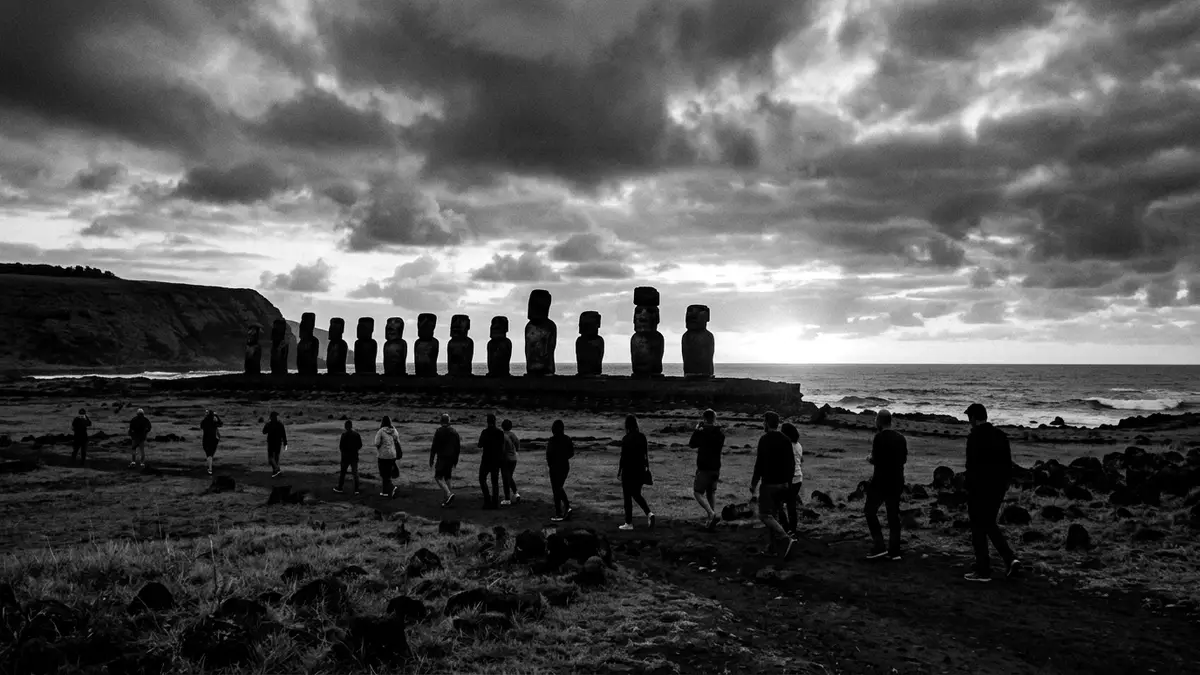
Rapa Nui National Park on Easter Island in Chile is a cultural landscape where stone figures, volcanic craters and the Pacific ocean meet in a single, isolated territory. The park covers much of Rapa Nui around Hanga Roa and has been recognised as a UNESCO World Heritage Site since 1995, protecting the archaeological record of the island’s Polynesian society.
Stone guardians of a Polynesian culture
The most striking feature of Rapa Nui National Park is the concentration of moai, the elongated stone figures that stand on ceremonial platforms around the coastline and inland. These statues, carved in volcanic tuff and other rock, are distributed across the park in different stages of completion, from moai still half embedded in the rock to fully erected figures facing inland above the shore. The park protects hundreds of these statues along with the ahu platforms beneath them, forming a continuous record of the island’s sculptural and architectural tradition between roughly the tenth and sixteenth centuries.The park protects nearly 900 moai and hundreds of ceremonial platforms, underlining the density of the archaeological remains on a relatively small island.
The main quarry where many of the statues were carved lies at Rano Raraku, a volcanic crater whose slopes are dotted with unfinished moai. This quarry area is one of the core sites within the national park and demonstrates how the statues were shaped directly out of the bedrock before being detached and transported. Another key site is the Orongo ceremonial village on the rim of the Rano Kau volcano, overlooking the ocean and nearby islets; this village is associated with the “bird man” cult that formed part of the island’s later ritual life.Orongo on the crater of Rano Kau and the Rano Raraku quarry are among the park’s most frequently cited locations because they demonstrate different aspects of Rapa Nui ritual practice.
A remote island turned national park and World Heritage Site
Rapa Nui, also known as Easter Island, lies in the Pacific ocean about 3,700 km (2,300 mi) from the coast of continental Chile, making it one of the most remote inhabited islands on Earth.UNESCO describes Easter Island as an isolated society that developed its own monumental tradition of sculpture and stone platforms without significant outside influence for more than a millennium. Much of the island’s land area has been designated as Rapa Nui National Park, which was created as a protected area in 1935 and later defined in its current form by Chilean decrees in the twentieth century.The national park category dates to 1935, and the protected area covers several thousand hectares of volcanic terrain, cliffs and archaeological sites.
The park entered the World Heritage List after a decision of the UNESCO World Heritage Committee in 1995, under cultural criteria that recognise outstanding monumental sculpture and architecture within an indigenous landscape.The committee inscribed Rapa Nui National Park as property number 715, identifying the island’s cultural phenomena as exceptional. Rapa Nui National Park is also listed as a National Historic Monument under Chilean law and has been managed with direct involvement of the Rapa Nui community Ma’u Henua since the 2010s, giving island residents a formal role in stewardship of their ancestral sites.The Ma’u Henua community holds a concession agreement to administer the park, blending national protection with indigenous participation.
Volcanic landforms, ceremonial sites and the Pacific
Beyond the statues themselves, Rapa Nui National Park is defined by its volcanic geology and coastal setting. The island has a triangular outline created by three main volcanoes: Terevaka, Rano Kau and Poike (also written Katiki in some sources), whose overlapping eruptions produced the current landmass.Rapa Nui is described as a triangular volcanic island, and the national park extends across slopes, cliffs and plains shaped by these volcanoes. Craters such as Rano Kau contain lakes and vegetation, while other areas carry dry grassland and coastal rock, so a visit to the park crosses several distinct terrains.
Named sites within the park include Anakena and Ovahe on the northern shore, where beaches sit beside restored ahu and moai, and Maunga Terevaka, the highest point of the island, which offers a wide view over the Pacific.Anakena, Ovahe and Maunga Tere Vaka show how natural scenery and archaeological remains coincide. Other sectors such as Costa Norte, Ahu Akivi, Puna Pau and Hanga Roa itself are listed in national and international descriptions as parts of the park’s zoning, each containing different combinations of platforms, quarries, dwellings and open land.The park is divided into named sectors in official summaries, giving structure to an otherwise continuous island landscape.
Visiting Rapa Nui National Park: what travellers from Western Europe should know
- Rapa Nui National Park surrounds Hanga Roa on Easter Island in the Pacific, reached mainly by air from mainland Chile through Mataveri International Airport near the town.
- Terrain within the park varies from grassy slopes and coastal rock to steep volcanic crater rims, with approaches to some viewpoints and sites involving extended walks over uneven ground.
- Several named sectors such as Rano Kau, Rano Raraku, Anakena and Ahu Akivi lie outside the built-up area of Hanga Roa, so moving between them involves travel across open countryside.
- The official language on Rapa Nui is Spanish and the currency is the Chilean peso.
- Entry requirements depend on your nationality; UK travellers can check the FCDO travel advice at gov.uk/foreign-travel-advice, Irish travellers the Department of Foreign Affairs at ireland.ie.
Searching for Rapa Nui National Park on social platforms
These links open searches for Rapa Nui National Park on each platform.
Frequently asked questions about Rapa Nui National Park
Where is Rapa Nui National Park located?
Rapa Nui National Park is on Easter Island in the Pacific ocean, within Chile, and surrounds the town of Hanga Roa as well as several outlying sectors.
What can visitors expect within the park boundaries?
Visitors encounter moai statues on stone platforms, volcanic craters with lakes and vegetation, coastal cliffs, beaches and ceremonial villages, all set within a relatively compact island landscape.
What makes Rapa Nui National Park distinctive among heritage sites?
The combination of an isolated Polynesian island, hundreds of monumental stone figures, extensive ritual platforms and a volcanic setting gives Rapa Nui National Park a character recognised by UNESCO as an exceptional cultural landscape.