
Rapa Nui and the volcanic stone world of the moai
Published on 09/24/2026 at 10:51 | Editorial responsibility: Rafael Müller, Editor-in-Chief AD HOC NEWS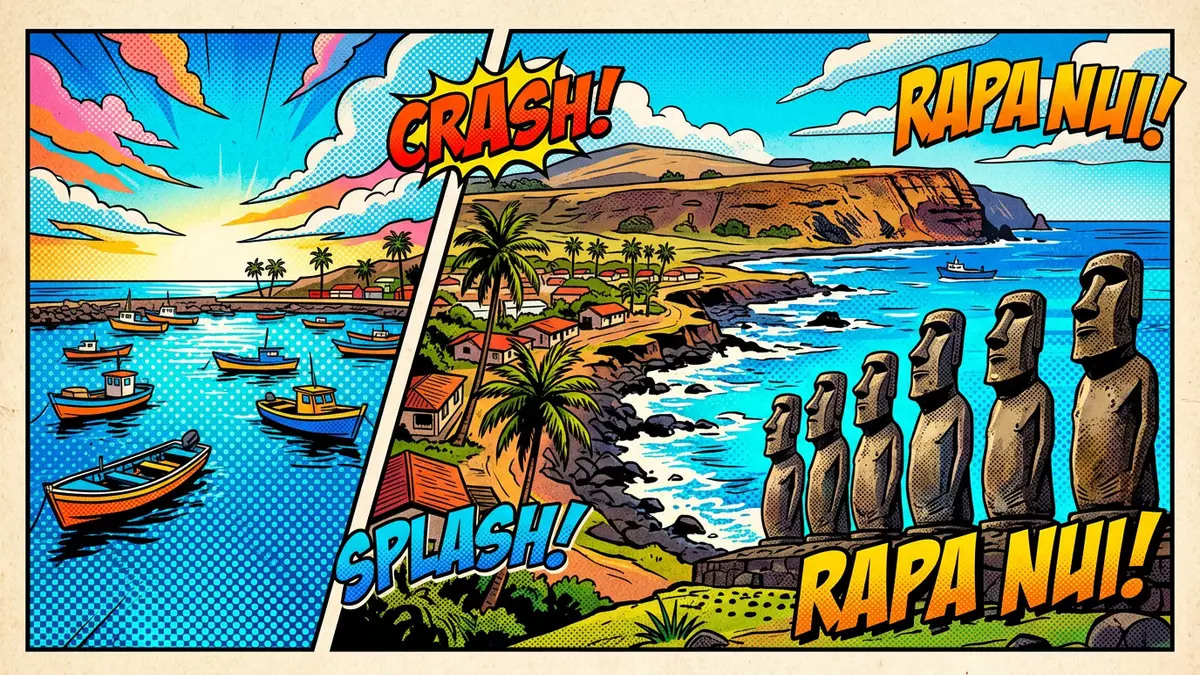
Rapa Nui is a volcanic island in the south-eastern Pacific, with Hanga Roa as its main settlement. Across its dark slopes and coastal platforms, monumental moai stand beside ahu, while unfinished figures remain at the quarries where sculptors worked the island’s volcanic rock.
The visible landscape is therefore also an archaeological record. Craters, grassland, cliffs and stone platforms belong to the same cultural setting, shaped by Polynesian communities between the eleventh and seventeenth centuries.
Rapa Nui: an island shaped in volcanic stone
Rapa Nui forms part of Chile and lies at the south-eastern edge of the Polynesian Triangle. Its highest point is Maunga Terevaka, rising to 507 m (1,663 ft) above sea level. Hanga Roa occupies the western side, with the Pacific beside streets, houses and small public spaces.
The island is volcanic, and its landforms remain visible throughout the archaeological landscape. Rano Kau is a large crater near the south-western coast, while Rano Raraku is associated with the production of the moai. The open slopes carry grass, exposed rock and traces of settlement.
Rapa Nui National Park covers a large part of the island and received UNESCO World Heritage status in 1995. The designation records archaeological remains within a cultural landscape, including ceremonial platforms, statues, caves, dwellings and rock carvings.
Moai, ahu and the unfinished quarry
The moai are carved human figures associated with the ancestors of Rapa Nui communities. Many stood on ahu, ceremonial platforms that vary in scale and construction. The statues are not identical: their proportions, surfaces and degrees of completion differ across the island.
Most moai were carved from yellow-brown volcanic tuff. Basalt tools known as toki were used in the work. Their surfaces preserve the relationship between sculpture and quarry, because Rano Raraku contains figures in several stages of production.
The Rano Raraku quarry has a crater lake and unfinished statues on its slopes. The site presents the moai as objects, landscape features and records of a skilled stone-working tradition.
Ahu Tongariki carries fifteen moai and forms one of the clearest architectural ensembles on the island. Other platforms stand along the coast or inland, connecting separate parts of the island through shared forms of ritual construction.
Hanga Roa and the cultural landscape
Hanga Roa is the centre of settlement, administration and everyday life on Rapa Nui. The town lies near the western coast, close to the airport and within reach of archaeological areas distributed across the island.
The island’s history includes Polynesian settlement, the development of monumental architecture, European contact in 1722, Chilean annexation in 1888 and national protection in the twentieth century. These dates belong to different phases of Rapa Nui history, while the stone remains link them within one landscape.
Rapa Nui National Park entered Chilean protection in 1935, and the island was declared a National Monument that year. The park’s cultural importance is expressed through its ahu, moai, petroglyphs, caves and volcanic terrain.
Rapa Nui language belongs to the Eastern Polynesian language family. Spanish is the official language, and the Chilean peso is the national currency. In Hanga Roa, cultural life includes food, music, dance, craft and traditions connected with the island’s Polynesian identity.
The relationship between settlement and monument remains visible around Hanga Roa. A short journey from the town can lead from paved streets and coastal bays into open slopes, crater rims and archaeological sites. The setting does not separate history from landscape; the two occupy the same island.
Visiting Rapa Nui: what travellers from Western Europe should know
- Rapa Nui lies in the south-eastern Pacific and forms part of Chile. Air arrivals use Mataveri International Airport near Hanga Roa.
- The island’s terrain includes volcanic slopes, crater rims, coastal rock and uneven archaeological ground. Several sites require walking outdoors.
- The official language is Spanish and the currency is the Chilean peso.
- Rapa Nui’s principal archaeological areas include Rano Raraku, Ahu Tongariki, Rano Kau and the ceremonial village of Orongo.
- Entry requirements depend on your nationality; UK travellers can check the FCDO travel advice at gov.uk/foreign-travel-advice, Irish travellers the Department of Foreign Affairs at ireland.ie.
Searching for Rapa Nui on social platforms
These links open searches for Rapa Nui on each platform.
Frequently asked questions about Rapa Nui
Where is Rapa Nui?
Rapa Nui is a Chilean island in the south-eastern Pacific Ocean. Hanga Roa is its main settlement and administrative centre.
What can visitors expect on Rapa Nui?
Visitors encounter volcanic terrain, coastal platforms, crater landscapes and archaeological sites. Walking outdoors is part of reaching several locations.
What makes Rapa Nui distinctive?
Its moai, ahu and quarries form a connected Polynesian cultural landscape. Rano Raraku preserves unfinished figures alongside the volcanic stone from which many were carved.


