
Rapa Nui and the stone faces of the Pacific
Published on 09/23/2026 at 23:04 | Editorial responsibility: Rafael Müller, Editor-in-Chief AD HOC NEWS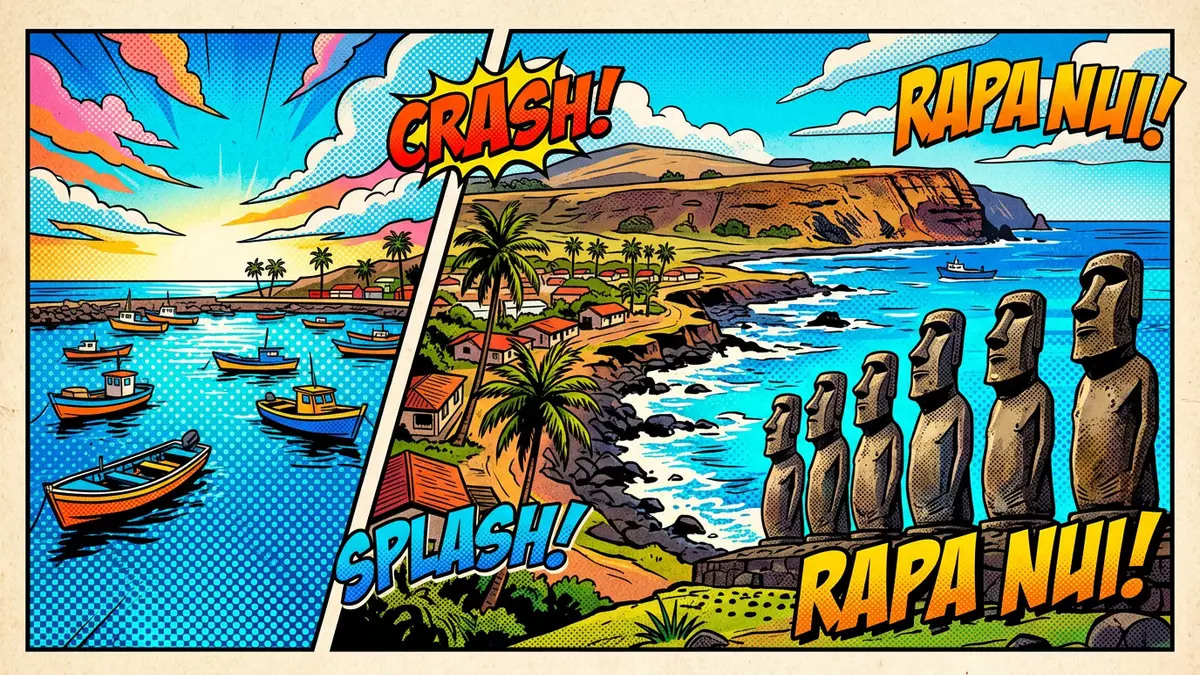
Rapa Nui is a volcanic island in the south-eastern Pacific, with Hanga Roa as its principal settlement. Across its grasslands, crater slopes and coast, moai stand on ahu, while unfinished figures remain in the volcanic quarry of Rano Raraku.
The island is also known as Easter Island. Its archaeological landscape belongs to the culture of the Rapa Nui people, whose stone sculpture, ceremonial architecture and settlement remains form a connected record across the island.
Rapa Nui: an island shaped by stone figures
The moai are monolithic statues carved from volcanic tuff and other local rock. Their heads and torsos have elongated proportions, with broad faces, prominent brows and long ears. Many stood on ahu, the stone platforms associated with ceremony and ancestral memory.
The statues vary in scale and condition. Some remain upright on platforms, some lie broken near ceremonial complexes, and others remain partly attached to the quarry walls. This range makes the island’s sculptural history visible as both finished monuments and incomplete work.
Rano Raraku and the unfinished quarry
Rano Raraku is the principal quarry associated with moai production. The volcanic slopes contain figures at different stages of carving, including statues set into the rock and forms lying near the quarry paths.
Volcanic tuff gives many statues their pale, weathered surface. Red scoria from Puna Pao was used for pukao, the cylindrical stone elements associated with some moai. Basalt and other volcanic rocks appear elsewhere in platforms, walls and tools.
A Polynesian archaeological landscape
Polynesian settlers reached Rapa Nui during the first millennium CE. Between the eleventh and seventeenth centuries, the island’s society developed monumental sculpture, ahu, habitation areas, petroglyphs and ritual sites.
Rapa Nui National Park covers the principal archaeological areas and was inscribed on the UNESCO World Heritage List in 1995. Its protected landscape includes coastal platforms, inland quarries, volcanic craters and traces of former settlement. Rapa Nui National Park records the island’s cultural heritage through monuments and landscapes.
At Orongo, the ceremonial village sits beside the crater of Rano Kau. Stone houses and carved rock surfaces belong to a different part of the island’s ritual geography. Ahu Tongariki forms a long coastal platform, while Ahu Akivi stands inland with its statues facing across the island.
European contact began on 5 April 1722, when the Dutch navigator Jakob Roggeveen reached the island. Chile annexed Rapa Nui in 1888. Hanga Roa remains the main settlement, with roads and local services connecting the inhabited area to archaeological sites across the island.
Visiting Rapa Nui: what travellers from Western Europe should know
- Rapa Nui lies in the south-eastern Pacific and belongs to Chile. Hanga Roa is the island’s principal settlement and transport base.
- LATAM Airlines connects Rapa Nui with mainland Chile by air. The island’s archaeological sites are reached from Hanga Roa by road, on foot, by bicycle or with local guides.
- The terrain includes volcanic slopes, exposed grassland, coastal cliffs and uneven ground around ahu and quarry sites.
- The official language is Spanish and the currency is the Chilean peso.
- Entry requirements depend on your nationality; UK travellers can check the FCDO travel advice at gov.uk/foreign-travel-advice, Irish travellers the Department of Foreign Affairs at ireland.ie.
Searching for Rapa Nui on social platforms
These links open searches for Rapa Nui on each platform.
Frequently asked questions about Rapa Nui
Where is Rapa Nui?
Rapa Nui is a Chilean island in the south-eastern Pacific. Hanga Roa is its principal settlement.
What can visitors see there?
Visitors encounter moai, ahu, volcanic craters, quarry landscapes, petroglyphs and remains of Rapa Nui settlements.
What makes Rapa Nui distinctive?
The island combines monumental stone sculpture with a dispersed archaeological landscape. Rano Raraku preserves unfinished moai beside the sites where completed figures stood.


