
Qasr Al Watan, Abu Dhabi’s palace of light and geometry
Published on 09/16/2026 at 21:38 | Editorial responsibility: Rafael Müller, Editor-in-Chief AD HOC NEWS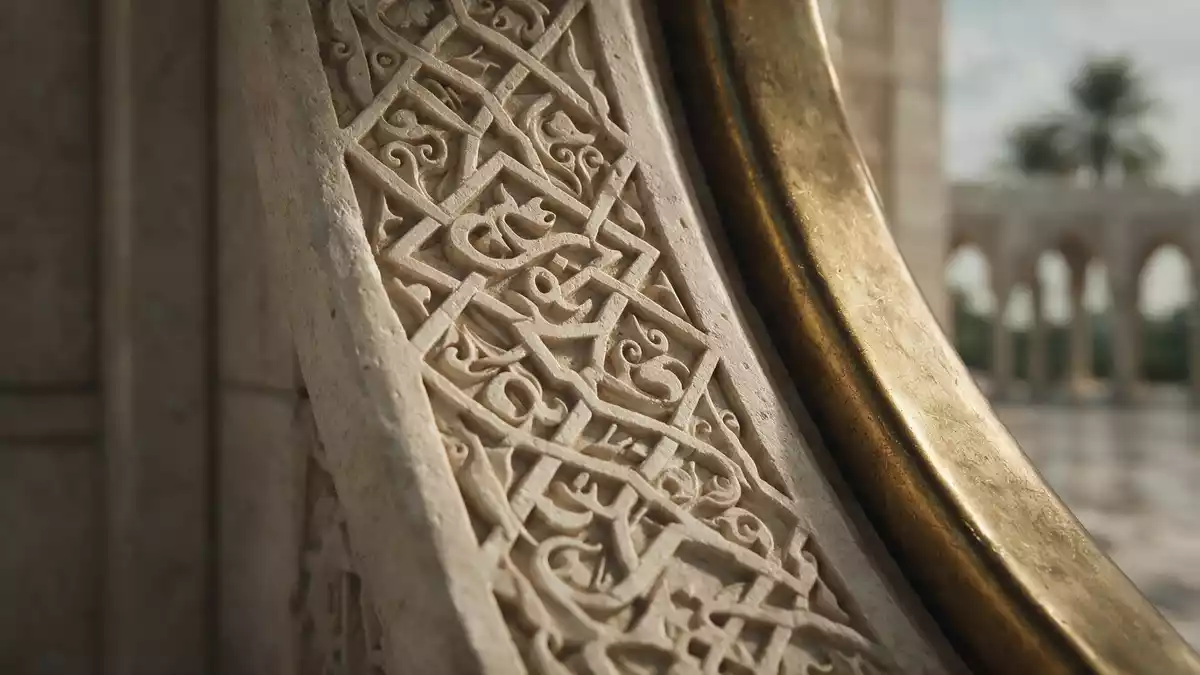
Qasr Al Watan in Abu Dhabi is the presidential palace of the United Arab Emirates, a monumental complex whose white architecture and grand domes give governmental life a visible form. Completed in the 2010s within the wider Presidential Palace compound and opened to visitors in 2019, it offers a rare glimpse inside a working seat of power in the Gulf.
A working palace on the Ras Al Akhdar peninsula
The palace stands within the Presidential Palace compound in the Ras Al Akhdar district at the western tip of Abu Dhabi island, on a peninsula that projects into the Arabian Gulf at the end of the Corniche. It shares this headland with Emirates Palace Mandarin Oriental Abu Dhabi and other landmark buildings, making the area one of the city’s clearest concentrations of official and ceremonial architecture.the presidential palace of the United Arab Emirates
Qasr Al Watan functions as a working palace rather than a private residence. State rooms inside the complex host cabinet meetings, Federal Supreme Council sessions and receptions for visiting heads of state, while offices in the surrounding compound house the formal roles of the UAE President, the Vice President and the Crown Prince of Abu Dhabi.current meeting place for the UAE Cabinet and Federal Supreme Council Parts of the palace are laid out for visitors, with interpretation that explains how the UAE’s federal system works.
White facades, domes and the Great Hall
From the Corniche, Qasr Al Watan appears as an expanse of white stone punctuated by domes and arches, set behind formal gardens and broad approach roads. The principal volume of the palace carries a central dome and flanking wings, with a series of courtyards and colonnades that give depth to the façades. The use of pale material and repeated geometric detailing ties the building to regional traditions of monumental civic architecture while keeping its appearance cohesive across the compound.expansive white architecture and grand domes
The architectural highlight for many visitors is the Great Hall, the vast central space inside the palace. This room is laid out as a square measuring 100 m (328 ft) on each side, beneath a dome with a diameter of 37 m (121 ft) that rises high above the floor.measuring 100 metres long by 100 metres wide The dome’s proportions are divided in visible tiers, and the hall contains mirrored cubes and a chandelier that weighs several tonnes, comprising hundreds of thousands of individual crystal pieces. Patterns on walls and ceilings draw on geometric and floral motifs from across the Arab world, giving the room a dense surface while preserving its clear overall form.
Libraries, exhibitions and ceremonial spaces
Beyond the Great Hall, the visitor route passes a sequence of themed spaces that explain the state’s functions and heritage. Exhibition rooms display gifts received during official visits, highlight the work of councils and ministries, and showcase elements of Arabian craftsmanship, including calligraphy, textiles and woodwork, as part of a wider narrative about the UAE’s formation and governance.landmarks and architecture
Two key spaces for readers interested in culture and knowledge are the House of Knowledge and the Qasr Al Watan Library. The House of Knowledge presents historic books and manuscripts that trace intellectual traditions from the region and beyond, while the library holds a large collection of volumes on the UAE’s legal, political and cultural development.House of Knowledge and Qasr Al Watan Library Ceremonial halls, including a banquet space laid with extensive silver, crystal and china for state dinners, demonstrate how hospitality is embedded into the palace’s working life.
Visiting Qasr Al Watan: what travellers from Western Europe should know
- The palace complex stands in the Ras Al Akhdar district at the western end of Abu Dhabi’s Corniche, on the same peninsula as Emirates Palace and other major landmarks. It is reached by road bridges that link central Abu Dhabi with the palace area.
- Approaching the palace involves a transfer from the Visitor Centre through the Presidential Palace grounds, and the visitor route inside includes broad halls, long corridors and stairways between levels.
- Abu Dhabi sits on the coast of the Arabian Gulf, so outdoor areas around the palace can be exposed to sun and heat, while interiors are arranged as large enclosed halls.
- The official language is Arabic and the currency is the United Arab Emirates dirham.
- Entry requirements depend on your nationality; UK travellers can check the FCDO travel advice at gov.uk/foreign-travel-advice, Irish travellers the Department of Foreign Affairs at ireland.ie.
Searching for Qasr Al Watan on social platforms
These links open searches for Qasr Al Watan on each platform.
Frequently asked questions about Qasr Al Watan
Where is Qasr Al Watan located?
Qasr Al Watan stands within the Presidential Palace compound in the Ras Al Akhdar district at the western end of Abu Dhabi’s Corniche, on a peninsula reaching into the Arabian Gulf.
What can visitors expect inside the palace?
Visitors follow a set route through monumental halls, exhibitions on UAE governance and heritage, ceremonial rooms such as banquet spaces, and areas devoted to books and manuscripts, including the House of Knowledge and the Qasr Al Watan Library.
What makes Qasr Al Watan distinctive among government buildings?
It combines an active role as the UAE’s presidential palace and meeting place for federal institutions with public access to its architectural spaces and interpretive exhibitions, allowing travellers to see how a working seat of power is arranged.


