
Punta Cana’s coast, forests and freshwater lagoons
Published on 09/23/2026 at 06:24 | Editorial responsibility: Rafael Müller, Editor-in-Chief AD HOC NEWS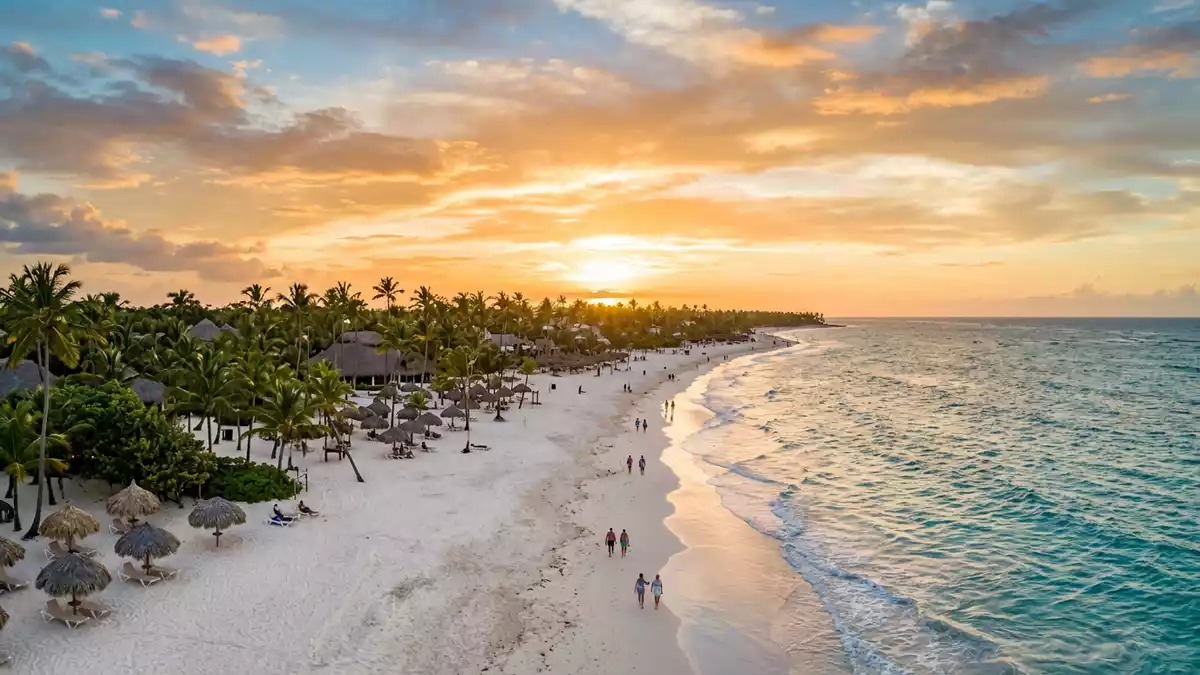
Punta Cana is a low coastal district at the eastern end of the Dominican Republic, where long sandy beaches meet the Caribbean Sea and the Atlantic Ocean. Its identity rests on a visible contrast: a broad resort coastline alongside palm forest, freshwater lagoons and protected ecological areas.
Where Punta Cana meets two seas
Punta Cana belongs to La Altagracia Province on the eastern side of Hispaniola. The Verón–Punta Cana Touristic Municipal District forms its civic setting, with territory extending between the Atlantic Ocean and the Caribbean Sea.
The coastline is marked by pale sand, shallow coastal water and rows of coconut palms. Beaches continue through the wider Bávaro area, creating a long sandy shore rather than a compact urban waterfront. Inland, the terrain remains low and largely coastal, with roads, hotels, golf courses and pockets of tropical vegetation.
From a remote coast to Punta Cana International Airport
Punta Cana’s present identity took shape in the late 1960s, when Frank Rainieri and Theodore Kheel began developing land on the eastern side of the Dominican Republic. The name refers to the cana palm, a tree associated with the region.
Punta Cana International Airport opened in December 1983. Punta Cana International Airport lies inland from the beaches and connects the resort district with international air routes.
The airport is a prominent part of the area’s geography, but Punta Cana is not defined by transport alone. Its hotels, residential districts, beaches and ecological sites form a spread-out coastal landscape linked with nearby Bávaro and the inland community of Verón.
Forest paths and the Ojos Indígenas lagoons
The Ojos Indígenas Ecological Reserve provides a different view of Punta Cana. The protected area covers 1,500 acres and includes tropical forest, freshwater lagoons and habitats connected with the coast. Ojos Indígenas Ecological Reserve is also associated with environmental education and scientific work.
Trails pass through woodland to freshwater pools known as ojos, or eyes. The reserve’s landscape contains native vegetation, birds and reptiles, while the lagoons provide a clear contrast with the open sea beyond the coastal strip. The name connects the place with both water and Indigenous cultural memory.
Taíno, African and Spanish influences form part of the Dominican Republic’s cultural background. In Punta Cana, that heritage appears through food, music, language and local traditions alongside an international resort economy.
Visiting Punta Cana: what travellers from Western Europe should know
- Punta Cana lies in La Altagracia Province on the Dominican Republic’s eastern coast. Punta Cana International Airport is the principal air gateway, and roads connect the airport with Bávaro, Verón and nearby coastal districts.
- The coastal terrain is low and sandy. Inland nature sites include forest paths, freshwater lagoons and exposed limestone landscapes.
- The official language is Spanish and the national currency is the Dominican peso.
- The coastline faces both the Caribbean Sea and the Atlantic Ocean. Sea conditions, beaches and vegetation vary along the shore.
- Ojos Indígenas Ecological Reserve lies within the Puntacana Resort & Club area and combines woodland trails with freshwater lagoons.
Searching for Punta Cana on social platforms
These links open searches for Punta Cana on each platform.
Frequently asked questions about Punta Cana
Where is Punta Cana?
Punta Cana is in La Altagracia Province on the eastern coast of the Dominican Republic, on the island of Hispaniola.
What does Punta Cana offer beyond its beaches?
The district includes tropical forest, freshwater lagoons, ecological reserves, golf courses, resort areas and the communities of Verón and Bávaro.
What makes Punta Cana distinctive?
Its landscape combines a long sandy coastline with protected inland nature, including the 1,500-acre Ojos Indígenas Ecological Reserve.


