Punta Cana and the rise of a resort coast
Published on 08/21/2026 at 20:30 | Editorial responsibility: Rafael Müller, Editor-in-Chief AD HOC NEWS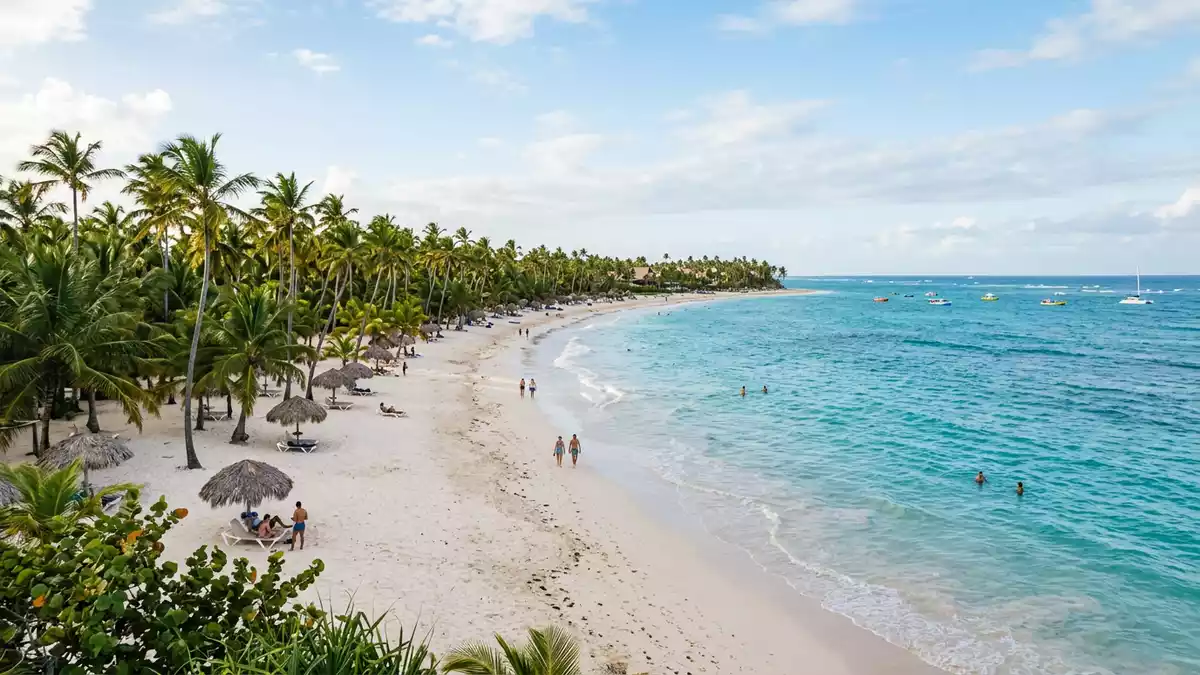
Punta Cana in the Dominican Republic is a coastal place shaped by resort development, long beaches and the presence of Punta Cana International Airport. Its modern identity is closely tied to Frank Rainieri, Theodore W. Kheel and the early work of Grupo Puntacana.
Punta Cana’s resort landscape and airport edge
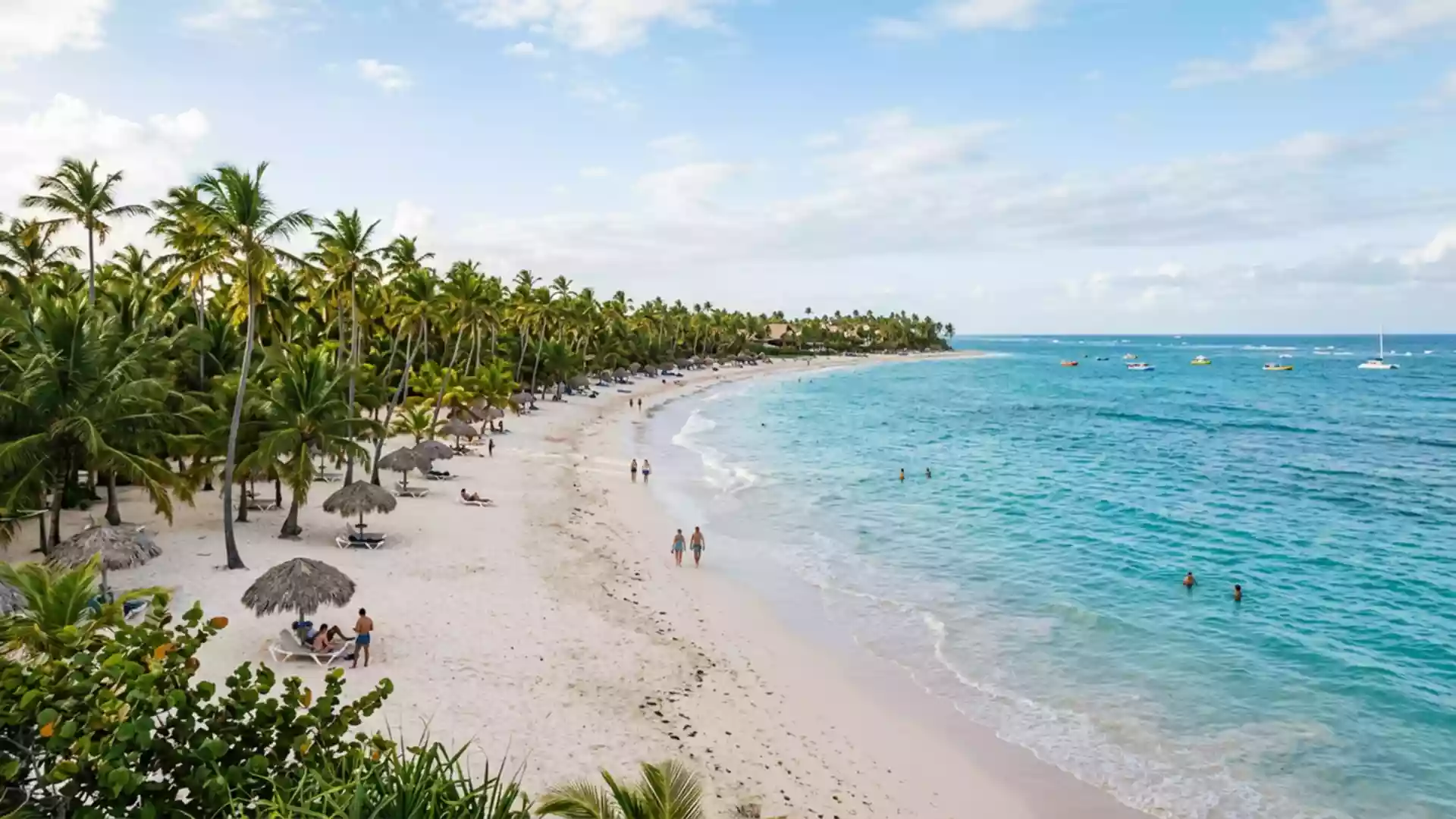
The place is spread along the eastern tip of the island of Hispaniola, in La Altagracia Province, with the Caribbean Sea on one side and Atlantic water nearby. The area’s most visible features are the beach line, the low resort buildings and the airport infrastructure that sits within the wider coastal zone.
The airport opened in 1983 and is widely identified with Oscar Imbert as architect and Grupo Puntacana as builder. Its open-air terminals and palm-frond roofing give the complex a local material character that sits apart from a standard sealed airport hall.airport history The wider resort area developed through the efforts of Frank Rainieri and Theodore W. Kheel, who appear throughout the area’s recorded history.resort history
From Punta Borrachón to Punta Cana
The name Punta Cana replaced Punta Borrachón in the early development story of the place. Frank Rainieri is associated with the renaming, and the new name refers to the cana palm found in the area.
That name change sits beside the growth of the resort community that followed in the 1970s. The first hotel, Punta Cana Club, belongs to the start of that phase, and it gives the destination a clear historical anchor.first hotel project The airport’s opening in 1983 completed the transition from isolated coast to travel hub, and the place has kept that dual identity ever since.1983 opening
Nature, coast and built resort form
Punta Cana’s landscape is a flat coastal one, with sand, palms and low-rise development rather than a dense urban grid. The resort form is visible in the scattered hotels, golf courses and planned communities that line the shoreline.
One of the best-known protected names in the area is the Puntacana Ecological Foundation, founded in 1994. That date places conservation work within the same development arc as the airport and the resort district.1994 foundation The place therefore combines leisure infrastructure with a coastal environment that remains central to its identity.
Visiting Punta Cana: what travellers from Western Europe should know
- The airport is the main arrival point for the area, and Punta Cana also sits within La Altagracia Province on the eastern side of the Dominican Republic.
- The coast is low-lying and sandy, with long beachfront stretches and resort compounds set close to the shore.
- English is widely used in visitor-facing parts of the resort zone, while Spanish remains the country’s official language.
- The Dominican peso is the national currency.
- Entry requirements depend on your nationality; UK travellers can check the FCDO travel advice at gov.uk/foreign-travel-advice, Irish travellers the Department of Foreign Affairs at ireland.ie.
Searching for Punta Cana on social platforms
These links open searches for Punta Cana on each platform.
Frequently asked questions about Punta Cana
Where is Punta Cana?
Punta Cana lies in La Altagracia Province on the eastern side of the Dominican Republic. It is a coastal resort area tied to Punta Cana International Airport.
What does a visit look like?
The area presents beaches, hotel zones and airport-led access rather than a compact colonial town. Its built form is low and spread out along the coast.
What makes Punta Cana distinctive?
The place stands out through its combination of a resort coast and a privately developed airport history. Frank Rainieri, Theodore W. Kheel and Oscar Imbert are central names in that story.