
Puente Romano de Cordoba and the long stone crossing of the Guadalquivir
Published on 08/27/2026 at 08:38 | Editorial responsibility: Rafael Müller, Editor-in-Chief AD HOC NEWS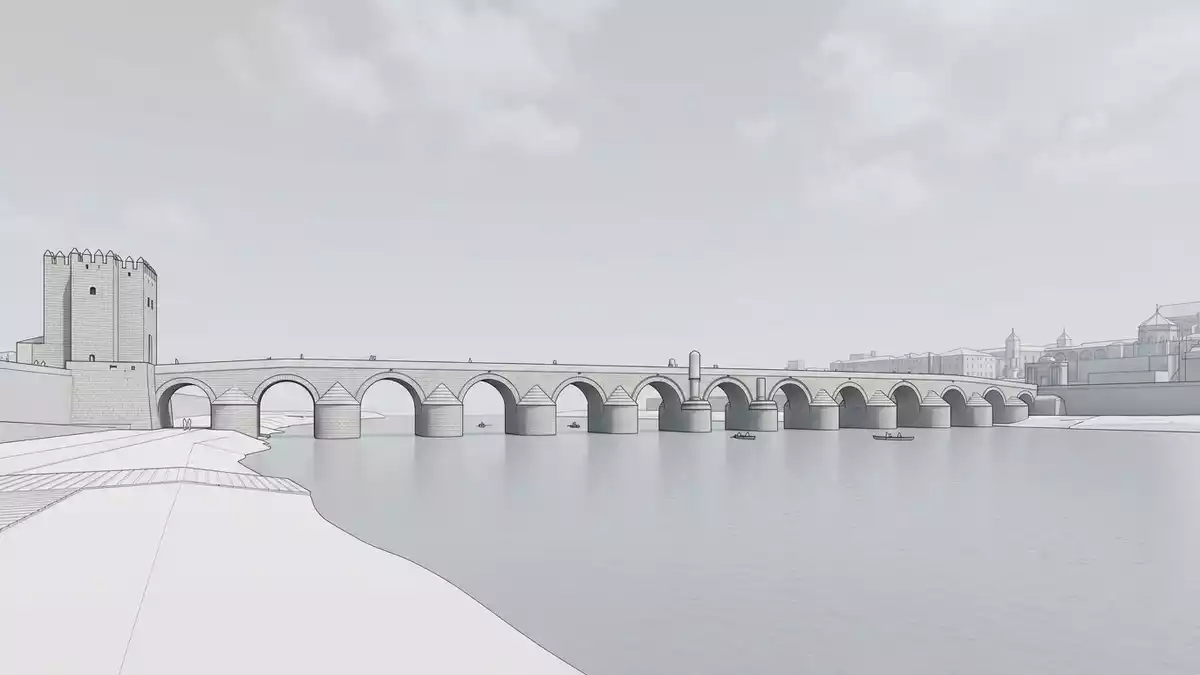
Puente Romano de Cordoba is a long stone bridge that carries a broad walkway across the Guadalquivir, linking Cordoba’s historic centre with the river’s southern bank in southern Spain. Built in the Roman period and heavily rebuilt under the Umayyad rulers of Al-Andalus, it places more than twenty centuries of engineering and power struggles into a single crossing between the Mezquita-Catedral and the fortified Torre de la Calahorra.
A Roman crossing reshaped by empires
The first stone bridge at this point on the Guadalquivir dates to the first century BC, when engineers working under Augustus created a permanent crossing as part of the Via Augusta between Tarraco and Gades.The Puente Romano was originally built in this period and gave Cordoba, then Colonia Patricia, a fixed link between the city and the farmland and routes to the south.In the first century BC the Romans built a stone bridge here, replacing earlier temporary crossings over the river.
Most of the structure visible now reflects extensive rebuilding under the Umayyad rulers in the eighth century, when Al-Samh ibn Malik al-Khawlani ordered a near-complete reconstruction of the Roman bridge to suit the needs of an expanding Islamic capital.A major reconstruction in the 720s gave the bridge much of its present profile, which was then reinforced and repaired through the medieval and early modern periods. The bridge’s long service life means that only a small number of its arches retain Roman masonry, while later work reflects both Andalusi and Christian interventions.
Stone arches, towers and a processional route
Puente Romano de Cordoba runs on sixteen stone arches across the main channel of the Guadalquivir, stretching for more than 300 m (around 1,000 ft) between the historic city and the river’s southern floodplain.Its length and sequence of arches give it a steady rhythm that visitors experience as a gentle rise from the city gate towards the tower. The piers stand on substantial cutwaters that break the current, anchoring the bridge in pale stone that catches the Andalusian light.
At the northern end, Puente Romano de Cordoba connects directly to the Puerta del Puente, a ceremonial gate from the sixteenth century that marks the entrance to the historic core of Cordoba and sits in line with the Mezquita-Catedral.The gate at the city end frames the approach to the bridge, while at the southern end the fortified Torre de la Calahorra rises above the riverbank as a defensive tower from the twelfth century linked to the bridge’s control. Midway along the eastern parapet stands a statue of St Raphael from the seventeenth century, placing a sculpted guardian among the steady flow of people crossing the river.
From traffic artery to pedestrian promenade
For roughly two thousand years Puente Romano de Cordoba was the only permanent bridge across this reach of the Guadalquivir, channelling wheeled traffic, pack animals and pedestrians between the two banks until the San Rafael bridge provided an additional crossing in the twentieth century.The Roman bridge long served as Cordoba’s sole bridge over the river and remained a key part of its transport network. Its alignment continues the axis from the Mezquita-Catedral through the Puerta del Puente towards the south, so that walking the bridge feels like extending a route that begins in the mosque-cathedral’s courtyard.
In its present form Puente Romano de Cordoba carries a wide paved walkway rather than vehicles, with stone parapets and occasional widenings where people pause to look at the river, the skyline of Cordoba or the flat country to the south.The bridge has been remodelled as a primarily medieval and early modern structure and now functions as a pedestrian route into the historic centre. Its surface, lighting and detailing reflect restoration campaigns that emphasise walking and viewing rather than carts or motor traffic, turning a former traffic artery into a linear public space above the water.
Visiting Puente Romano de Cordoba: what travellers from Western Europe should know
- Puente Romano de Cordoba crosses the Guadalquivir just south of Cordoba’s historic centre in Andalusia and links the area around the Mezquita-Catedral with the district by the Torre de la Calahorra.
- The approach from the city side is level and follows broad paving through the Puerta del Puente, while the bridge itself has a gentle gradient and a stone surface underfoot.
- On the southern bank the bridge meets the base of the Torre de la Calahorra, where ramps and steps lead down towards the riverside paths and the surrounding streets.
- The official language is Spanish and the currency is the euro.
Searching for Puente Romano de Cordoba on social platforms
These links open searches for Puente Romano de Cordoba on each platform.
Frequently asked questions about Puente Romano de Cordoba
Where is Puente Romano de Cordoba located?
Puente Romano de Cordoba spans the Guadalquivir in the city of Cordoba in Andalusia, southern Spain, linking the historic centre to the southern bank near the Torre de la Calahorra.
What can visitors expect when crossing Puente Romano de Cordoba?
Visitors find a broad stone walkway reserved for pedestrians, with views towards the Mezquita-Catedral, the river and the fortified tower that anchors the southern end of the bridge.
What makes Puente Romano de Cordoba distinctive among historic bridges?
Puente Romano de Cordoba combines a first-century BC Roman origin with major eighth-century Umayyad rebuilding and later Christian additions, creating a single crossing that reflects successive powers over Cordoba.


