

Puebla Cathedral undergoes restoration until 6 November
Published on 10/11/2026 at 07:16 | Editorial responsibility: Rafael Müller, Editor-in-Chief AD HOC NEWSKey points in brief
- Puebla Cathedral is undergoing facade restoration scheduled to run from 8 September to 6 November 2026.
- The restoration concerns the facade and extradós of Puebla Cathedral in Puebla, Mexico.
- The cathedral was consecrated in 1649 and forms part of the UNESCO-listed Historic Centre of Puebla.
- The interior remains open while restoration work continues around the atrium and exterior.
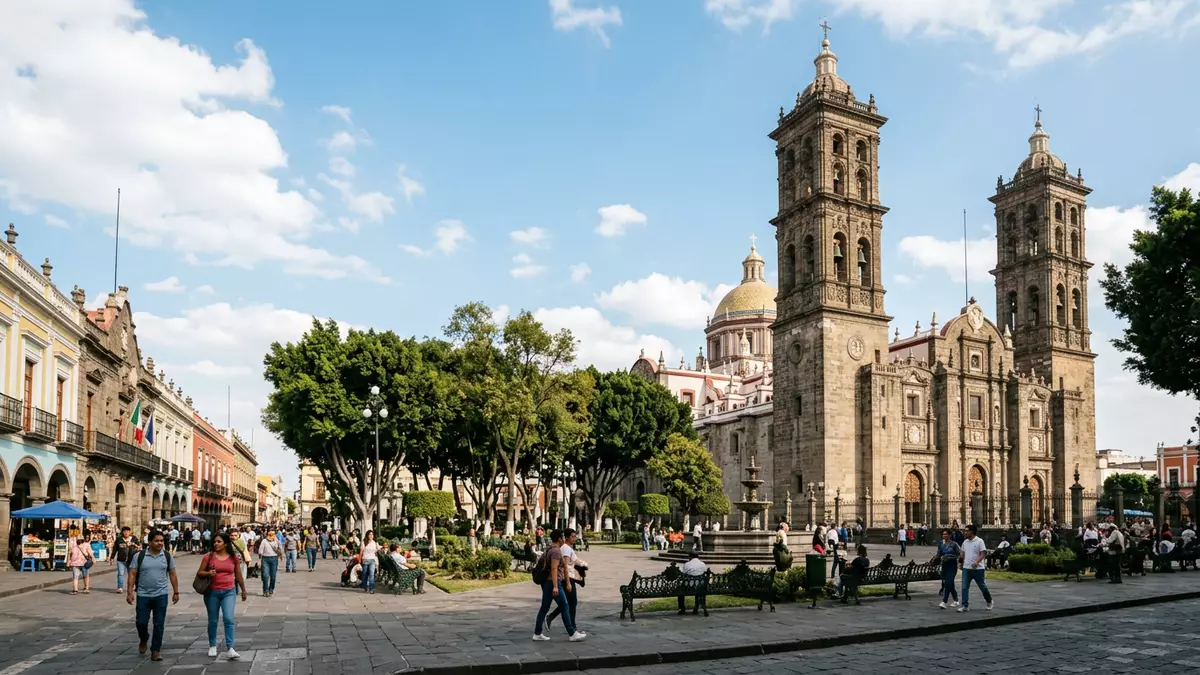
Puebla Cathedral (Catedral Basílica de Nuestra Señora de la Inmaculada Concepción) is undergoing restoration in Puebla, with the current facade project scheduled to continue until 6 November 2026. The work gives visitors a practical reason to check the exterior and access arrangements before entering one of Mexico's major historic churches.
The project concerns the facade and extradós of the cathedral, according to the state tender reported by the restoration report. The schedule set an expected start date of 8 September 2026 and a planned completion date of 6 November 2026, placing the work inside the current travel window.
Facade restoration at Puebla Cathedral runs until 6 November
The restoration is being carried out through a project commissioned by the Government of the State of Puebla. The tender describes rehabilitation work for the facade and extradós, the upper exterior surfaces of the building, and gives the programme a planned duration of about two months.
The same report says the project is intended to address deterioration and maintain the religious building. A separate report describes the intervention as a second cathedral project in 2026 and gives the same start and finish dates, from 8 September to 6 November.
Puebla Cathedral links a 1649 church to UNESCO heritage
Construction of the cathedral began in 1575, and the building was consecrated in 1649. Its long construction history explains why the current work concerns a building formed through several phases rather than a single completed campaign.
The cathedral stands within Puebla's Historic Centre, which UNESCO describes as preserving major religious structures from the sixteenth and seventeenth centuries. The World Heritage listing was made in 1987, and the cathedral remains one of the centre's principal religious buildings. The UNESCO heritage description places it within a wider historic landscape of tiled houses, palaces and churches.
This makes the November completion date more than a construction detail for travellers: the facade being treated is part of the protected historic setting, while the interior represents a building whose construction began almost five centuries ago.
Visiting Puebla Cathedral: what travellers from Western Europe should know
- The facade restoration is scheduled to run from 8 September to 6 November 2026 at Puebla Cathedral in the Historic Centre of Puebla.
- The interior remains open to worshippers and visitors while work continues around the atrium and exterior, according to a local report on access.
- The cathedral is in Puebla's Historic Centre, in the Mexican state of Puebla, within the central area described by UNESCO as a historic urban grid.
- Spanish is the official language used in Mexico, and the national currency is the Mexican peso.
- Entry requirements depend on your nationality; UK travellers can check the FCDO travel advice at gov.uk/foreign-travel-advice, Irish travellers the Department of Foreign Affairs at ireland.ie.
Searching for Puebla Cathedral on social platforms
These links open searches for Puebla Cathedral on each platform.
Frequently asked questions about Puebla Cathedral
When does the restoration take place at Puebla Cathedral?
The facade restoration is scheduled from 8 September until 6 November 2026.
What is Puebla Cathedral?
It is a historic cathedral in Puebla, consecrated in 1649 and located within the UNESCO-listed Historic Centre of Puebla.
Where is Puebla Cathedral and how do you get there?
The cathedral is in Puebla's Historic Centre in Mexico. It forms part of the central historic district described by UNESCO.


