

Protection works at Sidi Bou Saïd move ahead on 8 October
Published on 10/11/2026 at 02:37 | Editorial responsibility: Rafael Müller, Editor-in-Chief AD HOC NEWSKey points in brief
- A Tunisian government commission approved a market decision for hillside protection works at Sidi Bou Saïd on 8 October 2026.
- The works target landslide risks on the hill and follow technical studies and earlier preparation during 2026.
- Sidi Bou Saïd developed from the eighteenth century on a promontory above Carthage and the Gulf of Tunis.
- The 8 October 2026 announcement did not give a contractor, construction timetable or entrance change for visitors.
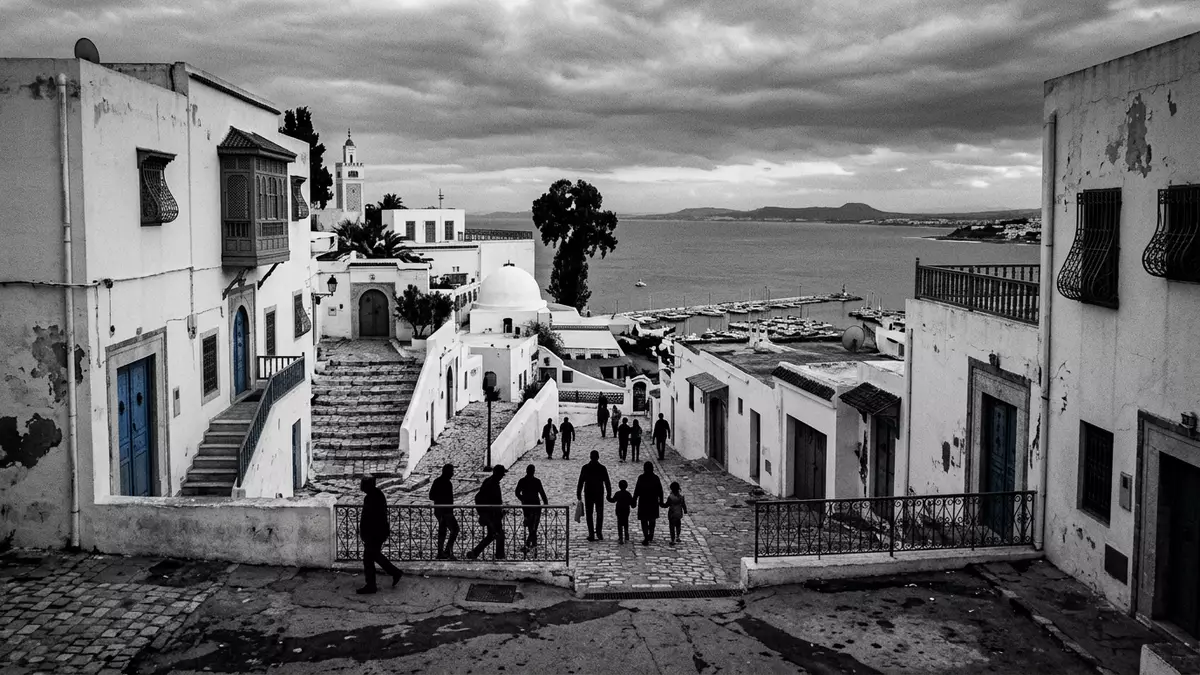
Sidi Bou Saïd and its protection works entered a new phase on 8 October 2026, when Tunisia's major projects commission approved a decision concerning the market for securing the hillside against landslides. The village, also written locally as Sidi Bou Saïd, stands near Tunis above Carthage and the Gulf of Tunis.
Sidi Bou Saïd protection works move ahead on 8 October
The commission met at La Kasbah under the chairmanship of Prime Minister Sarra Zaafrani Zenzri. Its decisions covered several public works markets, including the project to protect the hill of Sidi Bou Saïd from landslides. The announcement makes the October decision the latest formal step in a project that has been under public follow-up during 2026.
The report does not identify the company or office awarded the work. It also gives no final cost, construction length or precise timetable for implementation. A previous target for work to begin in August was mentioned, but the 8 October decision did not publish an updated start date. The 8 October market decision therefore advances the administrative process without setting out the next construction milestone.
Sidi Bou Saïd hill combines heritage and geological risk
The proposed heritage area developed from the eighteenth century around the zaouia, or religious sanctuary, associated with the Sufi figure Abu Saïd Khalaf Ibn Yahya El Tamimi El Beji. It includes religious monuments, palaces, public spaces, fountains and cemeteries, forming a varied architectural landscape on the Djebel El Manar promontory.
The hill's topography is central to both the village's character and the protection project. The UNESCO heritage description says the settlement adapts to the geology of the hill and records concerns about geological and climate-related weaknesses in the ground. The same account notes that a specific legal text was issued in 1915 to safeguard the village. The current works thus address the physical slope on which the historic streets, residences and monuments depend.
What the October decision means for a visit
The decision links a current infrastructure project directly to the setting visitors come to see. It does not, however, announce a closure, a new entrance or a change to the main visitor route. The practical position for October and November 2026 is therefore that the works decision is confirmed, while its effect on access remains unspecified.
The village's protected character also gives the project a cultural dimension. Stabilising the hillside must take place alongside the preservation of the architectural fabric and the relationship between the built area, the promontory and the sea. Those links explain why the October announcement matters beyond a routine public contract.
Visiting Sidi Bou Saïd: what travellers from Western Europe should know
- The confirmed decision concerns hillside protection works and was announced on 8 October 2026. No later construction start date was published in the checked report.
- No closure, restricted entrance or changed visitor route was announced with the 8 October 2026 decision. The announcement also did not state a new access arrangement.
- The village is north-east of Tunis, on a promontory overlooking Carthage and the Gulf of Tunis.
- The setting is a hill with sloping ground and streets shaped by the local topography. The terrain is part of the place's physical character and is also the subject of the protection project.
- Arabic is the official language of Tunisia and the national currency is the Tunisian dinar.
- Entry requirements depend on your nationality; UK travellers can check the FCDO travel advice at gov.uk/foreign-travel-advice, Irish travellers the Department of Foreign Affairs at ireland.ie.
Searching for Sidi Bou Saïd on social platforms
These links open searches for Sidi Bou Saïd on each platform.
Frequently asked questions about Sidi Bou Saïd
What changed at Sidi Bou Saïd on 8 October 2026?
A major projects commission approved a decision concerning the market for hillside protection works against landslides. The announcement did not publish a contractor or construction timetable.
Where is Sidi Bou Saïd and how do you get there?
The village is near Tunis on a promontory above Carthage and the Gulf of Tunis. The confirmed announcement does not specify a transport route.
What is Sidi Bou Saïd?
It is a historic hillside village that developed from the eighteenth century around a Sufi sanctuary and includes religious buildings, palaces, public spaces and fountains.


