
Predjamski grad and the castle pressed into the cliff above Postojna
Published on 09/15/2026 at 15:33 | Editorial responsibility: Rafael Müller, Editor-in-Chief AD HOC NEWS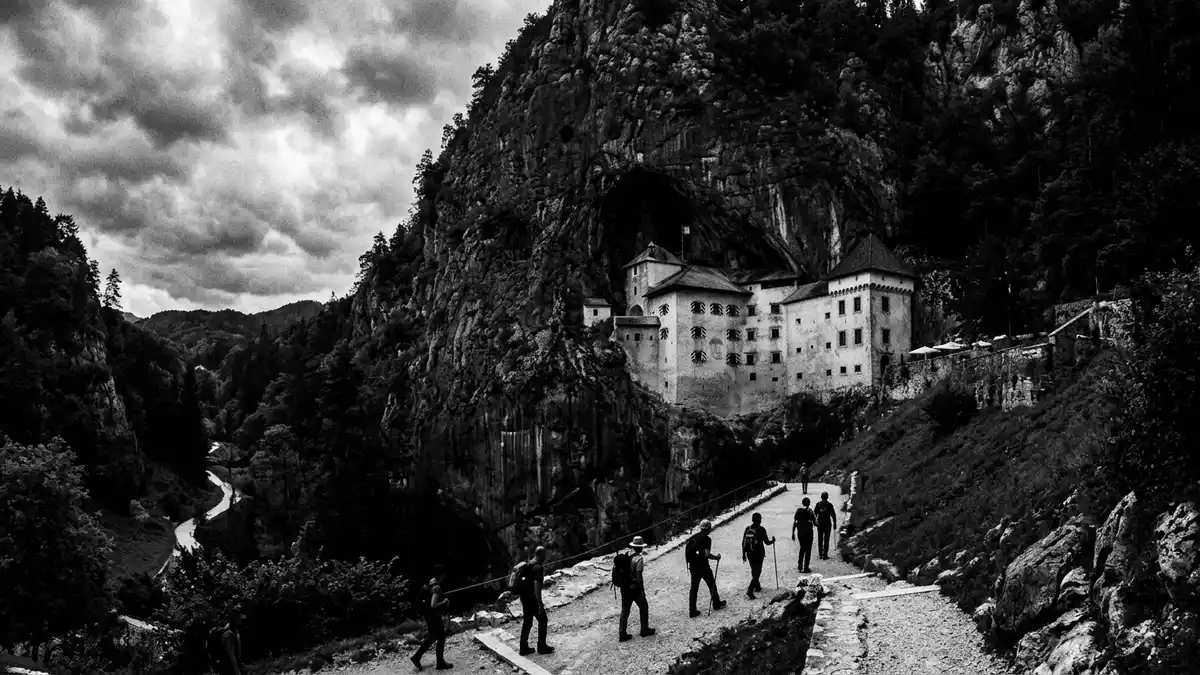
Predjamski grad in the village of Predjama near Postojna in Slovenia is a castle built directly into a limestone cliff, its Renaissance walls merging with the entrance to a deep karst cave system that runs behind the rock face.Predjama Castle in Inner Carniola stands in the historical region of Inner Carniola, and the present castle form dates from the second half of the sixteenth century.
A castle in the mouth of a cave
Predjamski grad occupies a position partway up a high limestone cliff above the village of Predjama, with its outer facade built against the rock and its inner parts recessed into the natural cavity of the cave.Predjama Castle stands twelve kilometres northwest of Postojna and the cliff forms part of the karst landscape of Inner Carniola in south-central Slovenia.Descriptions of the castle’s position emphasise the way the masonry appears to grow out of the rock face, with built rooms aligned along the vertical wall where the cave opens.
The castle is recognised as the largest cave castle in the world, a status recorded in the Guinness World Records listing for its type, and its layout is unusual for a European fortress because the inhabited spaces extend both in front of and behind the cliff wall.Grad Predjama is noted as the largest cave castle and the overall complex combines conventional built elements with terraces, galleries and service spaces that adjoin the cave entrance.
From medieval fortress to Renaissance residence
The history of Predjamski grad reaches back to the Middle Ages, when an earlier fortress occupied the rock cavity and was developed as a Gothic stronghold.Records mention the castle under the name Luegg in 1274 when it belonged to the Patriarchate of Aquileia, and this medieval phase used the depth of the cave as a defensible site embedded in the cliff.Accounts of the early Gothic fortress describe a Romanesque and Gothic complex recessed into the rock before later rebuilding.
In the fifteenth century Predjamski grad became associated with the knight Erasmus Lueger, also known as Erasmus of Predjama, whose name appears in accounts of the castle’s role in regional conflicts of that era.Erasmus Lueger is recorded as a notable inhabitant and later damage to the fortress was followed by ownership passing to the Oberburg noble family before a major earthquake in 1511.The present Renaissance appearance dates from 1570 when a new residence was constructed on the remains of the medieval stronghold, giving the castle its current multi-storey facade linked to the rock.
Karst landscape and cave beneath the castle
Predjamski grad stands on the edge of the karst plateau around Postojna, where soluble limestone has produced caves and sinkholes, and the castle is built directly above the entrance to one of these caves.The castle is described as built within a cave mouth and the ravine below the cliff forms part of the wider karst terrain whose geology has shaped the local landscape.German-language descriptions of Höhlenburg Predjama note its position near the village of Predjama, several kilometres from Postojna and its cave network.
Beneath Predjamski grad, the cave system extends under the castle for several hundred metres, and parts of this underground network are accessible on guided visits separate from the rooms of the fortress.Polish descriptions of Predjamski Grad mention that the castle and a section of the cave are open to visitors, and the route below the cliff leads through chambers where the natural rock forms ceilings and walls in contrast to the built masonry above.
Visiting Predjamski grad: what travellers from Western Europe should know
- Predjamski grad is in the village of Predjama north of Postojna in south-central Slovenia, reached by road from Postojna and the wider motorway network across Inner Carniola.
- The castle stands partway up a limestone cliff, and access to its interior involves walking uphill from the car park area and climbing staircases within the fortress.
- The surrounding landscape is karst terrain with exposed rock and uneven ground, and paths around the castle include sections on compacted surfaces and stone.
- The official language is Slovene and the currency is the euro.
Searching for Predjamski grad on social platforms
These links open searches for Predjamski grad on each platform.
Frequently asked questions about Predjamski grad
Where is Predjamski grad located?
Predjamski grad stands in the village of Predjama north of the town of Postojna in Inner Carniola, in south-central Slovenia, above a limestone cliff and cave.
What should visitors expect inside the castle?
Visitors encounter stone rooms built against the rock face, staircases connecting multiple levels and views from windows and terraces across the ravine and the surrounding karst landscape.
What makes Predjamski grad distinctive among European castles?
Predjamski grad is distinguished by its position in the mouth of a cave within a limestone cliff, recognised as the largest cave castle in the world and combining fortress architecture with underground karst geology.


