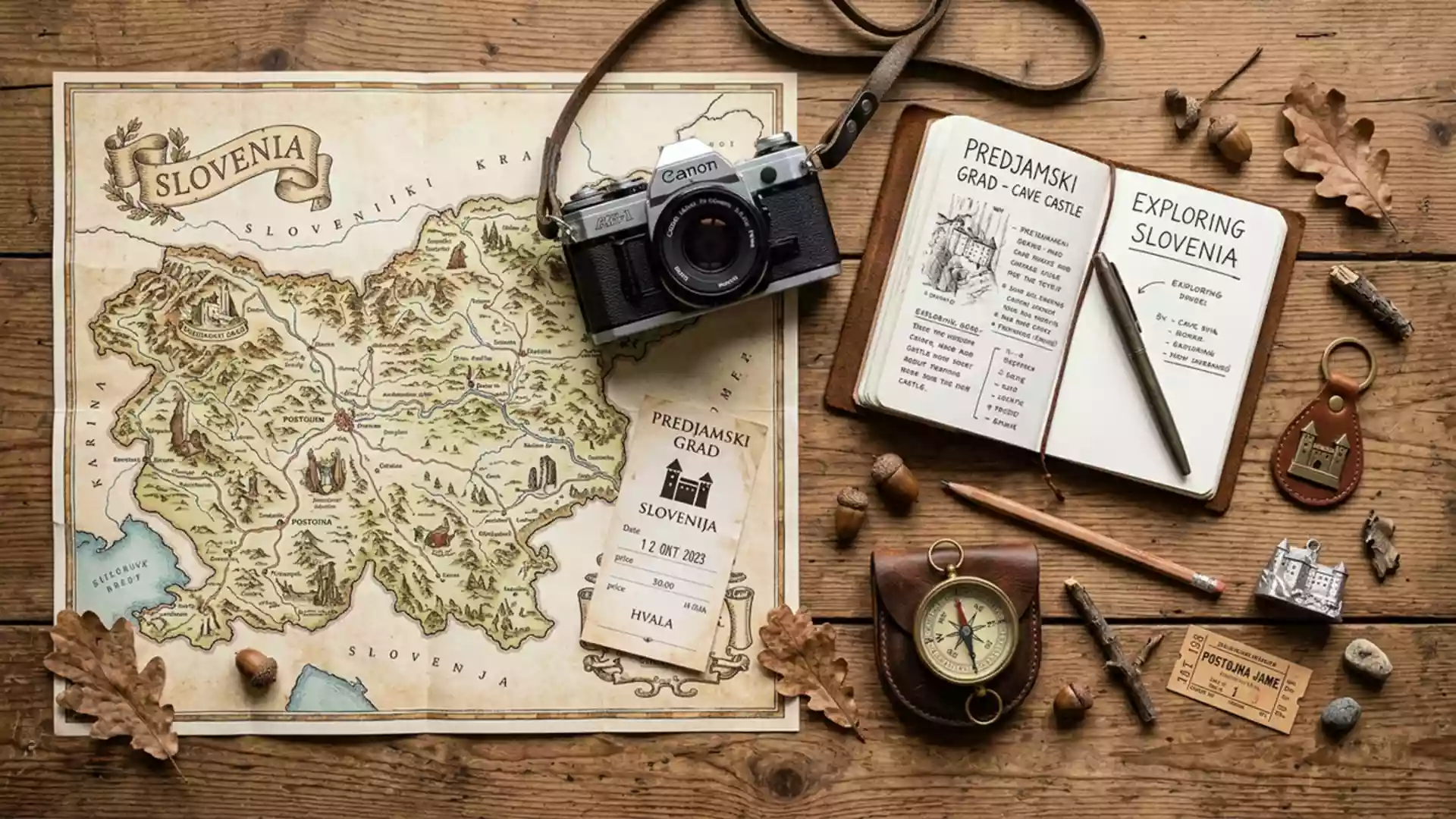
Predjamski grad and the castle in the cliff above Postojna
Published on 09/02/2026 at 13:01 | Editorial responsibility: Rafael Müller, Editor-in-Chief AD HOC NEWS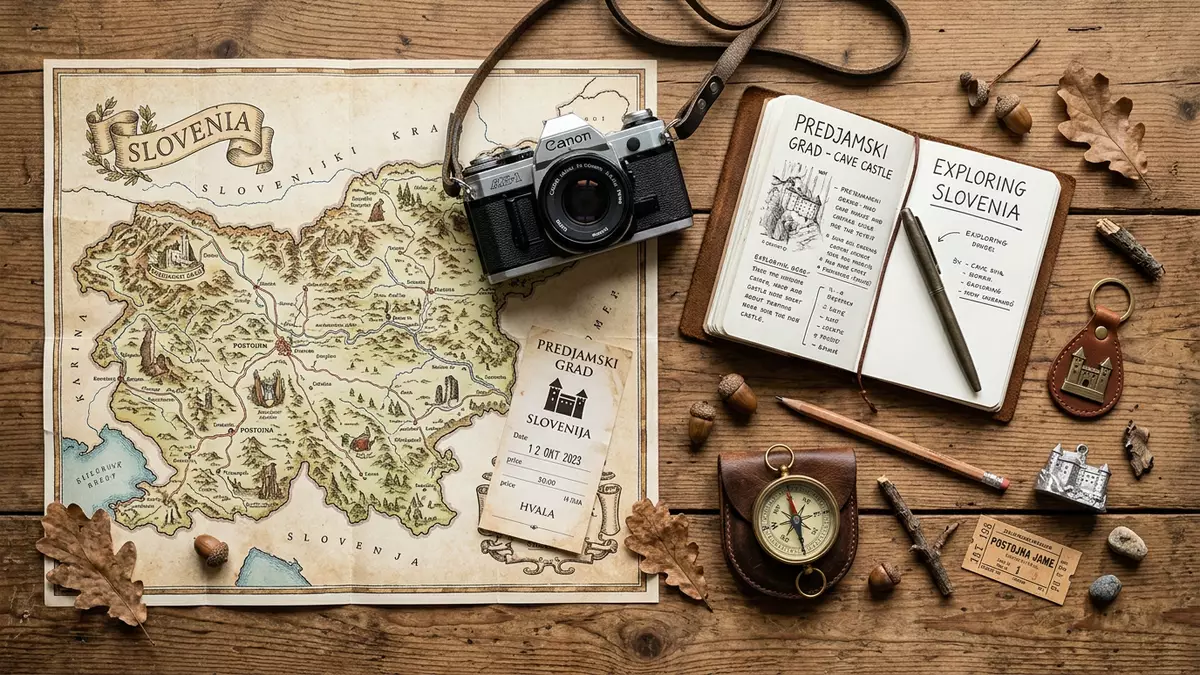
Predjamski grad near Postojna in Slovenia is a Renaissance castle fused with a limestone cliff and cave system, where rock and masonry occupy the same vertical face. Standing in the village of Predjama in Inner Carniola, it is a fortified residence built into the mouth of a cave in the karst landscape north of Postojna.
A castle built into a cliff and cave
Predjamski grad is a castle whose walls rise directly from a limestone cliff, with one side formed by built masonry and the other by exposed karst rock. The building occupies a cave mouth high above the village of Predjama, its upper levels leaning against a vertical rock face that forms part of the Slovenian Karst highlands.Predjama Castle is described as built within a cave mouth in Inner Carniola The castle stands under a cliff that reaches well above the roofline, creating a stacked composition of lower stone buildings, higher defensive walls and the overhanging rock above.
The site is known in Slovene as Predjamski grad or Grad Predjama and lies in the historical region of Inner Carniola, with the village of Predjama forming part of the municipality of Postojna.Grad Predjama is listed as standing near Postojna in Inner Carniola The cave behind the castle, known in Slovene as Erazmova jama, extends deep into the cliff and forms a natural backdrop to the man-made fortifications.The German entry describes the castle as sitting in a cave portal called Erazmova Jama
Medieval origins and Renaissance rebuilding
Predjamski grad stands on a site where a fortified residence is recorded in the Middle Ages, with written sources mentioning a castle in the thirteenth century under the name Jama Castle. Records from the mid-fourteenth century refer to a fortification called castrum Laforan and describe it as a cave castle in the Karst, indicating a long-standing link between defensive architecture and the rock landscape.Medieval records for Jama Castle and castrum Laforan are summarised in an architectural overview Later building campaigns gave Predjamski grad its Renaissance appearance, with the current multi-storey structure showing features of that period.
The castle’s medieval phase is associated with the patriarchs of Aquileia, who held authority over the region and invested knights with the castle and its surrounding lands.The same source notes that the patriarchs of Aquileia built the Gothic castle and granted it to various knights Over time Predjamski grad developed from an earlier fortress recessed into the cave into a larger castle that occupies the cliff face with several habitable levels, combining residential rooms, defensive walls and access routes that interact with the openings in the rock.
Karst landscape and cave connections
Predjamski grad belongs to the broader karst landscape around Postojna, where limestone, caves and underground rivers shape the terrain. The castle sits in the northern edge of the Postojna basin, above a ponor where water from the surrounding area sinks underground, and the cliff behind it forms part of the Hrušica foothills in the Carniola region.Regional tourism information places the castle in the rock wall at the edge of the Postojna basin The cave system linked with the castle is described as among the larger known networks in Slovenia, connecting the exposed opening behind the fortifications with deeper passages.
The relationship between architecture and rock at Predjamski grad is visible in the way internal routes meet the cave behind. Historical accounts refer to passages leading from the castle into the cave, connecting the enclosed rooms with the interior of the cliff and the ravine formed by local watercourses.Descriptions of the site note links between the fortress and the cave system and mention the ravine of the Vipacco river Around the castle the wider karst landscape continues towards Postojna Cave, another major cave system in the area, giving visitors a clear sense of how stone fortifications and natural cavities lie close together in this part of Slovenia.
Visiting Predjamski grad: what travellers from Western Europe should know
- Predjamski grad stands in the village of Predjama north-west of Postojna in south-central Slovenia, reached by road signposted from Postojna and the surrounding motorway network.
- The castle occupies a high cliff above the settlement, with interior routes including stairways that climb through several levels between built rooms and the rock face.
- Predjamski grad lies a short distance from Postojna Cave, and both sit in the karst landscape of Inner Carniola, where caves, sinkholes and limestone walls form the wider terrain.
- The official language is Slovene and the currency is the euro.
Searching for Predjamski grad on social platforms
These links open searches for Predjamski grad on each platform.
Frequently asked questions about Predjamski grad
Where is Predjamski grad located?
Predjamski grad stands in the village of Predjama in Inner Carniola in south-central Slovenia, north-west of Postojna and within the municipality of Postojna.
What can visitors expect when they reach Predjamski grad?
Visitors encounter a multi-level castle built into a limestone cliff, with rooms, stairways and fortifications that interact with the cave opening and the surrounding karst landscape.
What makes Predjamski grad distinctive among castles?
Predjamski grad is distinguished by its position in a cave mouth high on a cliff face, combining Renaissance castle architecture with the exposed rock and cave system behind it.