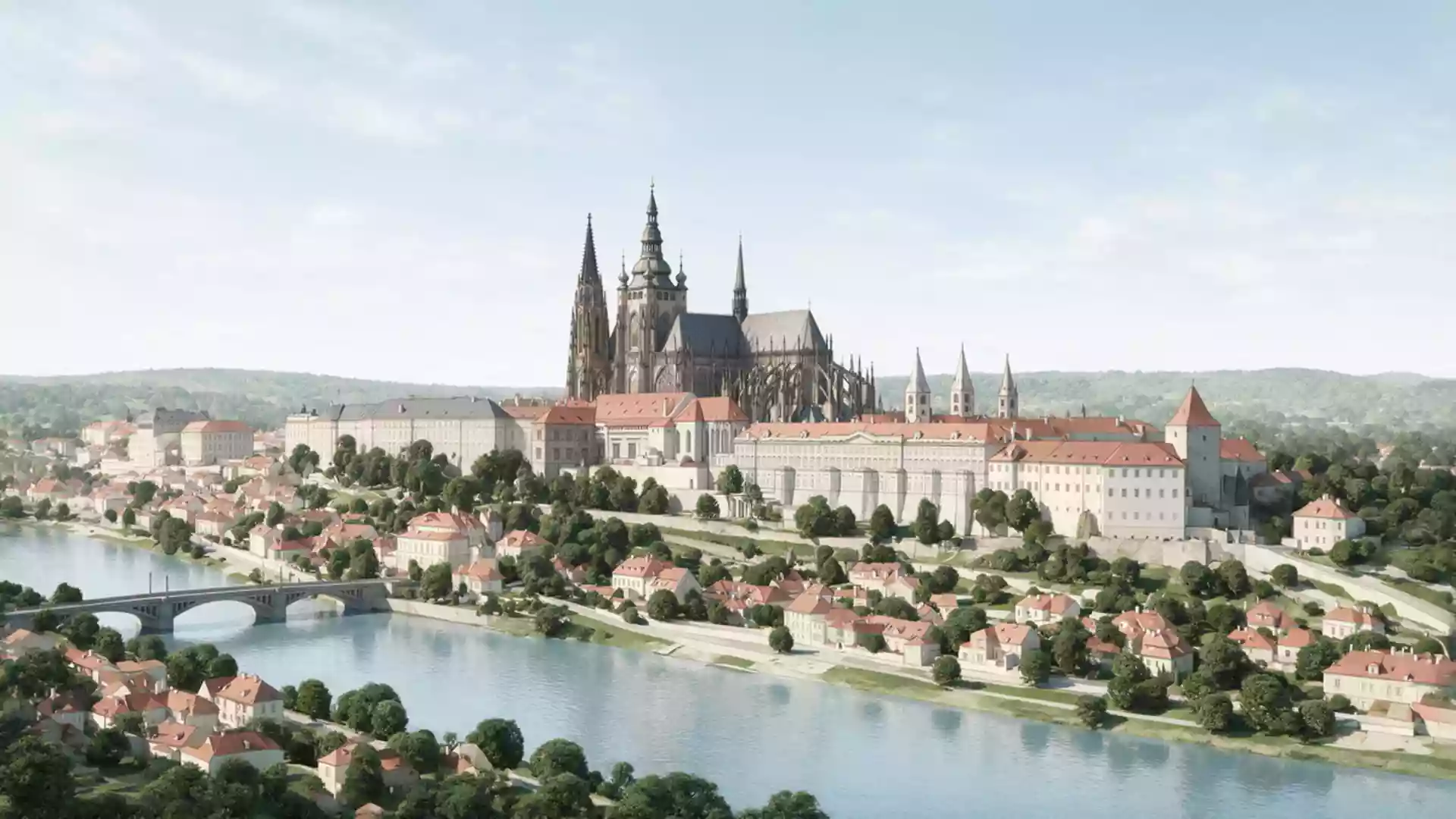
Prazsky hrad and the long stone ridge above Prag
Published on 09/04/2026 at 20:46 | Editorial responsibility: Rafael Müller, Editor-in-Chief AD HOC NEWS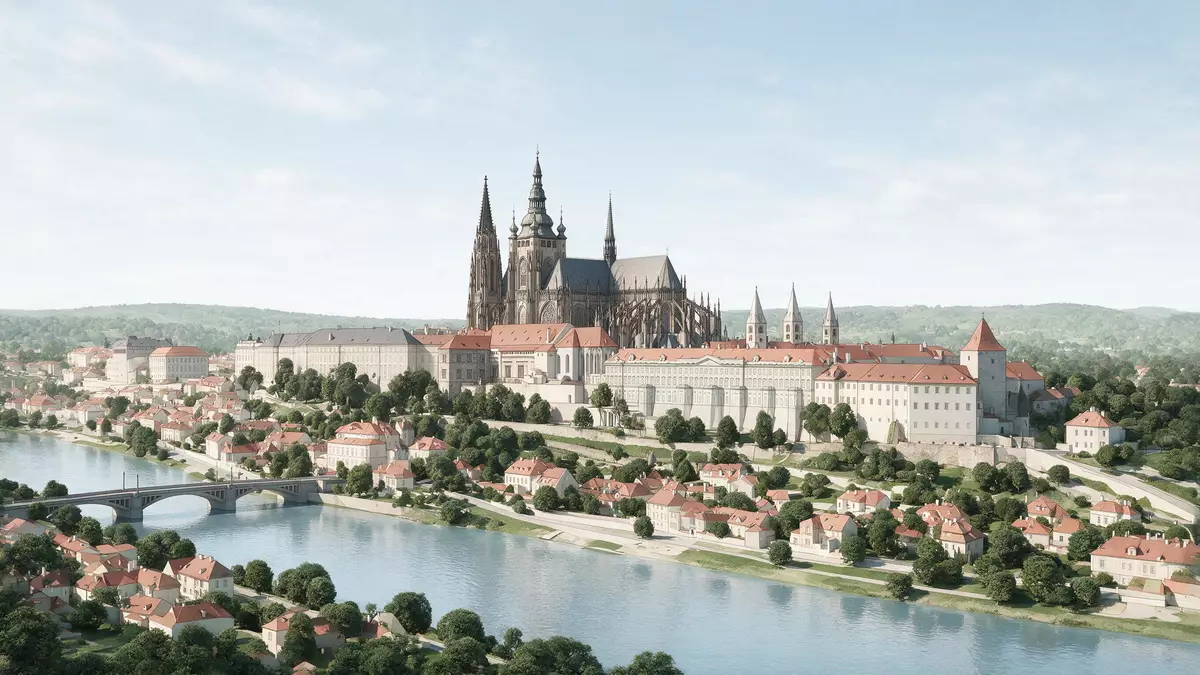
Prazsky hrad, known in English as Prague Castle, runs along a high ridge above the Vltava River and gathers a thousand years of Czech history into one fortified complex. Founded in the ninth century and linked with the P?emyslid rulers, it has served as a seat of power from medieval Bohemia to the modern Czech Republic.
A hilltop city of courtyards, palaces and churches
Prazsky hrad forms a long aggregation of palaces, churches, fortifications, offices, courtyards and gardens laid out on the Hrad?any hill on the western side of Prag.aggregation of palaces, churches, offices, fortifications, courtyards, and gardens The castle complex covers an area measured in tens of hectares, so that walking from one end to the other feels like crossing a small district of the city rather than a single building.covering approximately 110 acres
Within the walls stand major ecclesiastical structures, among them St Vitus Cathedral, St George’s Basilica and remnants of earlier churches, together with the Old Royal Palace and later residences.Prague Castle includes Gothic St. Vitus Cathedral, Romanesque Basilica of St. George, a monastery and several palaces Defensive towers and gates mark transitions between courtyards, while gardens step down towards the river. The whole ensemble forms part of Prag’s historic centre, which is recognised as a UNESCO World Heritage site.lies within the historic centre of Prague, a UNESCO World Heritage site
From P?emyslid stronghold to imperial residence
The history of Prazsky hrad is traditionally dated to the late ninth century, when a fortified settlement and the first church rose on the ridge under Prince Bo?ivoj of the P?emyslid dynasty.Prague Castle was most likely founded in around 880 by Prince Bo?ivoj of the Premyslid Dynasty Early stone churches appeared in the tenth century, including St George’s Basilica and the rotunda associated with St Vitus, as the castle became the seat of Czech princes and later kings.founded around 880 by prince Bo?ivoj of the Premyslid dynasty
In the fourteenth century the castle gained a new Gothic profile under Charles IV, king of Bohemia and Holy Roman emperor, who rebuilt the royal palace and began the present St Vitus Cathedral.in 1344 the king Charles IV laid the cornerstone of the cathedral of St. Vith Later rulers added Renaissance and Baroque elements, including Vladislav Hall in the late fifteenth century and new façades ordered by Maria Theresa in the eighteenth century, which gave some palace blocks a more regular, classicising appearance.Vladislav's Hall ... the first building with Renaissance elements in Bohemia
A layered record of architectural styles
Across its courtyards, Prazsky hrad reads as a textbook of architecture, with Romanesque, Gothic, Renaissance, Baroque and later Neo-Gothic forms sharing the same stone platform.A UNESCO World Heritage site, it consists of a large-scale composition of palaces and ecclesiastical buildings of various architectural styles St George’s Basilica preserves Romanesque proportions behind a later exterior, while the soaring interior of St Vitus Cathedral carries ribbed vaults, tracery windows and sculpted portals characteristic of high Gothic work by builders such as Matthias of Arras and Peter Parler.Mathias from Arras ... and the young Peter Parlé?
Renaissance elements appear in spaces like Vladislav Hall, where the long interior is covered by a complex stone vault, and in façades reshaped under Habsburg rule, while Baroque and Classicist frontages along the main courtyards reflect eighteenth-century tastes at the court of Maria Theresa.Maria Theresa considered Prague Castle insufficiently representative ... He built new facades in the style of Classicism In the twentieth century the Slovenian architect Jože Ple?nik reworked parts of the complex, including gardens and ceremonial spaces, adding new stone details and stairways that sit alongside the older structures.The famous Slovenian architect Josip Ple?nik was responsible for extensive renovations in the time of the First Republic
Visiting Prazsky hrad: what travellers from Western Europe should know
- Prazsky hrad stands on Hrad?any hill west of the Vltava in Prag and is reached from the old town by bridges and rising streets that lead towards its courtyards.
- The complex includes exterior stairways, cobbled surfaces and long approaches between gates and courtyards, so visiting involves walking on uneven ground and ascending inclines.
- The historic centre of Prag, including Prazsky hrad, forms part of a designated UNESCO World Heritage area, and the ridge offers wide views across the river and city rooftops.
- The official language is Czech and the currency is the Czech koruna.
Searching for Prazsky hrad on social platforms
These links open searches for Prazsky hrad on each platform.
Frequently asked questions about Prazsky hrad
Where is Prazsky hrad located within Prag?
Prazsky hrad occupies the Hrad?any hill on the western bank of the Vltava River, overlooking the historic centre of Prag and its bridges.
What should visitors expect when exploring the complex?
Visitors encounter a sequence of courtyards, churches, palaces and defensive structures connected by stairways and sloping streets, with extensive views across the city.
What makes Prazsky hrad distinctive among European castles?
Its ridge-top setting, role as a long-standing seat of Bohemian and Czech power, and concentration of Romanesque, Gothic, Renaissance and Baroque architecture within one complex give it a distinctive character.