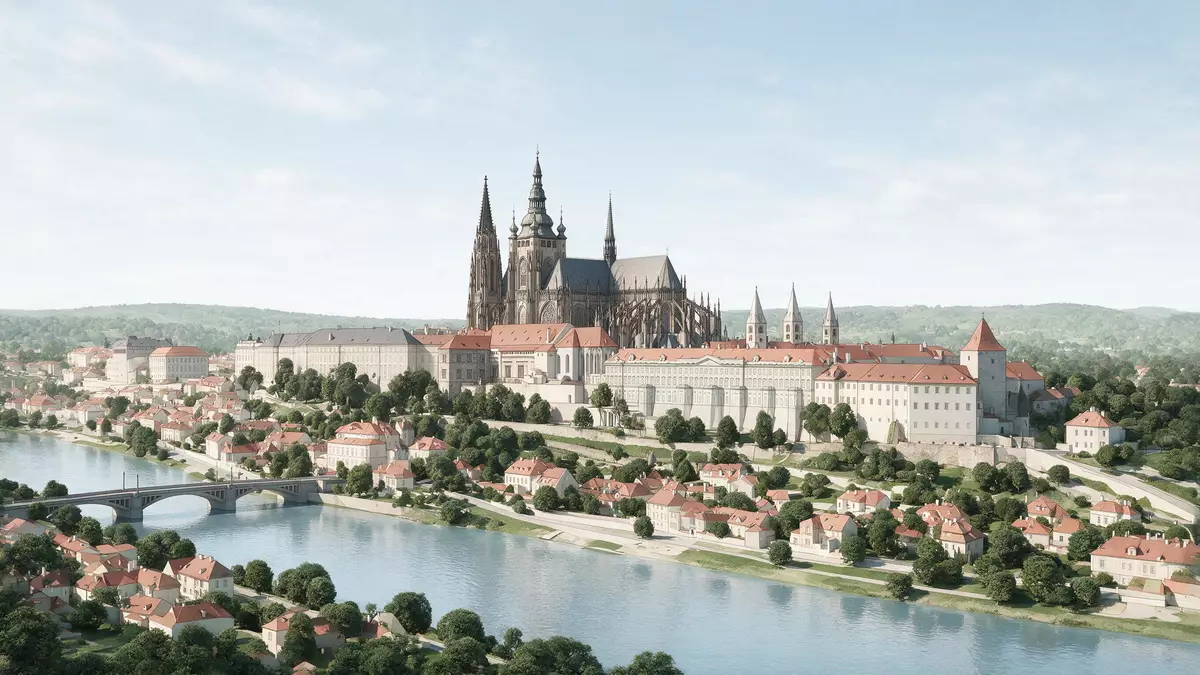
Prazsky hrad and Prague’s layered stone silhouette
Published on 08/09/2026 at 15:01 | Editorial responsibility: Rafael Müller, Editor-in-Chief AD HOC NEWS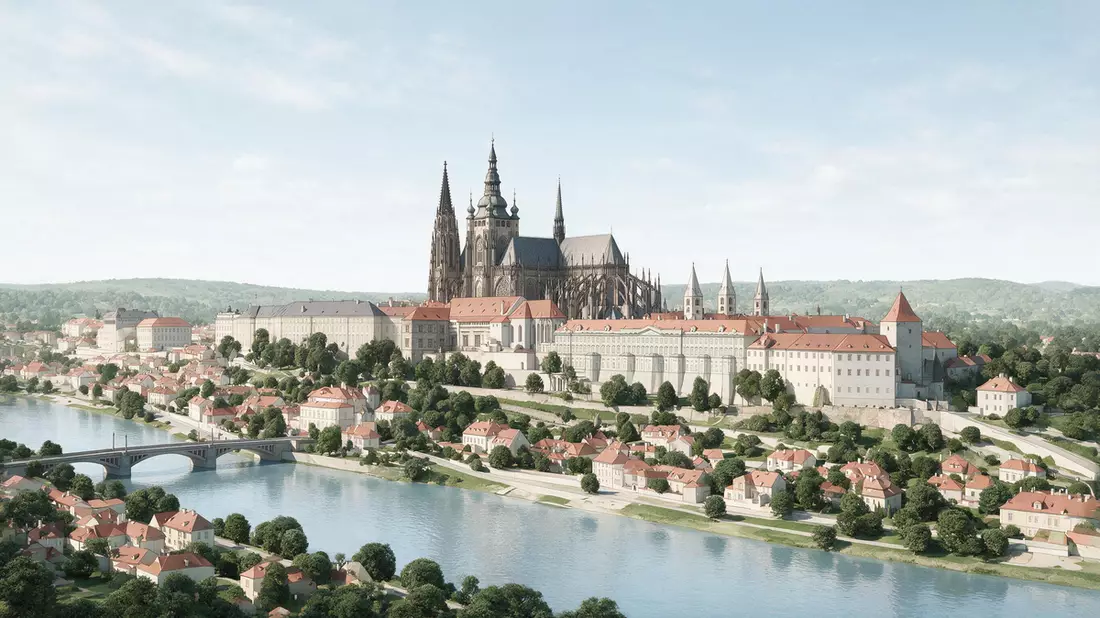
Prazsky hrad spreads across the hill above the Vltava in Prag, a vast complex of palaces, churches, courtyards and gardens. Its long stone profile carries the work of P?emyslid, Luxembourg and Habsburg hands, with origins in the ninth century and later layers from Gothic and Baroque phases.
The hilltop compound in Prag
The first impression is scale rather than symmetry. The site is a chain of precincts, with roofs, towers and walls stepping along the ridge above the city.
Saint Vitus Cathedral dominates the centre of the ensemble, while the Old Royal Palace, St George’s Basilica and the Golden Lane sit within the same enclosure. Red roofs, pale facades and rugged masonry give the place a mix of ceremonial and defensive character.
From early stronghold to royal seat
The earliest castle on the site is traditionally dated to the late ninth century and is linked with the P?emyslid dynasty. Over generations, the complex became the residence of Bohemian rulers and later the centre of Habsburg power in the lands of the Bohemian Crown.
Charles IV left one of the strongest marks on the site in the fourteenth century, when Gothic rebuilding gave the ensemble a more ambitious profile. Later additions by Matthias of Arras and Peter Parler, alongside Baroque work under the Habsburgs, left the castle as a layered record of Central European rule.
Architecture that reads as a timeline
The cathedral brings together pointed Gothic forms, tall tracery and a vertical emphasis that contrasts with the lower domestic blocks nearby. The Old Royal Palace preserves vaults and halls from medieval phases, while the basilica and lane show older and later domestic and devotional spaces within the same walls.
That variety makes Prazsky hrad less like a single monument than a sequence of rooms, courts and facades. Walking through it means moving between royal ceremony, church interior and narrow lane without leaving the same enclosure.
Visiting Prazsky hrad: what travellers from Western Europe should know
- The site is in Prag and is reached by tram, metro and on foot from the surrounding streets.
- Admission arrangements and opening hours are set by the site's operator and change with the season; the official website is the only binding source.
- Spring and early autumn suit a visit best, when the courtyards and gardens are less harsh than in high summer.
- The complex includes steps, sloping approaches and uneven paving, and the walk between parts of the site takes time on foot.
- Czech is the main language on site, and cards are accepted in many places, though cash can still be useful for smaller purchases.
- Entry requirements depend on your nationality. UK travellers should check the FCDO travel advice at gov.uk/foreign-travel-advice; Irish travellers the Department of Foreign Affairs at ireland.ie; EU and EEA citizens their own national foreign ministry.
Searching for Prazsky hrad on social platforms
These links open searches for Prazsky hrad on each platform.
Frequently asked questions about Prazsky hrad
Where is Prazsky hrad?
It stands on a hill above the Vltava in Prag, overlooking the city from the left bank side. The complex forms part of the historic centre of the Czech capital.
What should visitors expect?
Expect a large, uneven complex with churches, palaces, courtyards and ceremonial spaces. It rewards slow movement between sections rather than a quick pass-through.
What makes it distinctive?
Its distinctiveness lies in the accumulation of periods: early medieval origins, Gothic rebuilding and later imperial layers in one enclosed site. The result is a castle district that reads as both residence and monument.