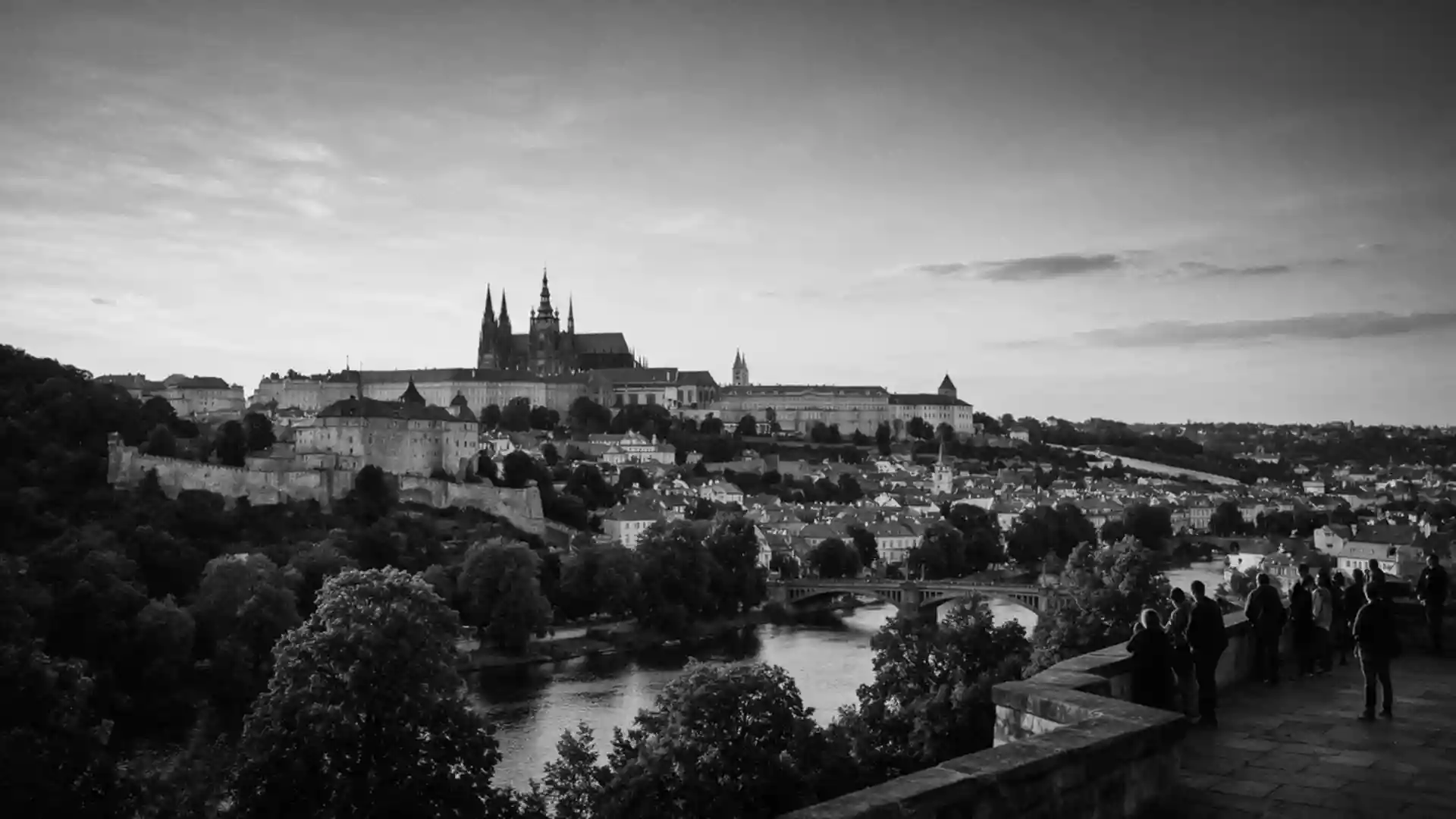
Prazsky hrad: a thousand years of stone above the Vltava
Published on 09/08/2026 at 08:06 | Editorial responsibility: Rafael Müller, Editor-in-Chief AD HOC NEWS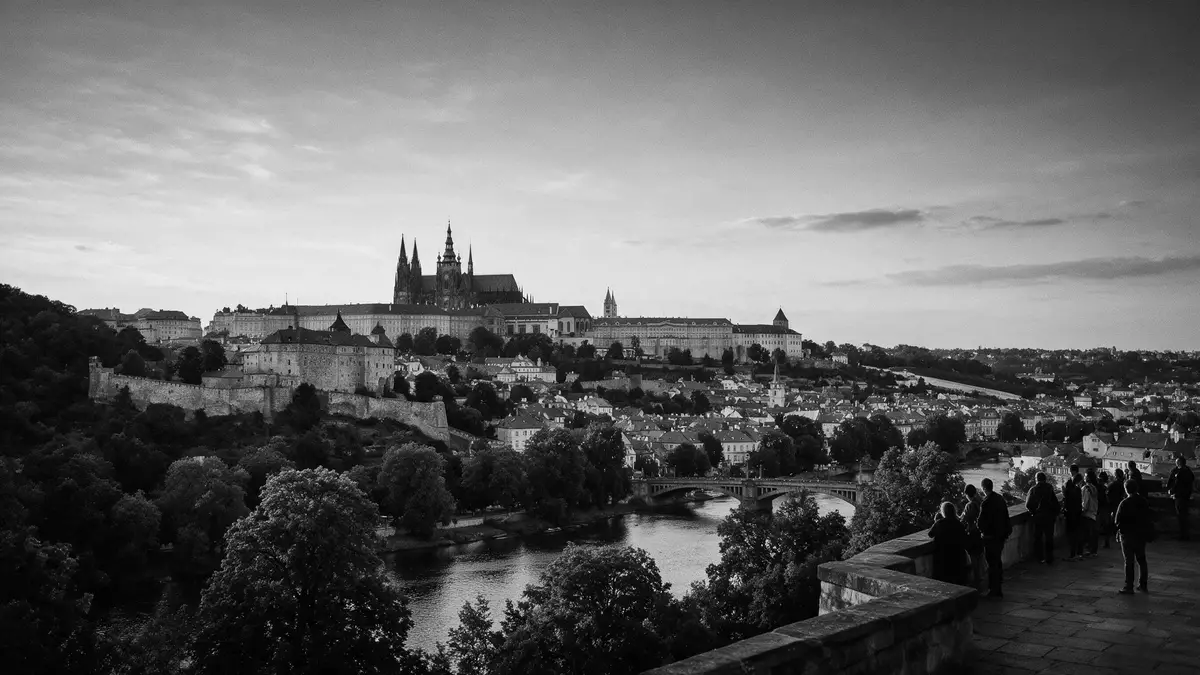
Prazsky hrad, known in English as Prague Castle, stretches across a long ridge above the Vltava River and brings more than a thousand years of Czech history into one vast architectural complex. Founded in the ninth century under Prince Bo?ivoj of the P?emyslid dynasty, it has served as the seat of Bohemian rulers and, since 1918, of the presidents of Czechoslovakia and the Czech Republic.
A castle that became a city of courtyards
Rather than a single fortress tower, Prazsky hrad unfolds as a chain of palaces, churches and administrative buildings arranged around several courtyards along the hilltop. The official visitor information describes it as a large-scale composition of secular and ecclesiastical structures representing architectural styles from Romanesque and Gothic to later Baroque and twentieth-century interventions, centred on three main castle courtyards.three castle courtyards This linear layout follows the ridge of Hradcany, with gateways, squares and terraces opening successively as visitors move through the complex.
Within this area, Prazsky hrad functions as a self-contained district with residences, representative halls, religious buildings and gardens all enclosed within historic fortifications. The site is registered as National Cultural Monument No. 1, a status that acknowledges its role as a symbol of more than millennial development of the Czech state.National Cultural Monument No. 1 The Guinness Book of World Records records Prague Castle as the largest coherent castle complex in the world, with an area approaching 70,000 m² (about 17 acres), which gives a sense of the scale involved.largest coherent castle complex
From early princes to modern presidents
The origins of Prazsky hrad lie in the late ninth century, when Prince Bo?ivoj, the first historically confirmed Christian ruler of Bohemia from the P?emyslid line, established his residence on this rocky promontory and began building the first fortifications and churches.founded around the year 880 Archaeological research and written sources place the foundation of the castle complex around the year 880, anchored by an early church dedicated to the Virgin Mary and timber fortifications that were later replaced in stone.origins in the late 9th century
Successive P?emyslid rulers deepened the religious and political significance of the site by adding major churches. In the first half of the tenth century, Duke Vratislaus I and his son Wenceslaus I were associated with the foundations of the Basilica of Saint George and early forms of St Vitus’s church, establishing Prazsky hrad as a spiritual centre alongside its role as a princely seat.Basilica of Saint George and St Vitus By the twelfth century a Romanesque palace had risen inside the walls, and in the fourteenth century King Charles IV rebuilt the royal palace in Gothic style and upgraded the fortifications, embedding the castle even more firmly in the political structure of the Holy Roman Empire.royal palace rebuilt in Gothic style
Gothic heights and Baroque facades
The visual focus of Prazsky hrad for many visitors is St Vitus Cathedral, the Gothic church that dominates the skyline of Prag with its soaring roof and towers. The foundations of this cathedral were laid during the reign of Charles IV in the mid-fourteenth century, replacing earlier rotunda and basilica structures dedicated to the same saint.foundations of St. Vitus Cathedral The building process extended into the twentieth century, when the cathedral’s construction was finally completed, giving the complex its distinctive Gothic centre framed by later buildings.completed almost six centuries later
Alongside these Gothic elements, Prazsky hrad carries extensive Renaissance and Baroque features introduced under Habsburg rule. During the sixteenth and seventeenth centuries, rulers such as Ferdinand I and Rudolf II added palaces and ceremonial halls, while Empress Maria Theresa unified the castle’s exterior facades in a restrained Baroque style in the eighteenth century, creating the long, linear frontage that faces Hradcany Square.Maria Theresa unified the exterior facades In the twentieth century architects including the Slovenian designer Josip Ple?nik reworked courtyards, staircases and gardens for President Tomáš Garrigue Masaryk, weaving modern details into the older stone fabric.Josip Ple?nik was responsible for extensive renovations
Visiting Prazsky hrad: what travellers from Western Europe should know
- Prazsky hrad stands above the left bank of the Vltava River in Prag, on the Hradcany ridge west of the historic Old Town. It is reached by tram routes serving Hradcany and by streets that rise from Mala Strana.
- Movement through the complex involves paved slopes, terraces and staircases between its courtyards, with some routes climbing the hill from river level to the castle plateau.
- The castle complex lies within the city district of Praha 1 in the Czech Republic, where the official language is Czech and the currency is the Czech koruna.
Searching for Prazsky hrad on social platforms
These links open searches for Prazsky hrad on each platform.
Frequently asked questions about Prazsky hrad
Where is Prazsky hrad located within Prag?
Prazsky hrad occupies a long hilltop on the Hradcany side of Prag, above the Vltava and Mala Strana, within the central municipal district of Praha 1.
What can visitors expect when exploring Prazsky hrad?
Visitors encounter a sequence of courtyards framed by palaces, churches and administrative buildings, with historic fortifications, terraces and views over the city.
What makes Prazsky hrad distinctive among European castles?
Prazsky hrad is distinctive for its role as a continuous seat of power since the ninth century and for its vast area as a coherent castle complex containing Gothic, Renaissance and Baroque architecture.